World
Connection Point is gaining popularity in the Abay region 08.09.2026
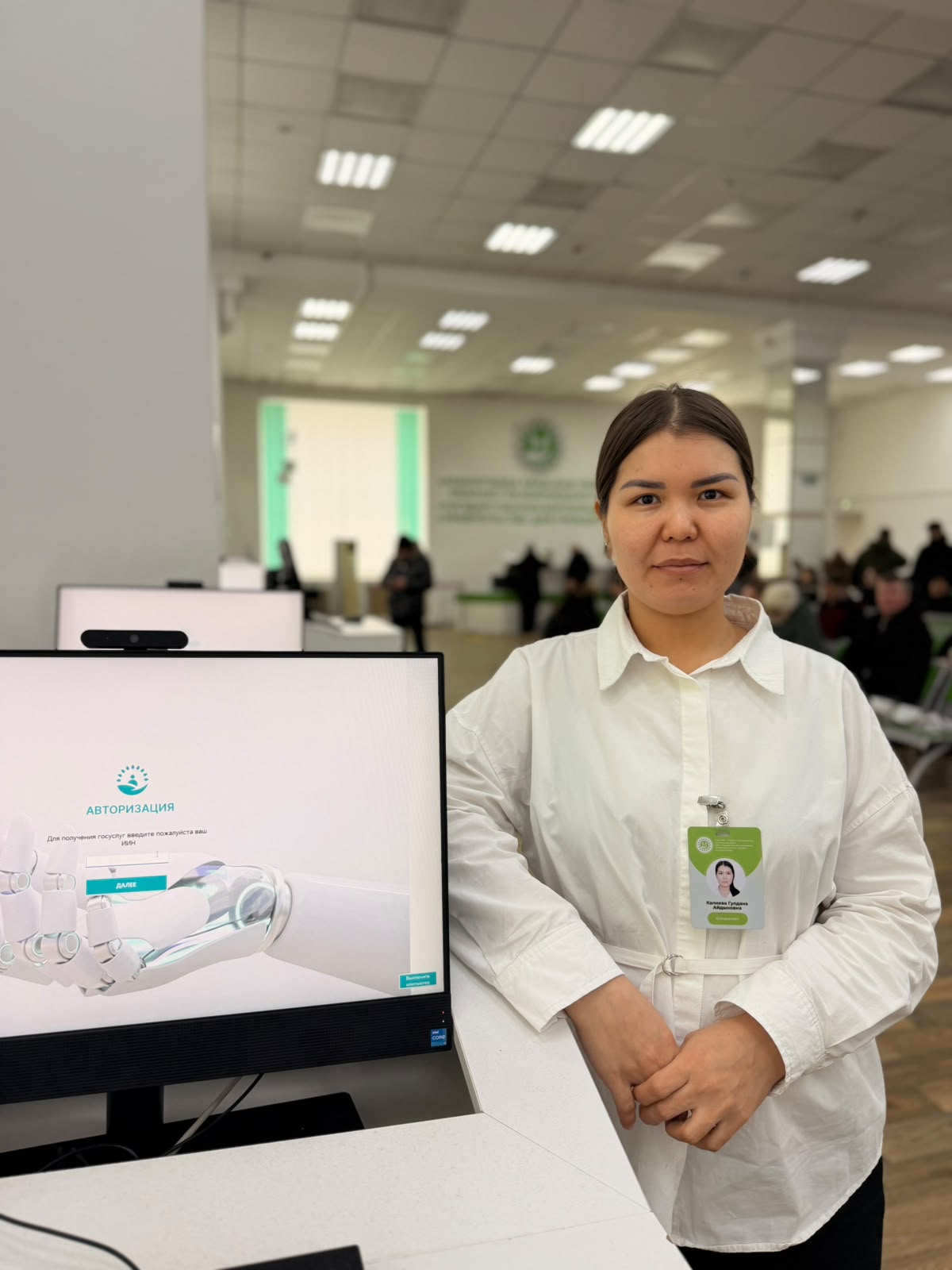
The "Government for Citizens" state corporation continues to expand options for residents of the Abai Region to access electronic government services independently. During the first seven months of 2026, citizens utilized "Connection Point" self-service sectors to obtain over 320,000 government services, while specialists provided more than 856,000 consultations.There are 14 "Connection Point" self-service sectors operating within Public Service Centers (PSC) across the Abai Region. Two sectors are located in the city of Semey, with the remainder situated in the region's district centers. Citizens of various ages—including adults and students—actively use these services.Among the most sought-after services are obtaining an electronic digital signature (EDS), Form No. 2 certificates, criminal record clearance certificates, certificates regarding registered real estate rights (and encumbrances), certificates confirming the presence or absence of real estate, as well as the issuance and revocation of registration certificates from the National Certification Authority of the Republic of Kazakhstan."Connection Point" self-service sectors enable citizens to access government services electronically on their own. Visitors can use the available computers and equipment, and may turn to specialists for assistance should any questions arise.Source : https://www.gov.kz/memleket/entities/abay-kurchatov/press/news/details/1287699?lang=ru
Procedure for Offsetting and Refunding Excessively Paid Taxes and Payments. 08.09.2026
In accordance with the Tax Code of the Republic of Kazakhstan, refunds of excessively (erroneously) paid amounts of taxes and payments to the budget are carried out by the state revenue authorities on the basis of a taxpayer’s tax application by transferring the funds to the bank account specified in the application.The form of the tax application for the offset and/or refund of taxes, payments to the budget, customs payments, penalties, interest and fines was approved by Order No. 637 of the Minister of Finance of the Republic of Kazakhstan dated October 28, 2025.Refunds of taxes and payments to the budget for which taxpayer’s personal accounts are maintained are carried out by the state revenue authority at the place where the personal accounts are maintained. Refunds of payments to the budget for which personal accounts are not maintained (state duty, registration fee) are carried out by the state revenue authority at the place where such payments were made.Please note that the public service “Offsetting and Refunds of Taxes, Payments to the Budget, Penalties and Fines” is not provided through the Unified Platform for Receiving and Processing All Citizens’ Appeals, e-Otinish.In order to ensure the timely refund of excessively (erroneously) paid amounts of taxes and payments to the budget, tax applications in the prescribed form must be submitted in one of the following ways:in paper form — through the Non-Profit Joint-Stock Company “State Corporation ‘Government for Citizens’”;electronically — through the eGov.kz digital government web portal or the “Taxpayer’s Cabinet” web application.Please take the above information into account when applying for a refund of excessively (erroneously) paid amounts of taxes and payments to the budget.Source : https://www.gov.kz/memleket/entities/kgd-astana/press/news/details/1287678?lang=ru
Mangystau DSR contacts 08.09.2026
Mangystau DSR contactsSource : https://www.gov.kz/memleket/entities/kgd-mangistau/press/news/details/1287645?lang=ru
Bodies, Agents and Subjects of Currency Control. 08.09.2026
Currency control in the Republic of Kazakhstan is exercised over residents, including financial organizations carrying out currency transactions, as well as non-residents carrying out currency transactions within the territory of the Republic of Kazakhstan (hereinafter referred to as the “subjects of currency control”).Currency control over financial organizations is exercised by the National Bank of the Republic of Kazakhstan. Currency control over other persons is exercised by the state revenue authority, the National Bank of the Republic of Kazakhstan and/or other currency control authorities within their respective competence.Source : https://www.gov.kz/memleket/entities/kgd-astana/press/news/details/1287623?lang=ru
Kazakhstan has launched the first administrative amnesty in its history. 08.09.2026
Introduced as part of the country’s constitutional and institutional reforms, the measure is expected to cover around one million eligible administrative fines. The process will be fully digital:• no application is required;• eligible cases will be identified automatically;• beneficiaries will be notified electronically or by SMS. The amnesty is intended to help citizens and individual entrepreneurs resolve liabilities arising from minor administrative offences. Court-imposed fines, repeat offences and violations affecting public safety, health or state interests are excluded. The amnesty will be implemented from 1 July to 31 December 2026.Source : https://www.gov.kz/memleket/entities/mfa-oslo/press/news/details/1287589?lang=ru
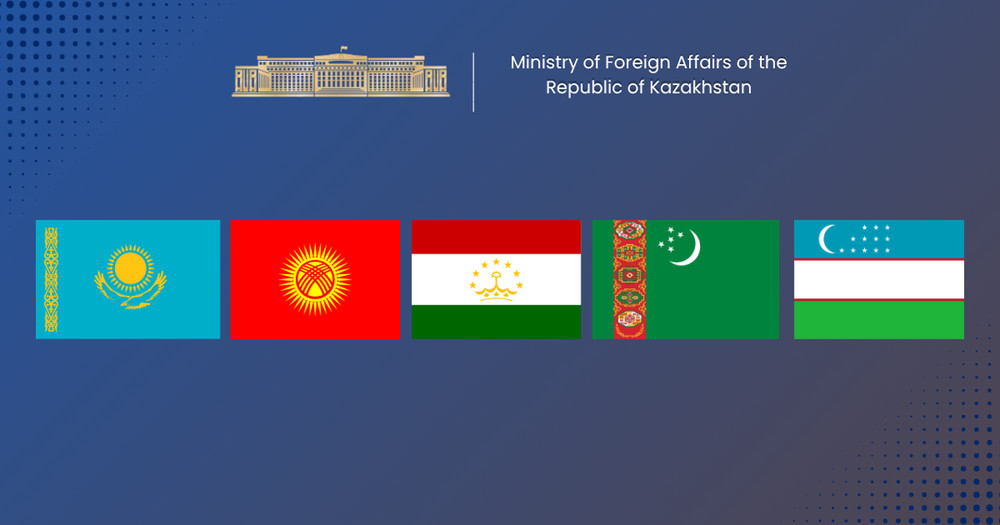
JOINT STATEMENT by the Ministers of Foreign Affairs of the States Parties to the Treaty on a Nuclear-Weapon-Free Zone in Central Asia on the occasion of the 20th anniversary of the signing of the Treaty 08.09.2026
We, the Foreign Ministers of the States Parties to the Treaty on a Nuclear-Weapon-Free Zone in Central Asia (hereinafter referred to as the “CANWFZ Treaty”), on the occasion of the 20th anniversary of the signing of the CANWFZ Treaty in Semipalatinskreaffirming our commitment to humanity’s common goal of achieving a world free of nuclear weapons, and recognizing the catastrophic humanitarian consequences of any use or testing of nuclear weapons,emphasizing that the establishment of nuclear-weapon-free zones is one of the most powerful universal tools for preventing the proliferation of nuclear weapons and strengthening the global disarmament process,noting the importance of the Treaty between the Republic of Kazakhstan, the Kyrgyz Republic, the Republic of Tajikistan, Turkmenistan, and the Republic of Uzbekistan on Friendship, Good-Neighborliness, and Cooperation for Development of Central Asia in the 21st Century in strengthening peace and security in the region,recalling that the idea of establishing a nuclear-weapon-free zone in Central Asia was first proposed by the Republic of Uzbekistan in September 1993 at the 48th session of the UN General Assembly,convinced that the establishment of a nuclear-weapon-free zone in Central Asia represents a successful example of the consolidation of efforts by the countries of the region, and emphasizing that this was an important step toward strengthening the nuclear nonproliferation regime and the process of nuclear disarmament, regional and international peace and security, as well as the development of cooperation in the peaceful uses of nuclear energy and the environmental rehabilitation of areas affected by radioactive contamination,welcoming the thirty-fifth anniversary of the closure of the Semipalatinsk Nuclear Test Site and the thirtieth anniversary of the opening for signature of the Comprehensive Nuclear-Test-Ban Treaty, and paying tribute to the memory of the numerous victims of nuclear explosions and their consequences in all regions of the world,we hereby declare the following:We reaffirm our commitment to the historically significant CANWFZ Treaty, signed by the Republic of Kazakhstan, the Kyrgyz Republic, the Republic of Tajikistan, Turkmenistan and the Republic of Uzbekistan on 8 September 2006, in Semipalatinsk. As the result of collective efforts of all five Central Asian states in their aspiration to ensure security, stability and peace in the region, and as it remains the first and only such zone located entirely in the Northern Hemisphere and directly bordering two nuclear-weapon States, the Semipalatinsk Treaty continues to play an important role in strengthening the global disarmament and non-proliferation regime and serves as a symbolic example of Central Asia’s transformation from a region where nuclear weapons were once actively tested and deployed into one of the leaders of global efforts toward nuclear disarmament.We reaffirm the key role of the Treaty on the Non-Proliferation of Nuclear Weapons (NPT) as the cornerstone of international efforts to prevent the proliferation of nuclear weapons and, ultimately, to achieve their complete elimination. In this regard, we regret that the Eleventh Review Conference of the States Parties to the NPT concluded without adopting substantive outcomes, reflecting continuing differences and a lack of trust in the field of nuclear disarmament and nonproliferation. We call on all NPT parties to continue negotiations in good faith on the effective implementation of obligations under all three interrelated and mutually reinforcing pillars – nuclear disarmament, nonproliferation, and the peaceful use of nuclear energy.In light of the urgent and unprecedented challenges threatening global security and stability, we express serious concern over the lack of substantial progress in the field of nuclear disarmament in accordance with Article 6 of the NPT, as well as the cessation of key arms control agreements, coupled with an alarming trend toward the modernization of nuclear arsenals. At the same time, we note the special responsibility of nuclear-weapon States to engage in negotiations on nuclear disarmament and call for the urgent development of new, verifiable arms control mechanisms to prevent a nuclear arms race.We affirm our unwavering support for the activities of the International Atomic Energy Agency (IAEA) in implementing the provisions of the NPT, promoting cooperation in the peaceful uses of nuclear energy, and applying safeguards and monitoring of nuclear programs in the Agency’s member states.We firmly advocate for the necessity of the earliest entry-into-force of the Comprehensive Nuclear-Test-Ban Treaty (CTBT) which will mark exactly thirty years since its opening for signature on 24 September 2026. In this regard, we emphasize the need to preserve and further strengthen the international norm against nuclear testing and call for refraining from any actions that could undermine this norm.We emphasize the important role of raising awareness on disarmament and non-proliferation in fostering a culture of peace, trust and responsibility, and note the particular importance of involving the youth in discussions on disarmament and international security. We support the continued promotion of the International Day for Disarmament and Non-Proliferation Awareness, initiated by the Kyrgyz Republic and symbolically observed annually on 5 March – the date the NPT entered into force – as well as related regional educational initiatives.In this regard, we note the relevance of the recommendations contained in the UN Study on Disarmament and Non-Proliferation Education, as well as the UN Secretary-General’s Agenda for Disarmament, “Securing Our Common Future: An Agenda for Disarmament.”We welcome the signing on 6 May 2014 by the nuclear-weapon States of the Protocol on Negative Security Assurances to the Treaty on the Central Asian Nuclear-Weapon-Free Zone and its ratification by four nuclear-weapon states, and we express our hope for the earliest completion of the ratification process for the Protocol by the United States of America.We express our interest in the institutional development of the CANWFZ Treaty and in expanding further partnerships with existing nuclear-weapon-free zones with the aim of strengthening the global nuclear non-proliferation regime and uniting international efforts to ensure peace and security. In this context, we welcome the signing of Memoranda of Understanding with the African Commission on Atomic Energy (AFCONE) and the Organization for the Prohibition of Nuclear Weapons in Latin America and the Caribbean (OPANAL), as well as the holding in Astana on August 28–29, 2024, under Kazakhstan’s chairmanship, of the second meeting of representatives of all existing nuclear-weapon-free zones.We note the great importance of strengthening regional security as a key factor for sustainable development and stability in Central Asia, and we reaffirm our intention to continue to cooperate closely in addressing common challenges and threats.We support efforts to establish new nuclear-weapon-free zones in regions where they do not currently exist, including in the Middle East.We welcome the adoption of the resolution “Treaty on a Nuclear-Weapon-Free Zone in Central Asia” at the 79th session of the UN General Assembly as well as the holding, of an anniversary meeting of the Treaty’s participating States in Ashgabat on 5 December 2024, under Turkmenistan’s chairmanship, with the participation of representatives of other existing nuclear-weapon-free zones and international organizations.Source : https://www.gov.kz/memleket/entities/mfa-hague/press/news/details/1291904?lang=ru
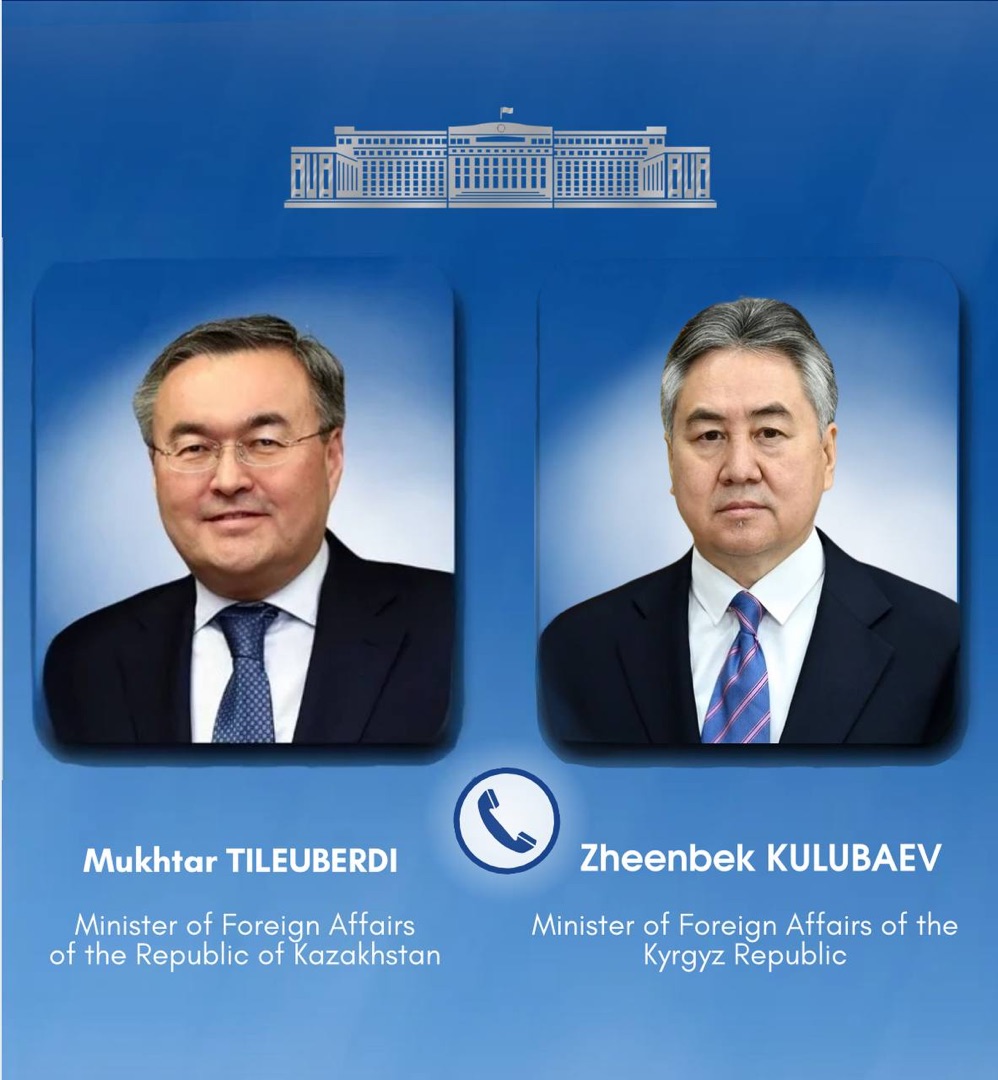
Foreign Ministers of Kazakhstan and Kyrgyzstan Discuss Further Development of Allied Relations 08.09.2026
Astana, September 8, 2026 – At the initiative of the Kyrgyz side, Minister of Foreign Affairs of the Republic of Kazakhstan Mukhtar Tileuberdi held a telephone conversation with Minister of Foreign Affairs of the Kyrgyz Republic Zheenbek Kulubaev. The Kyrgyz Foreign Minister warmly congratulated his Kazakh counterpart on his appointment to the high office and wished him every success in his responsible duties.During the conversation, the Ministers noted the steady development of the Kazakh-Kyrgyz allied relations. They expressed their mutual intention to further contribute to strengthening political dialogue and expanding cooperation in trade and economy, investment, transport and logistics, water and energy, as well as cultural and humanitarian spheres.The Ministers also discussed current issues on the regional and international agenda and reviewed the schedule of upcoming international events at the highest and high levels.Source : https://www.gov.kz/memleket/entities/mfa/press/news/details/1287543?lang=ru

JOINT STATEMENT by the Ministers of Foreign Affairs of the States Parties to the Treaty on a Nuclear-Weapon-Free Zone in Central Asia on the occasion of the 20th anniversary of the signing of the Treaty (September 8, 2026) 08.09.2026
We, the Foreign Ministers of the States Parties to the Treaty on a Nuclear-Weapon-Free Zone in Central Asia (hereinafter referred to as the “CANWFZ Treaty”), on the occasion of the 20th anniversary of the signing of the CANWFZ Treaty in Semipalatinskreaffirming our commitment to humanity’s common goal of achieving a world free of nuclear weapons, and recognizing the catastrophic humanitarian consequences of any use or testing of nuclear weapons,emphasizing that the establishment of nuclear-weapon-free zones is one of the most powerful universal tools for preventing the proliferation of nuclear weapons and strengthening the global disarmament process,noting the importance of the Treaty between the Republic of Kazakhstan, the Kyrgyz Republic, the Republic of Tajikistan, Turkmenistan, and the Republic of Uzbekistan on Friendship, Good-Neighborliness, and Cooperation for Development of Central Asia in the 21st Century in strengthening peace and security in the region,recalling that the idea of establishing a nuclear-weapon-free zone in Central Asia was first proposed by the Republic of Uzbekistan in September 1993 at the 48th session of the UN General Assembly,convinced that the establishment of a nuclear-weapon-free zone in Central Asia represents a successful example of the consolidation of efforts by the countries of the region, and emphasizing that this was an important step toward strengthening the nuclear nonproliferation regime and the process of nuclear disarmament, regional and international peace and security, as well as the development of cooperation in the peaceful uses of nuclear energy and the environmental rehabilitation of areas affected by radioactive contamination,welcoming the thirty-fifth anniversary of the closure of the Semipalatinsk Nuclear Test Site and the thirtieth anniversary of the opening for signature of the Comprehensive Nuclear-Test-Ban Treaty, and paying tribute to the memory of the numerous victims of nuclear explosions and their consequences in all regions of the world,we hereby declare the following:We reaffirm our commitment to the historically significant CANWFZ Treaty, signed by the Republic of Kazakhstan, the Kyrgyz Republic, the Republic of Tajikistan, Turkmenistan and the Republic of Uzbekistan on 8 September 2006, in Semipalatinsk. As the result of collective efforts of all five Central Asian states in their aspiration to ensure security, stability and peace in the region, and as it remains the first and only such zone located entirely in the Northern Hemisphere and directly bordering two nuclear-weapon States, the Semipalatinsk Treaty continues to play an important role in strengthening the global disarmament and non-proliferation regime and serves as a symbolic example of Central Asia’s transformation from a region where nuclear weapons were once actively tested and deployed into one of the leaders of global efforts toward nuclear disarmament.We reaffirm the key role of the Treaty on the Non-Proliferation of Nuclear Weapons (NPT) as the cornerstone of international efforts to prevent the proliferation of nuclear weapons and, ultimately, to achieve their complete elimination. In this regard, we regret that the Eleventh Review Conference of the States Parties to the NPT concluded without adopting substantive outcomes, reflecting continuing differences and a lack of trust in the field of nuclear disarmament and nonproliferation. We call on all NPT parties to continue negotiations in good faith on the effective implementation of obligations under all three interrelated and mutually reinforcing pillars – nuclear disarmament, nonproliferation, and the peaceful use of nuclear energy.In light of the urgent and unprecedented challenges threatening global security and stability, we express serious concern over the lack of substantial progress in the field of nuclear disarmament in accordance with Article 6 of the NPT, as well as the cessation of key arms control agreements, coupled with an alarming trend toward the modernization of nuclear arsenals. At the same time, we note the special responsibility of nuclear-weapon States to engage in negotiations on nuclear disarmament and call for the urgent development of new, verifiable arms control mechanisms to prevent a nuclear arms race.We affirm our unwavering support for the activities of the International Atomic Energy Agency (IAEA) in implementing the provisions of the NPT, promoting cooperation in the peaceful uses of nuclear energy, and applying safeguards and monitoring of nuclear programs in the Agency’s member states.We firmly advocate for the necessity of the earliest entry-into-force of the Comprehensive Nuclear-Test-Ban Treaty (CTBT) which will mark exactly thirty years since its opening for signature on 24 September 2026. In this regard, we emphasize the need to preserve and further strengthen the international norm against nuclear testing and call for refraining from any actions that could undermine this norm.We emphasize the important role of raising awareness on disarmament and non-proliferation in fostering a culture of peace, trust and responsibility, and note the particular importance of involving the youth in discussions on disarmament and international security. We support the continued promotion of the International Day for Disarmament and Non-Proliferation Awareness, initiated by the Kyrgyz Republic and symbolically observed annually on 5 March – the date the NPT entered into force – as well as related regional educational initiatives.In this regard, we note the relevance of the recommendations contained in the UN Study on Disarmament and Non-Proliferation Education, as well as the UN Secretary-General’s Agenda for Disarmament, “Securing Our Common Future: An Agenda for Disarmament.”We welcome the signing on 6 May 2014 by the nuclear-weapon States of the Protocol on Negative Security Assurances to the Treaty on the Central Asian Nuclear-Weapon-Free Zone and its ratification by four nuclear-weapon states, and we express our hope for the earliest completion of the ratification process for the Protocol by the United States of America.We express our interest in the institutional development of the CANWFZ Treaty and in expanding further partnerships with existing nuclear-weapon-free zones with the aim of strengthening the global nuclear non-proliferation regime and uniting international efforts to ensure peace and security. In this context, we welcome the signing of Memoranda of Understanding with the African Commission on Atomic Energy (AFCONE) and the Organization for the Prohibition of Nuclear Weapons in Latin America and the Caribbean (OPANAL), as well as the holding in Astana on August 28–29, 2024, under Kazakhstan’s chairmanship, of the second meeting of representatives of all existing nuclear-weapon-free zones.We note the great importance of strengthening regional security as a key factor for sustainable development and stability in Central Asia, and we reaffirm our intention to continue to cooperate closely in addressing common challenges and threats.We support efforts to establish new nuclear-weapon-free zones in regions where they do not currently exist, including in the Middle East.We welcome the adoption of the resolution “Treaty on a Nuclear-Weapon-Free Zone in Central Asia” at the 79th session of the UN General Assembly as well as the holding, of an anniversary meeting of the Treaty’s participating States in Ashgabat on 5 December 2024, under Turkmenistan’s chairmanship, with the participation of representatives of other existing nuclear-weapon-free zones and international organizations.Source : https://www.gov.kz/memleket/entities/mfa-budapest/press/news/details/1290379?lang=ru
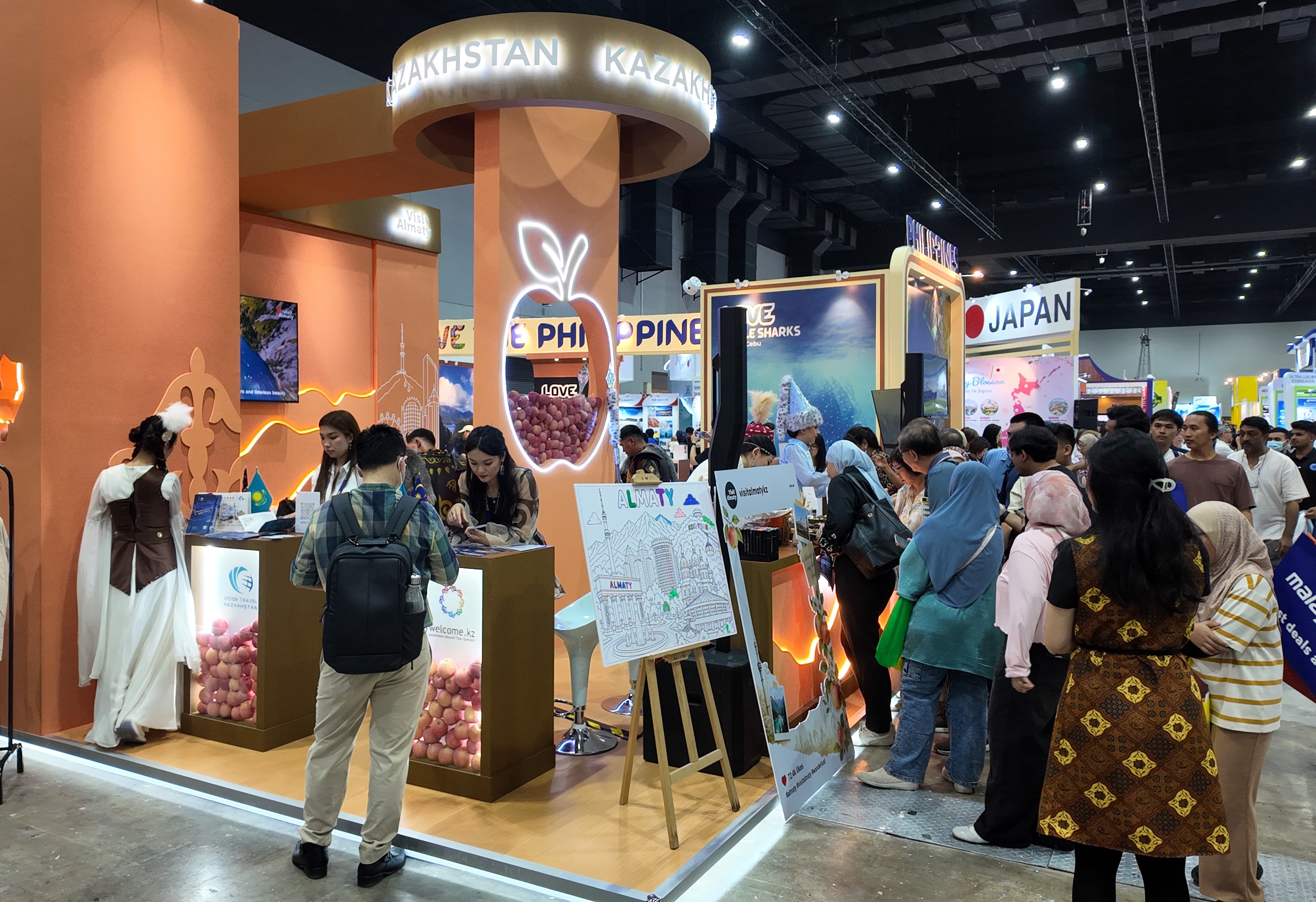
Almaty Pavilion Wins an Award at Malaysia’s MATTA Fair 2026 08.09.2026
Kuala Lumpur, 7 September 2026 – Almaty showcased its tourism potential at MATTA Fair 2026, Malaysia’s leading international tourism exhibition. Kazakhstan participated in the country’s largest tourism event for the first time, introducing Almaty and Kazakhstan’s diverse travel opportunities to the Malaysian market.The Visit Almaty pavilion emerged as one of the highlights of the exhibition. Its distinctive design, engaging programme and performances by a Kazakh creative ensemble attracted strong interest from Malaysian travellers and tourism industry professionals. Over the three-day exhibition, more than 10,000 registered visitors came to the pavilion to discover the tourism offerings of Almaty and the surrounding region, including its natural landscapes, cultural attractions, national cuisine and traditions.A vibrant cultural programme featuring musicians, dancers and Kazakh batyrs, along with traditional food tastings and displays of national handicrafts and souvenirs, presented Almaty as a destination where a dynamic modern city meets spectacular mountain scenery, rich cultural heritage and the timeless hospitality of the Great Steppe.Alongside its participation in the exhibition, Almaty Tourism Day was held in Kuala Lumpur to further promote Almaty as one of Central Asia’s most attractive destinations and strengthen tourism ties between Kazakhstan and Malaysia.The event brought together representatives of Malaysia’s Ministry of Tourism, Arts and Culture, Tourism Malaysia, the Malaysian Association of Tour and Travel Agents (MATTA), the Malaysian Association of Tour and Travel Agents (MATA), airlines and the wider tourism industry. The programme featured a presentation of Almaty’s tourism potential, remarks by tourism industry leaders, the signing of memoranda of understanding, business meetings and a cultural showcase.In his welcoming remarks, Ambassador of Kazakhstan to Malaysia Bulat Sugurbayev highlighted the importance of expanding tourism exchanges between the two countries. He noted that Kazakhstan’s first participation in MATTA Fair opens new opportunities to promote the country as a travel destination among Malaysian visitors.Secretary General of Malaysia’s Ministry of Tourism, Arts and Culture, Shaharuddin bin Abu Sohot, highlighted Almaty’s growing importance as a tourism hub, providing a gateway to other regions of Kazakhstan and destinations across Central Asia.One of the key outcomes of Almaty Tourism Day was the signing of a Memorandum of Understanding between the Tourism Department of the Almaty City Akimat and the Malaysian Association of Tour and Travel Agents. The agreement is aimed at strengthening cooperation in tourism promotion, information exchange, professional networking and business collaboration between the tourism industries of Kazakhstan and Malaysia.MATTA President Nigel Wong highlighted the strong interest generated by the Kazakh pavilion and announced that the Almaty pavilion had received an award for Best Cultural Programme.More than 50 Kazakh and Malaysian tourism companies took part in business meetings held on the sidelines of Almaty Tourism Day, creating new opportunities for partnerships and the development of joint tourism products.The cultural programme introduced guests to traditional Kazakh music, performances on the dombra and kobyz, national dances and vocal traditions. The performances offered visitors an opportunity to experience Kazakhstan’s rich cultural heritage and the spirit of hospitality of the Great Steppe.Almaty Tourism Day marked another important step in Kazakhstan’s active promotion in one of Southeast Asia’s key tourism markets. Held on the sidelines of MATTA Fair 2026, the event demonstrated the shared interest of Kazakhstan and Malaysia in further expanding tourism cooperation, strengthening business ties and opening new opportunities for travellers.Source : https://www.gov.kz/memleket/entities/mfa-kuala-lumpur/press/news/details/1287479?lang=ru
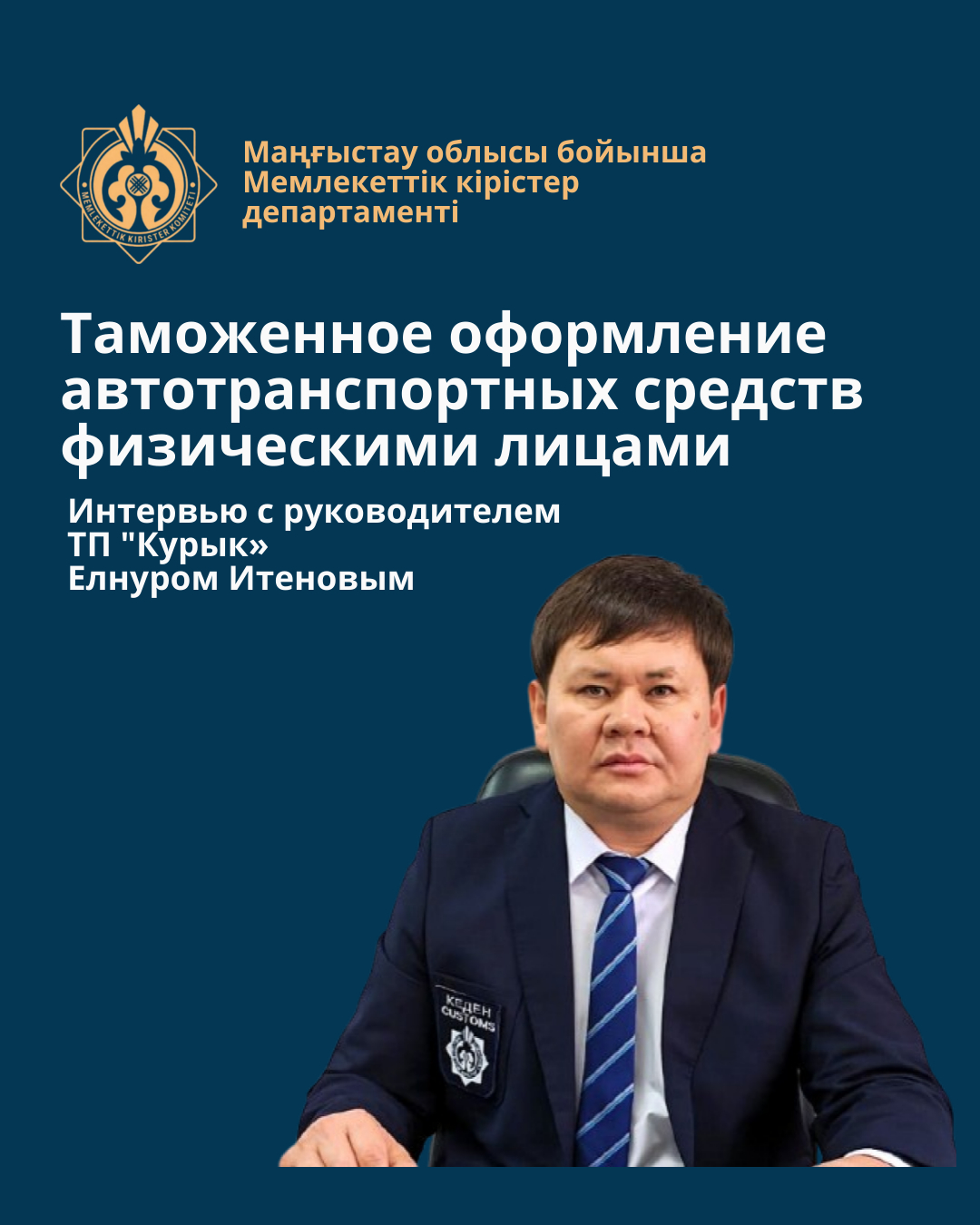
Customs clearance of motor vehicles imported by individuals 08.09.2026
Interview with Elnur Itenov, Head of the Kuryk Customs Post— Elnur, what is the role of the Kuryk customs post in vehicle imports? Itenov: The Kuryk customs post is located at the seaport of Kuryk and operates around the clock. Cars and cargo arrive here on ferries and Ro-Ro vessels, including from the Caucasus direction. For individuals, this is one of the sea routes for bringing a vehicle onto the customs territory of the Eurasian Economic Union. We carry out customs control, declaration, risk management and release of the vehicle in line with the law.— How does clearance for an individual differ from a commercial import? Itenov: An individual imports a car for personal use. Such a vehicle is declared with a passenger customs declaration through the Keden information system. A commercial import follows a different track: a goods declaration, different rates and requirements. Importantly, if a person brings in more than one vehicle in a calendar year, the customs authority may treat this as activity that is not personal use. In that case the rules for business activity apply.— What documents does a citizen need at the post? Itenov: The basic set is: an identity document; vehicle papers — a registration certificate or equivalent title; a sale-purchase contract, invoice or other proof of acquisition and value; documents confirming ownership or the right to dispose of the vehicle; transport documents — a bill of lading or ferry waybill. If the car comes from a third country, route documents are required. VIN, body number, year of manufacture, engine capacity and the parties’ details must match across all papers. Inconsistencies are one of the main reasons for delayed release.— What does the procedure at Kuryk look like step by step? Itenov: After leaving the ferry, the vehicle goes through radiation control, weighing if required, and inspection, including the inspection and screening complex. Then a passenger customs declaration is filed in the clearance building. An officer checks the documents and identification numbers and applies risk profiles. A customs examination may follow. After assessment and payment of customs duties, taxes and the customs processing fee, the car is released. The owner must then register the vehicle with the competent authority within the statutory period — generally within ten working days after the customs operations related to release.— What payments does an individual make when clearing a passenger car? Itenov: The set of charges is standard. First, import customs duty. For most petrol and diesel passenger cars imported by individuals, the rates are those set by Decision No. 107 of the EEC Council of 20 December 2017. According to clarifications by the State Revenue Committee, a 15 percent rate of customs value still applies to a large share of cars up to seven years old. Older cars are charged specific rates in euro per cubic centimetre of engine capacity. Second, value-added tax at 16 percent of the tax base, which includes customs value and duty. Third, the customs processing fee — six monthly calculation indices. Separately, after customs release, the recycling (utilisation) fee and the primary state registration fee are payable. Their amount depends on category, age and engine type. Electric vehicles have separate preferential regimes, but quotas and conditions must be checked on the date of import.— Can a car be brought in temporarily without full clearance? Itenov: Yes. A vehicle registered abroad may be temporarily imported by an individual with relief from customs duties and taxes for the period provided by law. In practice a period of up to 90 days is often cited for certain categories of international movement and temporary admission. The term and conditions depend on the person’s status and the regime. Temporary admission does not replace release for personal use. If a citizen intends to operate the car permanently in Kazakhstan and register it, full customs clearance is required.— Where do people most often go wrong? Itenov: First, an incomplete or inconsistent set of documents, especially on value and title. Second, an attempt to understate customs value. The risk-management system and price information detect this; value is adjusted, charges are recalculated, and liability may follow. Third, bringing in several cars “for personal use” in one year. Fourth, not realising that after customs one still needs a vehicle construction safety certificate, an electronic vehicle passport, the recycling fee and registration. Since 20 October 2025, under an EAEU decision, individuals cannot obtain the safety certificate for certain types of vehicles that are not on the approved list. Such cars cannot be fully cleared and registered. Fifth, confusion between the national tariff and the EAEU Common Customs Tariff. If a car was cleared at a lower national rate, taking it later to another Union state may require payment of the difference.— How does the post address grey imports and smuggling? Itenov: We use risk management, examination, screening complexes, and cooperation with the Border Service, the transport prosecutor’s office and economic investigation bodies. The post’s record shows that concealed goods in trucks have been detected more than once, involving tens of millions of tenge in unpaid charges. For cars, control is built on VIN identification, database checks and analysis of the document chain. A compliant declarant benefits: a legal vehicle moves faster.— What would you advise a Mangystau resident planning to import a car via Kuryk? Itenov: Prepare the papers before boarding the ferry. Check the VIN on every document. Value the car realistically, using the contract and market data. File the declaration in Keden without errors. Allow time for inspection and payment. Remember the one-car-per-year rule for personal use. After release, do not delay the safety certificate, the electronic passport, the recycling fee and registration. Advice is available from the state revenue contact centre and from information boards at the post. Our job is not to put a barrier in front of a law-abiding person, but to apply equal and transparent rules for everyone.— Has the post gone digital? Itenov: Yes. Electronic declaration, integration with the Keden platform, screening complexes and elements of a single window reduce face-to-face contact and queues. The port and the post operate 24 hours a day. The digital trail of the transaction protects both the budget and the vehicle owner.Interview prepared by the Department of State Revenues for the Mangystau Region.Source : https://www.gov.kz/memleket/entities/kgd-mangistau/press/news/details/1287471?lang=ru

Cucumber prices in Ust-Kamenogorsk have halved 08.09.2026
In Ust-Kamenogorsk, prices for socially important food products have generally remained stable since the beginning of the year. At the same time, a significant decrease in prices is noted for certain types of products. Thus, in the city, the price of cucumbers decreased by 51% and became half the level of the beginning of the year. Tomatoes also fell in price by 45%.The Department of Trade and Consumer Protection of the East Kazakhstan Region, based on data from the Bureau of National Statistics, conducted an analysis of price changes for January–August 2026. According to its results, the overall price index for socially important food products in Ust-Kamenogorsk amounted to 101.0%. This is lower than the national average (101.4%).The most noticeable price decrease is observed for vegetable products. In addition to cucumbers and tomatoes, the price of polished rice has decreased by 6.7% since the beginning of the year. At the same time, the price of wheat bread made from first-grade flour remained at the January level — the index amounted to 100.0%.The cost of bone-in beef has remained virtually unchanged since the beginning of the year — the index amounted to 100.7% (an increase of only 0.7%). The price of poultry meat also remains stable — index 100.2%.At the same time, due to the transition to the new harvest, a seasonal price increase is observed for a number of vegetables. Carrots rose in price by 57.4%, onions — by 51.4%, potatoes — by 30.9%. The price of lamb increased by 19.5%, minced meat — by 9.1%. Butter rose in price by 3.2%, hard cheese — by 1.1%.To reduce the impact of seasonal changes on the market, work is underway in the region to form food reserves. In particular, replenishment of the stabilization fund is envisaged through direct purchases of the new harvest of potatoes, onions, cabbage, and carrots from local farmers. The collected products will be used in the autumn-winter period to provide the market with necessary goods and prevent sharp price increases.In order for residents to be able to purchase products directly from producers and at affordable prices, farmers' fairs are also regularly held in the region. Here, goods are offered at prices 15–20% lower than in stores. Since the beginning of the year, 421 fairs have been held in the region.To prevent unjustified price increases, control in retail facilities has also been strengthened. Monitoring of compliance with the established 15% maximum trade markup on socially important food products is carried out on an ongoing basis. Based on the results of control, 75 administrative measures have been applied against entrepreneurs who committed violations.In addition, as a result of the work of the regional commission, more than 10 unproductive intermediaries have been excluded from the supply chain of goods. This allows reducing unjustified markups on the way from producer to consumer and lowering the final cost of products.Source : https://www.gov.kz/memleket/entities/mti/press/news/details/1287431?lang=ru

Good news! 08.09.2026
At the VI World Nomad Games, the Kazakhstan national team won the long-distance horse race — 300 kilometers. Akim of Kostanay region Kumar Aksakalov personally congratulated our fellow countryman Yesen Akhmet, who was part of the Kazakh riders' team.«This competition, requiring several days of incredible endurance and perseverance from the riders, became a true test. The athletes demonstrated outstanding results thanks to their skill and determination. This victory — is a great achievement that has strengthened our country's prestige. May the winning path continue, and may our blue flag always proudly fly high!» — the head of the region noted in his congratulations.Kumar Aksakalov wished the riders and coaches good health, great success, and new achievements.Source : https://www.gov.kz/memleket/entities/kostanay/press/news/details/1287324?lang=ru

Almas Zhumagali is the silver medalist of the VI World Nomad Games! 08.09.2026
Akim of Kostanay region Kumar Aksakalov congratulated our fellow countryman Almas Zhumagali on his high achievement — a silver medal won at the VI World Nomad Games in Kyrgyz wrestling in the weight category over 100 kg.Almas Zhumagali – is a renowned wrestler who contributes to the development of national sports and has repeatedly achieved victories on the mat. He has participated several times in the republican tournament «Kazakhstan Barysy», honorably defending the honor of Kostanay region.«This award on the international stage – is the result of the athlete's persistence and hard work, as well as the support and trust of his coaches and fellow countrymen. I wish Almas great success and new victories in upcoming competitions!» – noted the head of the region in his congratulatory message.Source : https://www.gov.kz/memleket/entities/kostanay/press/news/details/1287318?lang=ru

TAX DEDUCTIONS IN DECLARATION 270.00: KEY RULES AND THE TRANSITION PERIOD 08.09.2026
Due to the reform of tax legislation, the mechanism for applying tax deductions for individuals is undergoing fundamental updates. The procedure involving preliminary deductions of up to 282 MCI applied with an employer and subsequently recorded in Declaration 270.00 is a transitional rule established exclusively for the year 2025. For income earned in 2025, a temporary framework for preliminary "other" deductions applies, which covers expenses for education, medical care, mortgage interest, and voluntary pension contributions. During 2025, an employee was entitled to apply a preliminary deduction with their employer based on a written application—without presenting receipts or contracts—in an amount not exceeding 282 MCI per year or up to 23.5 MCI per month. However, deductions for education, medical treatment, or mortgage interest cannot exceed 118 MCI for each individual category, while the total annual deduction cap across all categories is 564 MCI. Individuals who utilized preliminary deductions with their employer in 2025 are required to submit the Declaration of Income and Assets (Form 270.00) by September 15, 2026. The primary requirement is that all deductions claimed in the declaration must be strictly supported by documentation—such as contracts, receipts, and payment slips—which must be retained throughout the statute of limitations period. Under this framework, if the deduction amount in a given month exceeds the monthly salary, any unused balance cannot be carried forward to the following month and is forfeited. If the declaration results in an excess personal income tax (PIT) amount refundable from the budget, the tax authorities will conduct a compliance check regarding the eligibility of the deductions claimed, and refunds for 2025 tax liabilities will be processed up to September 15, 2027. Starting January 1, 2026, the procedure for claiming preliminary "other" deductions via employer applications and receipt collection will cease to operate. The new Tax Code simplifies tax administration by introducing a single fixed tax deduction of 30 MCI for all categories of citizens. Consequently, the preliminary deduction mechanism of up to 282 MCI serves as a one-off tool applicable only to 2025 income. Citizens who applied for such deductions with their employers during 2025 must ensure they keep all supporting receipts and documents to report them in Declaration 270.00 by September 15, 2026.Source : https://www.gov.kz/memleket/entities/kgd-zhetysu/press/news/details/1287244?lang=ru

В Казахстане в пилотном режиме запущены Центры поддержки и сопровождения бизнеса 08.09.2026
АО «ФРП «Даму» запустил работу пилотных Центров поддержки и сопровождения бизнеса в Астане, Алматы, Шымкенте, Северо-Казахстанской и Актюбинской областях.Фонд «Даму» рассматривает возможность расширения формата работы и внедрения механизма комплексного сопровождения бизнеса. Такой подход позволит обеспечить предпринимателям более удобное взаимодействие с государственными органами, финансовыми институтами и другими организациями при решении вопросов, связанных с развитием бизнеса.В рамках пилотного проекта планируется объединить имеющуюся инфраструктуру, экспертизу и инструменты поддержки, а также взаимодействие с организациями Холдинга «Байтерек» в рамках Единого фронт-офиса. Механизм предполагает сопровождение предпринимателей на всех этапах - от диагностики проблемы до ее урегулирования.Работа Центров построена следующим образом: предприниматель обращается в региональный филиал Фонда «Даму», где специалисты проводят первичную диагностику ситуации, определяют возможные механизмы ее решения и формируют дальнейший маршрут сопровождения. В зависимости от характера обращения к работе с кейсом подключаются профильные государственные органы, финансовые институты, местные исполнительные органы и организации группы Холдинга «Байтерек». Фонд «Даму» координирует взаимодействие между участниками и сопровождает предпринимателя до получения решения по его вопросу. Таким образом, предпринимателю не требуется самостоятельно обращаться в каждое ведомство по отдельности.В рамках пилотного проекта основное внимание будет уделено вопросам, которые непосредственно влияют на финансовую устойчивость и продолжение деятельности бизнеса.В частности, предприниматели смогут получить содействие по вопросам:реструктуризации задолженности и доступа к финансированию;получения мер государственной поддержки;урегулирования налоговой задолженности;восстановления доступа к рынкам сбыта и продвижения продукции;развития предпринимательских компетенций;государственной поддержки и финансирования субъектов АПК.Такие направления были определены на основе анализа более 2,4 тыс. проблемных обращений субъектов МСБ из реестра НПП «Атамекен». Более 600 из них поступили из пяти регионов, где реализуется пилотный проект. Наиболее часто предприниматели обращались по вопросам финансирования и реструктуризации задолженности, получения мер господдержки, налогообложения, сбыта продукции и развития бизнеса.Главный критерий - решенный вопросВ отличие от традиционного консультационного формата, эффективность Центров будет оцениваться прежде всего по результату. Ключевым показателем станет доля урегулированных обращений предпринимателей, а также содействие в восстановлении доступа бизнеса к финансированию и рынкам сбыта, решении проблемных кредитов и налоговых вопросов, соблюдении сроков рассмотрения обращений.Одновременно Центры будут формировать аналитику по повторяющимся проблемам бизнеса. Это позволит выявлять системные барьеры и вырабатывать предложения по совершенствованию действующих мер поддержки и законодательства.Пилотный проект продлится до конца 2026 года. По его итогам будет проведена оценка эффективности нового механизма и подготовлены предложения по его дальнейшему масштабированию на другие регионы страны.Обратиться в Центр поддержки и сопровождения бизнеса можно в региональных филиалах Фонда «Даму» в пяти пилотных регионах. Адреса и контактные данные региональных филиалов доступны на официальном сайте Фонда. Также информацию можно получить в Едином контакт-центре по номеру 1408.Source : https://www.gov.kz/memleket/entities/economy/press/news/details/1287250?lang=ru
Japanese Food Production Technologies to Be Introduced in Kazakhstan 08.09.2026
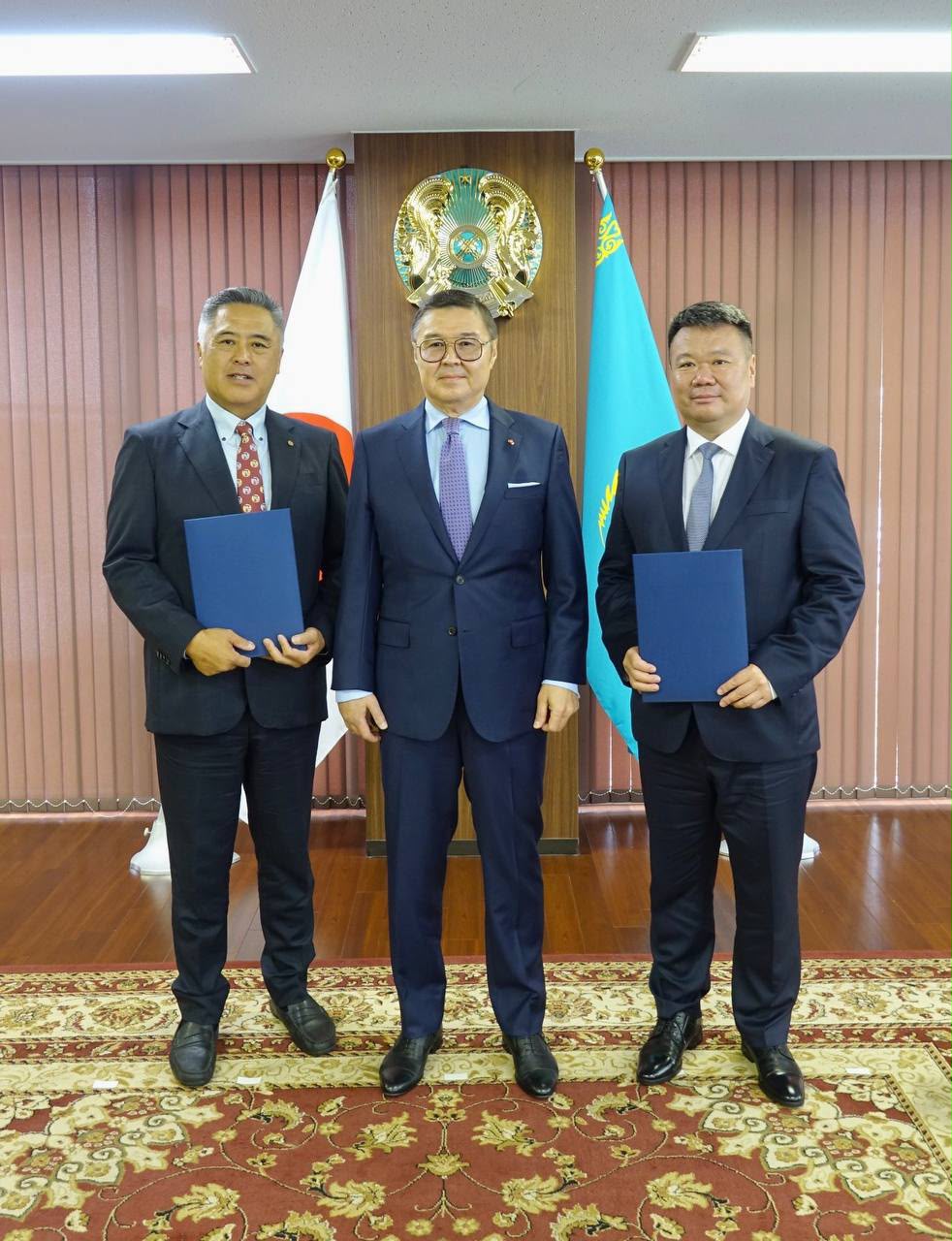
Tokyo, September 8, 2026 - A signing ceremony for an agreement to establish a joint venture between the Kazakhstani company “Shin-Line” and the Japanese company “Shigemitsu Industry”, which specializes in food production and restaurant business development, was held at the Embassy of the Republic of Kazakhstan in Japan.The agreement was signed on behalf of the Kazakhstani side by Andrey Shin, Chairman of the Board of Directors of “Shin-Line”, and on behalf of the Japanese side by Katsuaki Shigemitsu, President of “Shigemitsu Industry”.The alliance is aimed at developing the well-known Japanese brand AJISEN RAMEN in Kazakhstan and subsequently expanding it into the markets of countries across the region. A key area of cooperation will be the phased localization of “Shigemitsu Industry”’s production in the Republic of Kazakhstan, using advanced Japanese technologies and production standards while taking HALAL requirements into account. At the first stage, the parties plan to establish a centralized production facility at the “Shin-Line” site in Baiserke village, Almaty Region, and open the brand’s first flagship restaurant in Almaty.Speaking at the ceremony, Ambassador Yerlan Baudarbеk-Kozhataev noted that the project represents a practical result of the expansion of Kazakh-Japan economic cooperation in non-resource sectors. In his view, the launch of the enterprise will contribute to attracting Japanese technologies and management expertise, developing the food industry, and creating new jobs.In the future, the parties plan to expand the network across Central Asian countries and, in the longer term, are considering entering the markets of the EAEU, the Caucasus and Eastern Europe. Localizing production in Kazakhstan will create opportunities to supply both the domestic market and potential network outlets in neighboring countries.For the Japanese side, the project offers wide opportunities to promote the brand in the Central Asian region and to use Kazakhstan as a key production and logistics hub.Background: Shigemitsu Industry traces its history back to 1968 and has extensive experience in food production and the restaurant business. The company is engaged in international franchising, food production, personnel training, and the development of new products.Source : https://www.gov.kz/memleket/entities/mfa-tokyo/press/news/details/1287217?lang=ru
Investment in Fixed Capital in the Capital Increases by 2.7% 07.09.2026
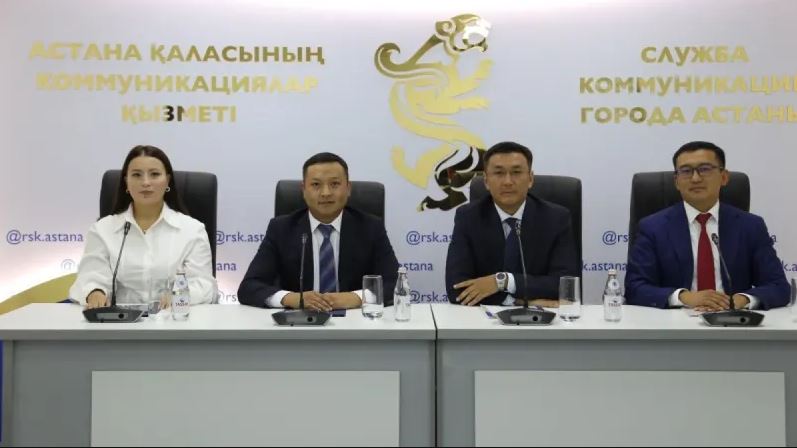
The Astana City Department for Investment and Entrepreneurship Development has presented the results of its activities. Astana continues to strengthen its position as one of Kazakhstan’s leading investment and industrial centers. Despite the capital’s large-scale infrastructure challenges and rapid pace of development, the city continues to demonstrate sustained investment activity and positive dynamics in industrial production.The results were presented at a briefing held at the Astana City Communications Service by Nurzhan Ashimov, Deputy Head of the Astana City Department for Investment and Entrepreneurship Development; Yerlan Yerzhanov, Deputy Chairman of the Management Board of Astana Development Center JSC; and Sabit Mukhamedzhanuly, Deputy Chairman of Astana Invest City Investment Development Center LLP. For more details, see the article “Investment in Fixed Capital in the Capital Increases by 2.7%” published by Astana Aqshamy: https://www.astana-akshamy.kz/news/elordada-negizgi-kapitalga-salyngan-investiciialar-kolemi-27-ga-ulgaidySource : https://www.gov.kz/memleket/entities/astana-uir/press/news/details/1287192?lang=ru
Damu Fund Holds Open Day in Astana 07.09.2026
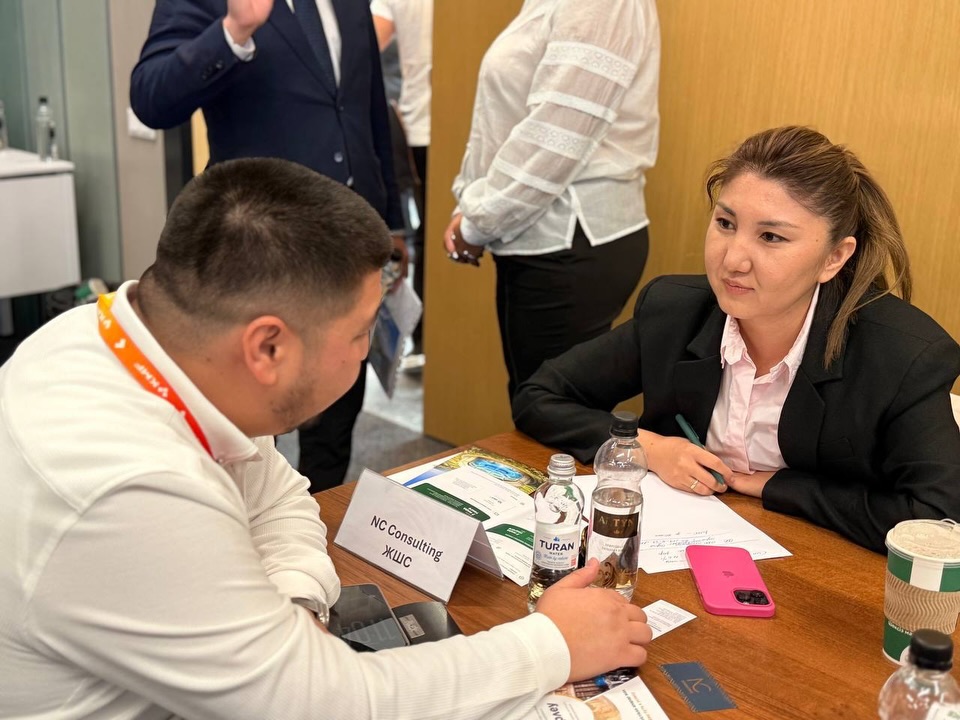
More than 180 entrepreneurs received consultations as part of the Damu Fund’s Open Day in Astana. The event brought together entrepreneurs, the Fund’s management and specialists, representatives of the Astana City Department for Investment and Entrepreneurship Development, the city’s Department of State Revenue, banks, and consulting companies engaged by the Fund. The meeting focused on the existing government support instruments available to businesses.“We have been holding Open Days across all regions of the country for the second consecutive year. For us, this is primarily an opportunity to receive direct feedback from entrepreneurs, remain as open as possible, listen to their needs, and better understand the issues businesses are facing today. That is why the management of the Damu Fund takes an active part in these events and personally provides consultations to entrepreneurs. This allows us to identify information gaps and address them promptly,” said Farkhat Sarsekeyev, Chairman of the Management Board of the Damu Fund.Participants were introduced to existing financial and non-financial support measures and informed about the work of the single front office and mobile front offices. Following the general session, participants had the opportunity to receive individual consultations and speak directly with representatives of relevant development institutions, banks, and government agencies.The Damu Fund’s Open Days are held across all regions of Kazakhstan. Information about upcoming events and the schedule of mobile front offices is published on the Damu Fund’s official website and social media channels. Entrepreneurs can also receive consultations by contacting the Unified Contact Center at 1408.Source : https://www.gov.kz/memleket/entities/astana-uir/press/news/details/1287194?lang=ru
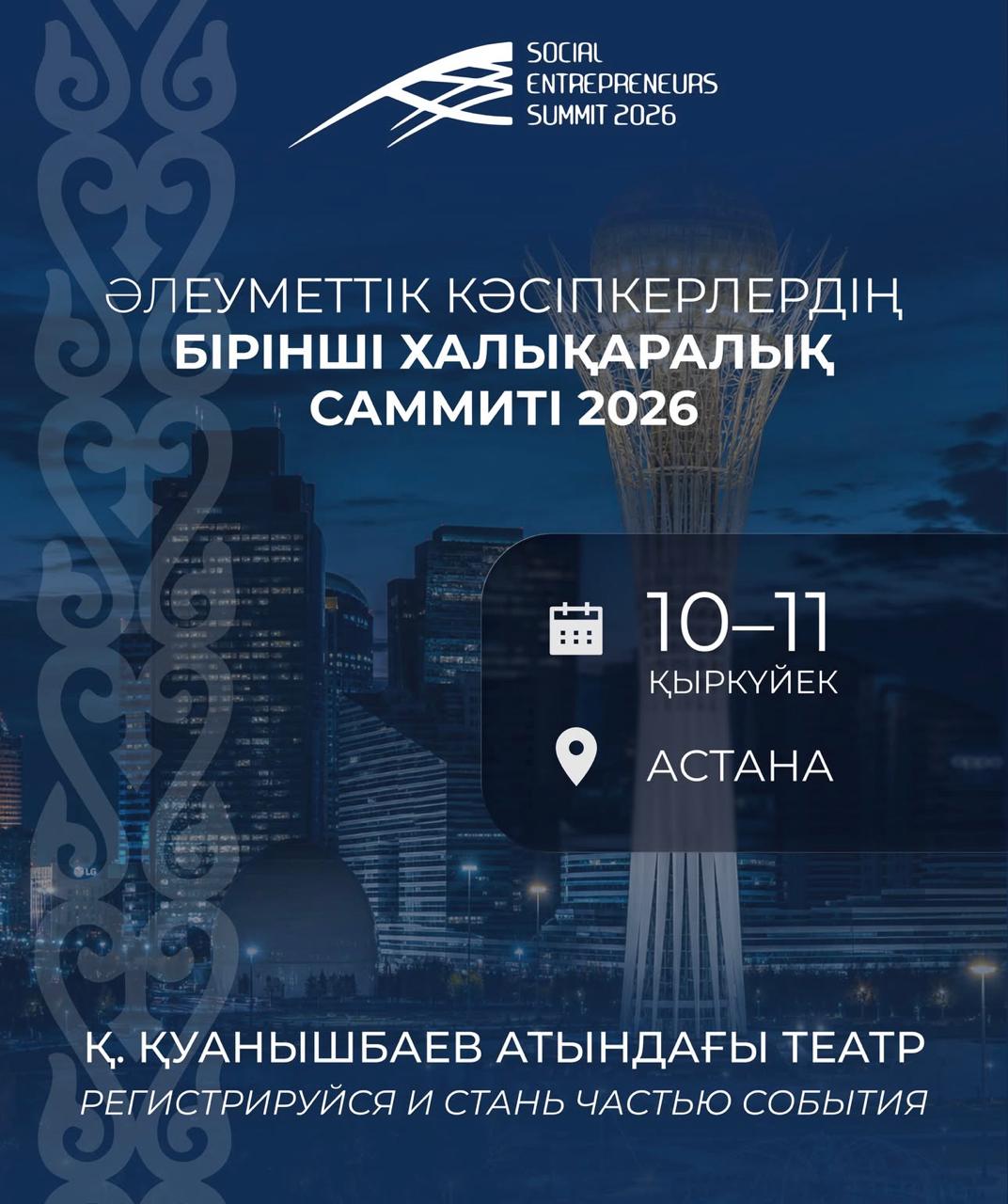
Astana to Host First International Summit of Social Entrepreneurs 07.09.2026
On September 10–11, Astana will become a platform for dialogue, new ideas, and partnerships in the field of social entrepreneurship.The international summit “Social Investment for a Sustainable Future” will bring together around 700 participants from Kazakhstan and abroad, including social entrepreneurs, investors, and representatives of government agencies, international organizations, and development institutions.The summit will focus on social investment, sustainable business models, international cooperation, and new opportunities for the development of social entrepreneurship.Participants and experts will include representatives of the European Bank for Reconstruction and Development (EBRD), the World Bank, the United Nations Development Programme (UNDP), as well as international organizations and diplomatic missions.One of the key events of the summit will be the awards ceremony for the winners of the national competition “Best Social Entrepreneur – 2026.”The summit will also feature:Ethnic Heritage Fair — a fair showcasing products by social entrepreneurs inspired by ethnic traditions; Information Fair — an exhibition of support and development programs; the “Alem ainasy” photo exhibition; panel sessions, meetings, and discussions featuring international experts. https://www.instagram.com/p/Dc4MpuRMFdM/ Source : https://www.gov.kz/memleket/entities/astana-uir/press/news/details/1287195?lang=ru

The Republic Of Kazakhstan successfully completes second issuance of sovereign panda bonds 07.09.2026
Today, September 7 of this year, the Ministry of Finance of the Republic of Kazakhstan successfully completed its second issuance of sovereign Panda bonds on the Chinese stock market, in a total volume of RMB 6.6 billion. The Panda bonds were placed in two tranches: a 3-year tranche at a coupon rate of 1.82% per annum in the amount of RMB 5 billion, and a 5-year tranche at a coupon rate of 1.95% per annum in the amount of RMB 1.6 billion.Kazakhstan has once again secured financing in the Chinese market on terms comparable to those available to countries with higher "A" category credit ratings. The strong investor interest reflects a positive assessment of the economic and structural reforms being pursued in Kazakhstan, aimed at diversifying and strengthening the resilience of the economy.The issuance follows the upgrade of Kazakhstan's sovereign credit rating by S&P from "BBB-" to "BBB" with a "Stable" outlook, reflecting sustainable growth prospects and a low level of government debt, which stands at 20.9% of GDP. External government debt stands at 4.5% of GDP, one of the lowest levels in the world.The placement took place against the background of further strengthening of a comprehensive strategic partnership between Kazakhstan and China. The partnership has acquired an unprecedentedly high level, covering almost all key areas - from trade and investment to energy, transport, industrial cooperation and digitalization. Deepening cooperation in the capital markets, including through the entry of Kazakhstani issuers into the Chinese market, serves as a practical reflection of this course.The placement took place against the backdrop of the further strengthening of the comprehensive strategic partnership between Kazakhstan and China. The partnership has reached an unprecedentedly high level, encompassing virtually all key areas — from trade and investment to energy, transport, industrial cooperation, and digitalization. The deepening of cooperation in capital markets, including through the entry of Kazakhstani issuers into the Chinese market, serves as a practical reflection of this course.The steady expansion of Kazakhstan's presence in international capital markets contributes to broadening funding sources, diversifying the debt portfolio, and building sustainable access to a diverse range of investors. The Ministry of Finance will continue to pursue a balanced approach to sovereign borrowing, taking into account market conditions and the objectives of effective public debt management. This placement of three-year and five-year tranches further contributes to the development of Kazakhstan's sovereign yield curve in Chinese renminbi and establishes a benchmark for future issuances by Kazakhstani quasi-sovereign and corporate issuers.China International Capital Corporation Limited (CICC) acted as Lead Global Coordinator for the issuance. China Construction Bank Limited (CCB), Industrial and Commercial Bank of China Limited (ICBC), The Export-Import Bank of China, and Bank of China Limited (BOC) served as Joint Lead Managers. Teniz Capital Investment Banking JSC acted as local manager for the transaction. Source : https://www.gov.kz/memleket/entities/minfin/press/news/details/1287189?lang=ru