World
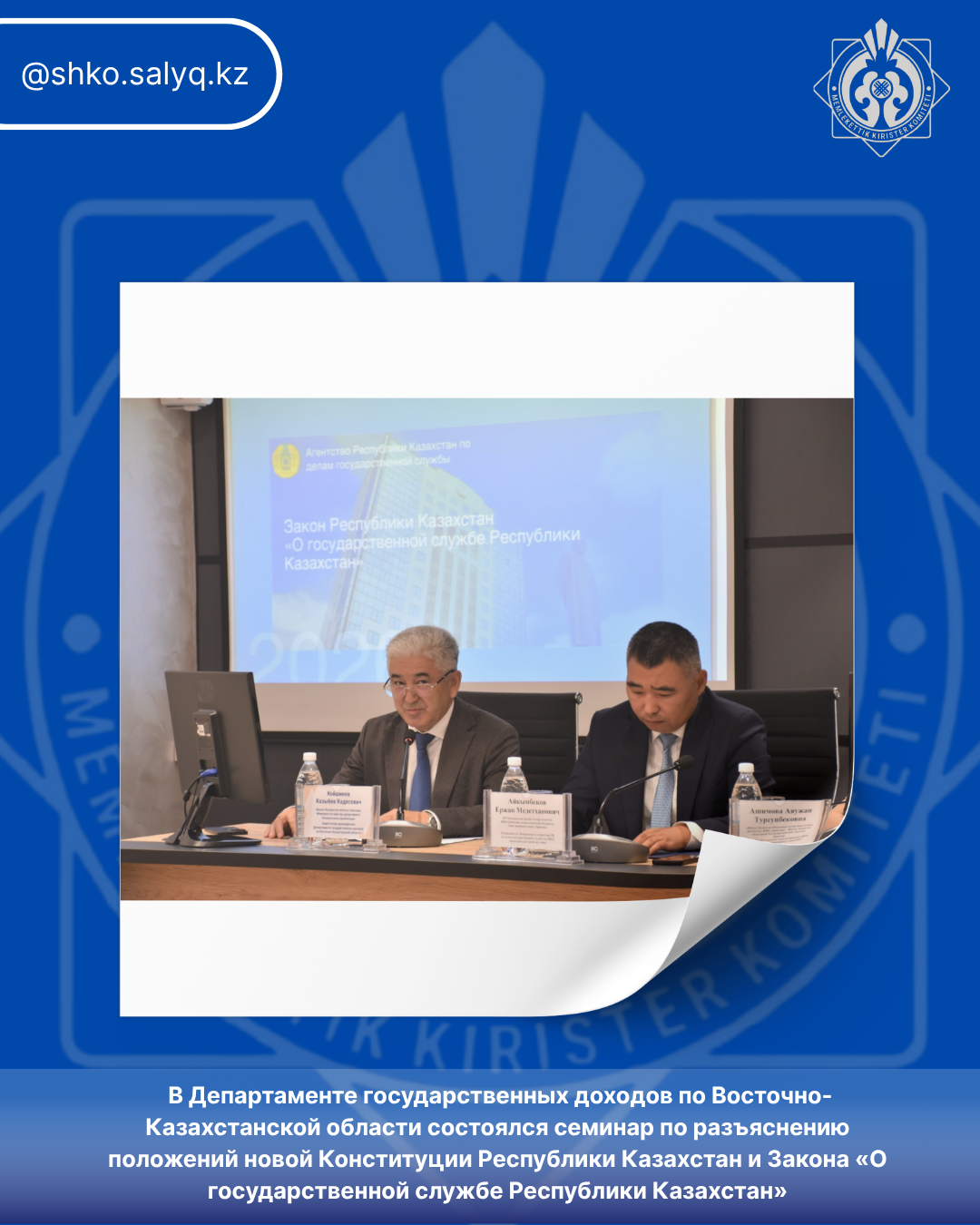
A seminar on explaining the provisions of the new Constitution of the Republic of Kazakhstan and the Law "On the Civil Service of the Republic of Kazakhstan" was held at the State Revenue Department of East Kazakhstan region 24.07.2026
On July 24, 2026, a seminar was held to explain the key provisions of the new Constitution of the Republic of Kazakhstan and the new Law of the Republic of Kazakhstan "On the Civil Service of the Republic of Kazakhstan" at the site of the State Revenue Department of East Kazakhstan region (hereinafter - the Department).The event was chaired by Kazybek Koishinov, Deputy Head of the Department. The seminar was attended by the staff from across the Department. Yerzhan Aikymbekov, Head of the Department of the Agency of the Republic of Kazakhstan for Civil Service Affairs of East Kazakhstan Region and Chairman of the Ethics Council, delivered an address on the implementation of the new Law of the Republic of Kazakhstan "On the Civil Service of the Republic of Kazakhstan." The speaker provided a detailed overview of the core innovations, the nuances of their practical application, and the strategic importance of the ongoing reforms in modernizing the public service.Furthermore, Yerzhan Aikymbekov highlighted the primary objectives of the Concept for the Development of the Civil Service of the Republic of Kazakhstan for 2024–2029, principles of client-oriented approach, competitive procedures, social protection guarantees for public servants, disciplinary enforcement standards, crime prevention strategies, and anti-corruption measures.Ayauzhan Ashimova, Director of the Institute of Analysis and Forecasting of the East Kazakhstan Region LLP and Chairwoman of the Public Council of EKR, outlined the core provisions of the new Constitution of the Republic of Kazakhstan. She presented the primary constitutional amendments to the participants, their strategic significance for public administration, society, and the broader development of the nation.During the seminar, it was emphasized that the new Constitution of the Republic of Kazakhstan, approved in the national referendum on March 15, 2026, and taking full legal effect on July 1, 2026, is designed to further modernize the system of public administration, reinforce guarantees of citizens' rights and freedoms, and safeguard the democratic and social principles of the national development.The seminar concluded with an interactive question-and-answer session. The staff of the Department demonstrated active engagement in the issues under discussion, plied experts with questions regarding the practical application of the provisions under the new Law of the Republic of Kazakhstan "On the Civil Service of the Republic of Kazakhstan," as well as key aspects of the new Constitution of the Republic of Kazakhstan. The specialists provided comprehensive clarifications and authoritative answers to all questions submitted by the participants.The lecture enhanced the participants' understanding of the constitutional foundations of the state, the rights and obligations of public servants, and importance of the nation's ongoing legal reforms.Source : https://www.gov.kz/memleket/entities/kgd-vko/press/news/details/1263481?lang=ru
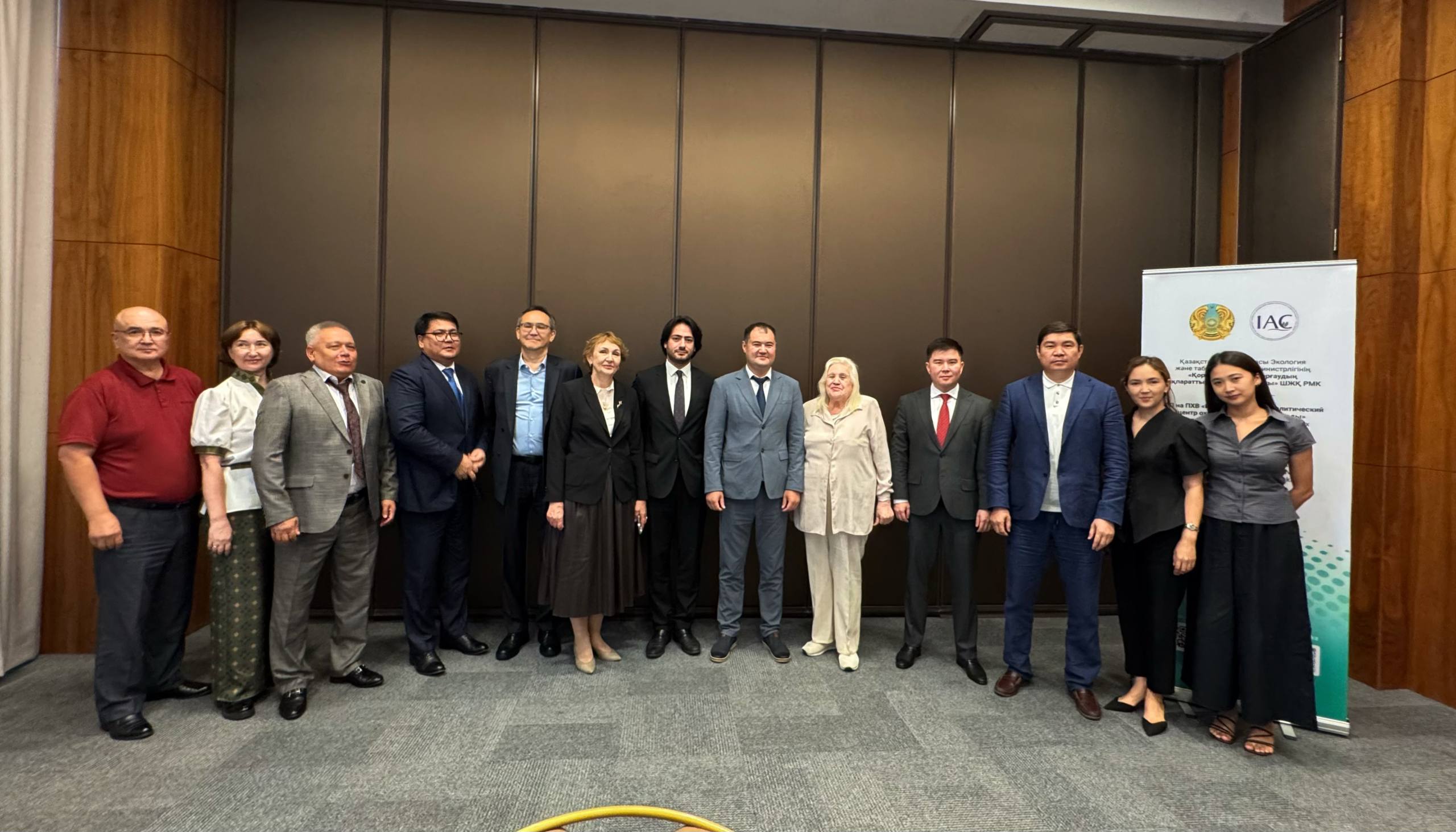
Round Table “Implementation of the Principles of the Aarhus Convention in the Republic of Kazakhstan” 24.07.2026
On 24 July 2026, the annual round table on the Implementation of the Principles of the Aarhus Convention in the Republic of Kazakhstan was held in Astana in a hybrid format. The event was organized by the Ministry of Ecology and Natural Resources of the Republic of Kazakhstan jointly with the RSE on REM “Information and Analytical Center for Environmental Protection”, with the support of the OSCE Programme Office in Astana.The round table brought together representatives of the Ministry of Ecology and Natural Resources of the Republic of Kazakhstan, the Supreme Court of the Republic of Kazakhstan, the Association of Environmental Organizations of Kazakhstan, regional Aarhus Centres, non-governmental and international organizations, as well as independent experts.The first session focused on public participation and access to justice as key elements in the implementation of the Aarhus Convention. Representatives of regional Aarhus Centres and non-governmental organizations shared their views, highlighted current issues, and presented proposals for the further development of public participation mechanisms and the protection of citizens’ environmental rights.The second session focused on access to environmental information and its dissemination through modern digital tools. During the session, representatives of the RSE on REM “Information and Analytical Center for Environmental Protection” presented a digital system designed to ensure the collecting, systematizing, and disseminating environmental information. Representatives of JSC NC "Kazakhstan Gharysh Sapary” introduced participants to the capabilities of space-based monitoring and demonstrated its application for environmental monitoring and obtaining up-to-date ecological information.Following the event, a Protocol Decision was adopted containing recommendations aimed at further developing the system of access to environmental information, expanding public participation in environmentally significant decision-making, and strengthening cooperation among government authorities, Aarhus Centres, non-governmental organizations, and the public.Source : https://www.gov.kz/memleket/entities/ecogeo/press/news/details/1263473?lang=ru
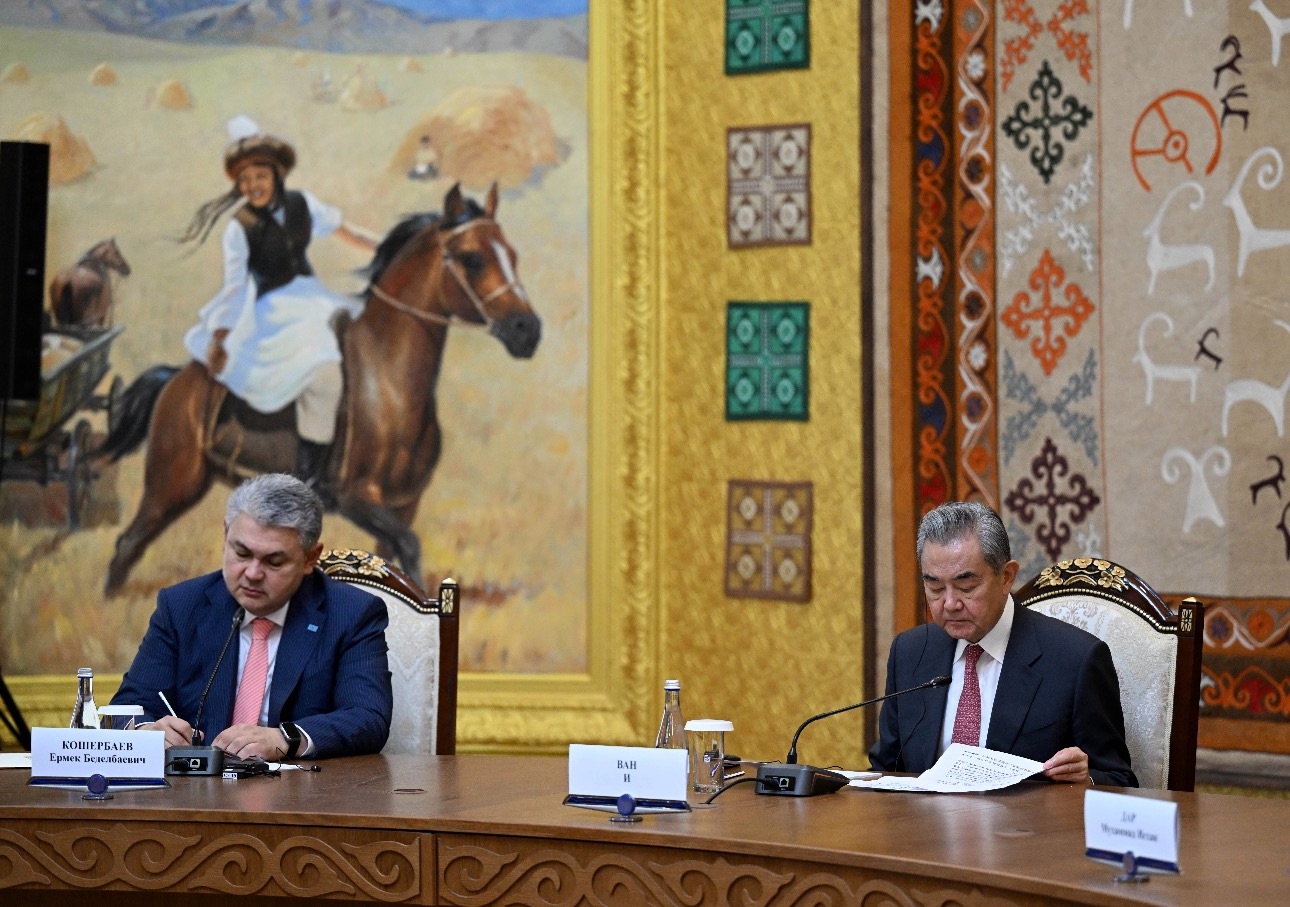
Head of Kazakhstan's Ministry of Foreign Affairs holds a series of bilateral meetings on the sidelines of the meeting of the council of Foreign Ministers of the SCO member states 24.07.2026
Cholpon-Ata, 23 July 2026, On the sidelines of the meeting of the Council of Foreign Ministers of the Shanghai Cooperation Organisation (SCO) member states, Minister of Foreign Affairs of the Republic of Kazakhstan Yermek Kosherbayev held bilateral meetings with Member of the Political Bureau of the Central Committee of the Communist Party of China and Minister of Foreign Affairs of the People's Republic of China Wang Yi, Deputy Prime Minister and Minister of Foreign Affairs of the Islamic Republic of Pakistan Mohammad Ishaq Dar, and Minister of Foreign Affairs of the Republic of Uzbekistan Bakhtiyor Saidov.The agenda of the meetings covered key issues of bilateral cooperation, ranging from strengthening the strategic partnership and expanding trade and economic ties to coordinating approaches on pressing international issues.During the talks with Wang Yi, particular attention was paid to the outcomes of the Head of State's working visit to the People's Republic of China (Shanghai) on 15–17 July this year to take part in the World Conference on Artificial Intelligence, as well as to the agreements reached during the high-level talks.At the meeting with Mohammad Ishaq Dar, the two sides positively noted the active political dialogue and the steady development of trade and economic cooperation. Particular attention was given to the implementation of joint projects, the development of transport and logistics connectivity, and reaching the goal of increasing mutual trade turnover to USD 1 billion. The Kazakh side expressed gratitude to Pakistan for supporting the initiative of President of the Republic of Kazakhstan Kassym-Jomart Tokayev to establish an International Water Organisation aimed at strengthening cooperation in the sustainable management of water resources.During the conversation with Minister of Foreign Affairs of the Republic of Uzbekistan Bakhtiyor Saidov, the heads of the foreign policy agencies discussed prospects for the further development of bilateral cooperation and exchanged views on pressing issues on the regional and international agenda. Particular attention was paid to the practical implementation of agreements reached during high-level and top-level visits.The parties also confirmed their readiness for further cooperation within the framework of the UN, SCO, OIC and CICA, as well as mutual support for international initiatives. Source : https://www.gov.kz/memleket/entities/mfa/press/news/details/1263470?lang=ru
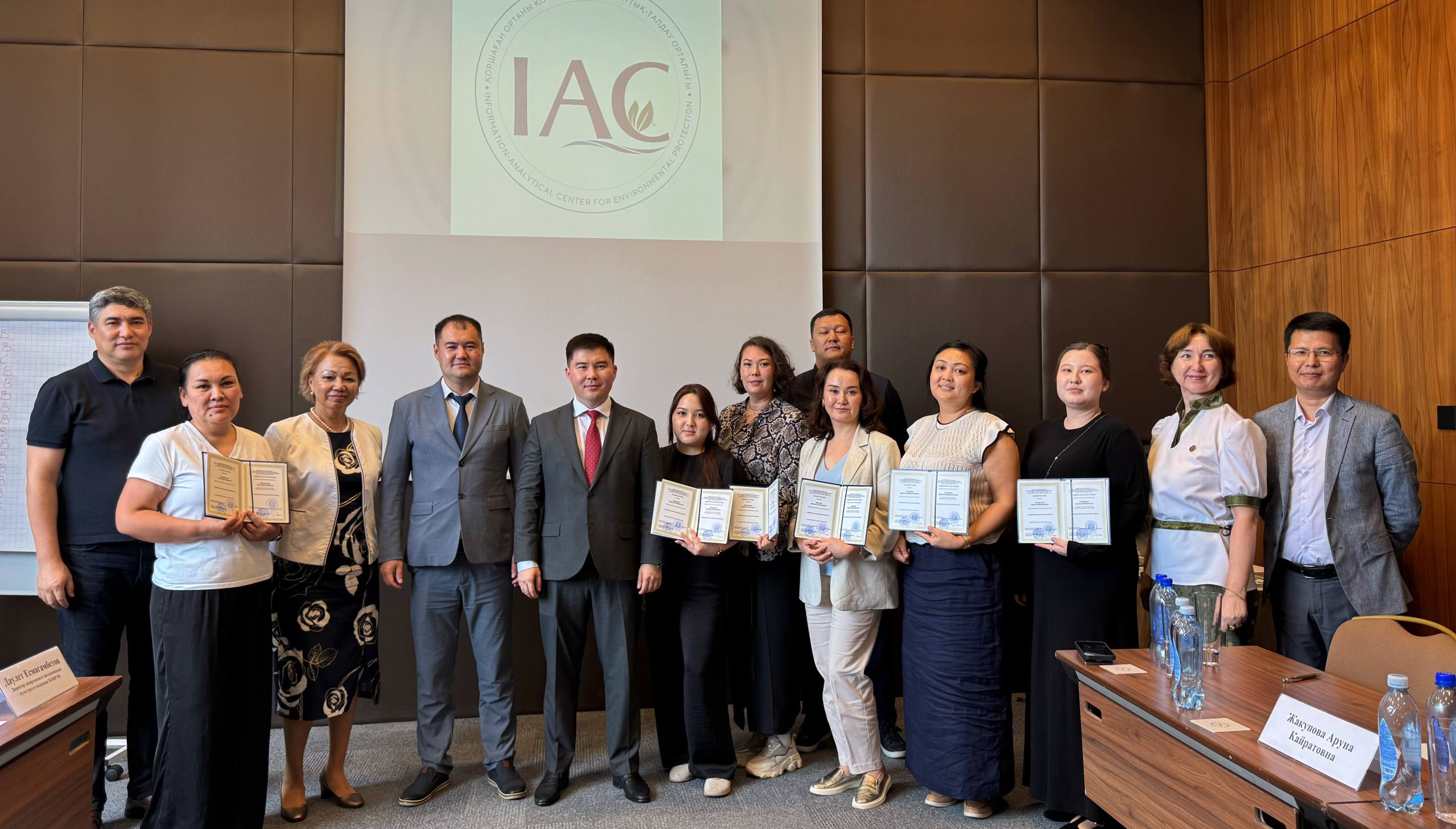
IACEP Conducted a Seminar-Training on Strategic Environmental Assessment 24.07.2026
On 23–24 July 2026, in Astana (Sheraton Hotel), the Information and Analytical Center for Environmental Protection of the Ministry of Ecology and Natural Resources of the Republic of Kazakhstan (IACEP), jointly with the Green Academy Scientific and Educational Center, organized and conducted the seminar-training entitled “Strategic Environmental Assessment: International Experience, Regulatory Framework and Practical Application in the Republic of Kazakhstan.”The event was held within the framework of Article 51 of the Environmental Code of the Republic of Kazakhstan and aimed at enhancing the professional competencies of government officials, developers of strategic documents and master plans, business representatives, and members of the expert community in the field of Strategic Environmental Assessment (SEA).During the seminar, participants reviewed international practices in SEA implementation, the regulatory and legal framework for conducting SEA in Kazakhstan, the stages and procedures of the assessment process, the consideration of public health factors in territorial planning, as well as mechanisms for public consultations and discussions.Welcoming remarks were delivered by Daulet Yesmagambetov, Director of the Department of Environmental Culture and Policy of the Ministry of Ecology and Natural Resources of the Republic of Kazakhstan, and Askhat Kozhumov, Director General of the Information and Analytical Center for Environmental Protection. They emphasized the importance of implementing Strategic Environmental Assessment as an effective tool for sustainable development and environmentally informed decision-making.The seminar was moderated by Dr. Bakhyt Yessekina, Doctor of Economics, Professor, and Director of the Green Academy Scientific and Educational Center.The following speakers and experts participated in the seminar:* Bakhyt Yessekina, Director of the Green Academy Scientific and Educational Center;* Zhanar Tyulyubayeva, Director of the Department of Hygiene and Health Protection at the National Center for Public Health under the Ministry of Healthcare of the Republic of Kazakhstan;* Yerbol Orazbekov, National Expert of the European Union’s SWITCH-Asia Project;* Balzhan Zhartybayeva, Representative of the Department of Environmental Culture and Policy of the Ministry of Ecology and Natural Resources of the Republic of Kazakhstan.The seminar programme included both theoretical and practical sessions. Particular attention was given to the practical application of Strategic Environmental Assessment procedures. Participants became familiar with the step-by-step SEA process, worked through practical case studies, and discussed current issues related to its implementation in Kazakhstan.The seminar brought together representatives of local executive bodies, developers of master plans and strategic documents, as well as representatives of businesses and non-governmental organizations.Upon completion of the training, participants were awarded personalized certificates confirming their participation in the seminar.📧 seminar.iac@iacoos.kz info@green-academy.kz 🌐 https://iacoos.kz www.green-academy.kz Source : https://www.gov.kz/memleket/entities/ecogeo/press/news/details/1263380?lang=ru

Early professional training – a new step towards modern civil service 24.07.2026
Since July 1, 2026, a new Law of the Republic of Kazakhstan "On Civil Service" has been in effect in Kazakhstan. It provides for a comprehensive modernization of the civil service system. One of the fundamentally new areas is the early professional training of citizens for entry into civil service.While previously, the training of future civil servants began primarily after graduating from higher education institutions, the state now creates conditions for developing professional competencies even during the educational stage of young people.The main goal of this innovation is to create a generation of young professionals who consciously choose civil service, possess the necessary knowledge, understand the principles of public administration, and are ready to work effectively for the benefit of society.Early professional training includes training aimed at developing basic knowledge of public administration, legislation, and the civil service system, as well as the professional and personal competencies necessary for civil servants. Particular attention is paid to developing customer focus, a high level of legal culture, responsibility, leadership qualities, teamwork skills, and adherence to the principles of civil service.This work is primarily aimed at high school students, college students, and students in higher education institutions. Young people have the opportunity to become familiar with the specifics of the civil service, the requirements for civil servants, the prospects for professional development, and modern digital recruitment tools.The new Law reflects a transition to a modern approach to developing the state's human resources potential. Today, the civil service is viewed not only as a place of work but also as a professional environment, where competence, integrity, responsibility, and continuous development are of particular importance. Therefore, the continuous professional development of civil servants is enshrined as one of the legislative principles.The practical implementation of early professional training will ensure that government agencies are provided with motivated and prepared young specialists, reduce their adaptation period after entering service, and improve the quality of public administration.It is worth noting that early career guidance for young people has been underway in the Kostanay Region for several years. The Department of the Agency of the Republic of Kazakhstan for Civil Service Affairs in the Kostanay Region is implementing the "School of Young Civil Servants" project, which introduces students to the activities of government agencies, the principles of civil service, and career development opportunities. Since the beginning of this year, 30 university students have completed internships in government agencies as part of the "School for Young Civil Servants" project. The new Law has given this work a legislative basis and confirmed its importance for developing the country's future human resources.The development of an early professional training system is an important step toward creating a new model of civil service—one that is open, professional, customer-oriented, and attractive to talented young people. It is these specialists who will ensure the effective implementation of public policy, the high-quality delivery of public services, and the strengthening of public trust in government institutions.Department of the Agency of theRepublic of Kazakhstan forCivil Servicefor Kostanay RegionSource : https://www.gov.kz/memleket/entities/kostanai-mendykarin-audany-akimat/press/news/details/1263352?lang=ru
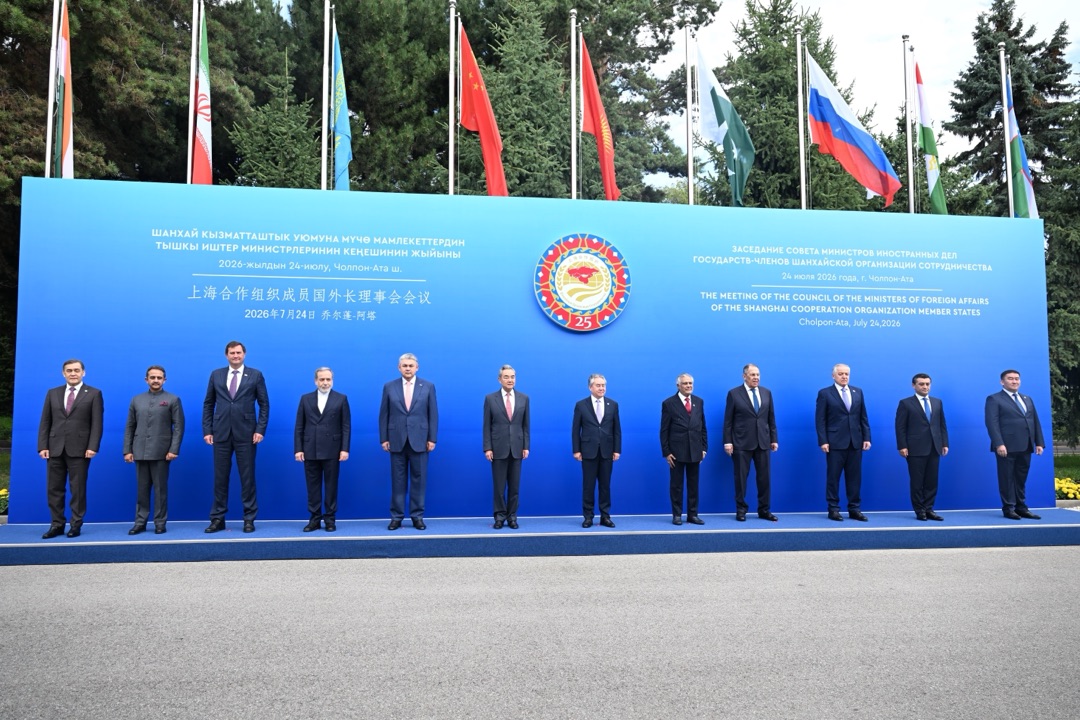
Minister of Foreign Affairs of the Republic of Kazakhstan Yermek Kosherbayev Participates in the SCO Council of Foreign Ministers Meeting 24.07.2026
Cholpon-Ata, 24 July 2026 - Minister of Foreign Affairs of the Republic of Kazakhstan Yermek Kosherbayev took part in the regular meeting of the Council of the Foreign Ministers of the Shanghai Cooperation Organization (SCO) Member States.The heads of delegations exchanged views on further strengthening foreign policy coordination among SCO member states in the current international environment and discussed preparations for the upcoming SCO Summit, which will take place in Bishkek on 1 September 2026.In his remarks, Minister Kosherbayev underscored the SCO’s special role in strengthening regional security and advancing multifaceted cooperation, reaffirming Kazakhstan’s unwavering support for the Organization’s activities.The Kazakh Foreign Minister also highlighted the importance of further improving the SCO and adapting its institutions to contemporary challenges and threats.He stressed that, amid the rapidly evolving international environment, ensuring the resilience of the global economy and the security of international trade has become an increasingly pressing priority.“Geopolitical turbulence, increasingly spilling over into the military sphere, is seriously affecting the stability of international trade relations. Today, the security of supply chains is becoming an ever more pressing issue, including for Kazakhstan. A clear example is the attacks by unidentified unmanned systems on energy infrastructure and tankers chartered by Kazakhstan for oil transportation. Against this backdrop, joint efforts to ensure the security of trade routes are of particular importance,” said Minister Kosherbayev.As previously stated, Kazakhstan considers any actions aimed at destabilizing legitimate international trade, global energy markets, and the security of global transport and logistics supply chains to be absolutely unacceptable.Among the priority areas of cooperation, the Minister highlighted the need to intensify joint efforts in climate change adaptation and the sustainable management of water resources. In this regard, Kazakhstan counts on the support of the SCO member states for its initiative to establish an International Water Organization under the auspices of the United Nations, as well as an SCO Water Issues Analysis Centre.Following the meeting, the participants approved draft key documents, including the Bishkek Declaration marking the 25th anniversary of the SCO, aimed at enhancing the effectiveness of the Organization.On the sidelines of the meeting, the SCO foreign ministers also held a joint meeting with the President of the Kyrgyz Republic, Sadyr Japarov.During the meeting, the participants underscored the importance of further expanding multifaceted cooperation within the SCO and implementing joint initiatives aimed at improving the well-being of the peoples of the Organization’s member states.Minister Kosherbayev expressed Kazakhstan’s readiness to continue supporting the Kyrgyz Republic’s SCO Chairmanship and reaffirmed the country’s commitment to further mutually beneficial and constructive cooperation with fellow SCO member states.Source : https://www.gov.kz/memleket/entities/mfa/press/news/details/1263269?lang=ru
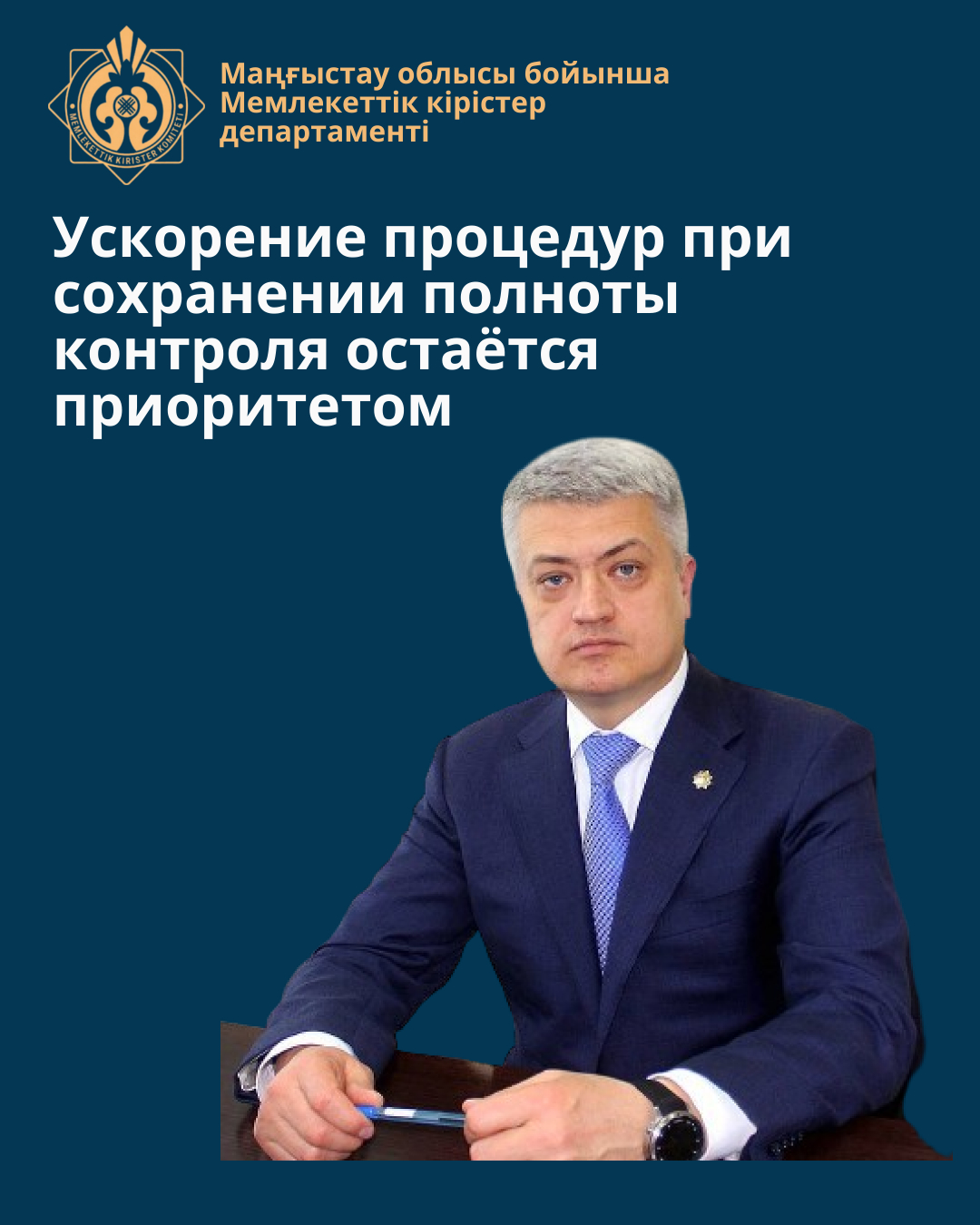
Speeding up procedures while maintaining full control remains a priority 24.07.2026
Interview with Artem Anatolyevich Abildinov, Deputy Head of the State Revenue Department for the Mangystau region Artyom Anatolyevich, what are the key changes in customs regulation in effect in 2026 and the most noticeable for citizens and businesses? A.A. Abildinov: Starting from July 1, 2026, e-commerce products have been allocated to a separate category within the EAEU. The duty-free limit has been maintained at 200 euros. At the same time, the weight threshold of 31 kg has been abolished. If the value of the parcel or order exceeds 200 euros, a customs duty of 5% of the value of the goods plus VAT of 16% will be charged. A special declaration for e-commerce goods has been introduced, which is issued by operators. For most ordinary purchases from AliExpress, Temu and similar sites, the procedure remains familiar — you do not need to contact the customs authorities yourself. These measures are aimed at streamlining online commerce and preventing the import of commercial shipments under the guise of personal purchases. How does digitalization affect customs administration, especially in the Mangystau region with its seaports? A.A. Abildinov: We are actively working in the Keden information system. It allows you to speed up the processing of transit declarations (from 30 to about 10 minutes), process container trains much faster and minimize paperwork. In the region, this is especially important for Aktau and Kuryk seaports, terminals and checkpoints. The upgraded posts, including Temir Baba on the border with Turkmenistan, are already showing a reduction in border crossing time. Digital tools increase transparency, reduce administrative burden, and enable more effective risk management. What is important for participants in foreign economic activity and individuals to know right now? A.A. Abildinov: I recommend that participants of foreign economic activity switch to work at Keden in a timely manner, keep up-to-date reference books and properly arrange preliminary information. Individuals should be attentive to the cost and nature of parcels. With regular large shipments, even from the EAEU countries, full-fledged registration may be required if the signs indicate entrepreneurial activity. There have been no significant changes in rates for customs clearance of vehicles at the moment — we are working within the framework of current legislation. What are the Department's priorities in customs administration in the near future? A.A. Abildinov: The main thing is to ensure a balance between convenience for bona fide participants in foreign economic activity and effective control. The State Revenue Committee continues digitalization, and the Department continues to optimize the work of customs posts, explanatory work and interaction with businesses. Mangystau region is an important logistics hub, so speeding up procedures while maintaining full control remains a priority. (Unofficial translation)Source : https://www.gov.kz/memleket/entities/kgd-mangistau/press/news/details/1263247?lang=ru
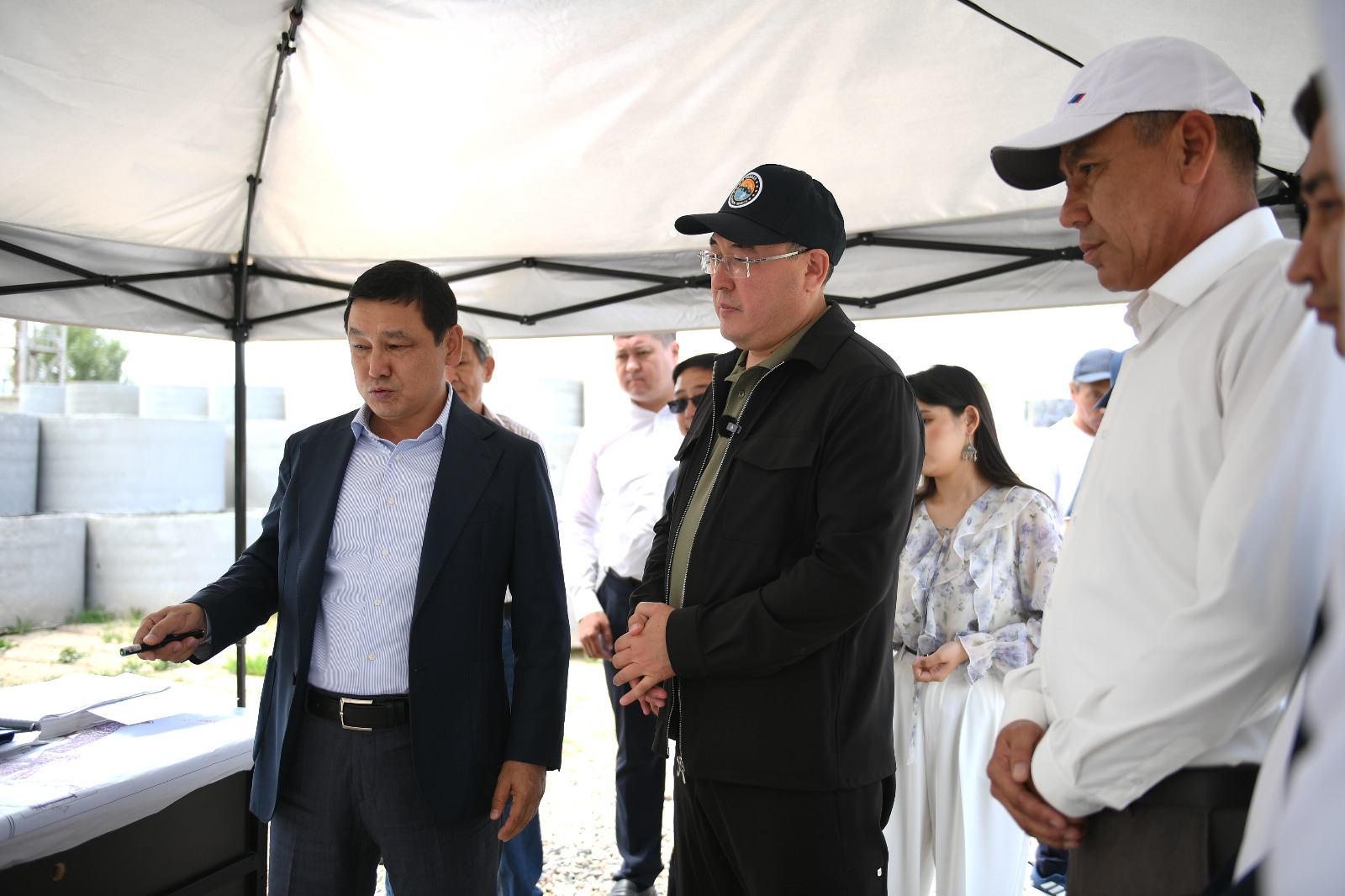
More than 18 thousand residents of the village of Kemertogan in Almaty region will be provided with clean drinking water. 24.07.2026
Source : https://www.gov.kz/memleket/entities/almobl/press/news/details/1263205?lang=ru
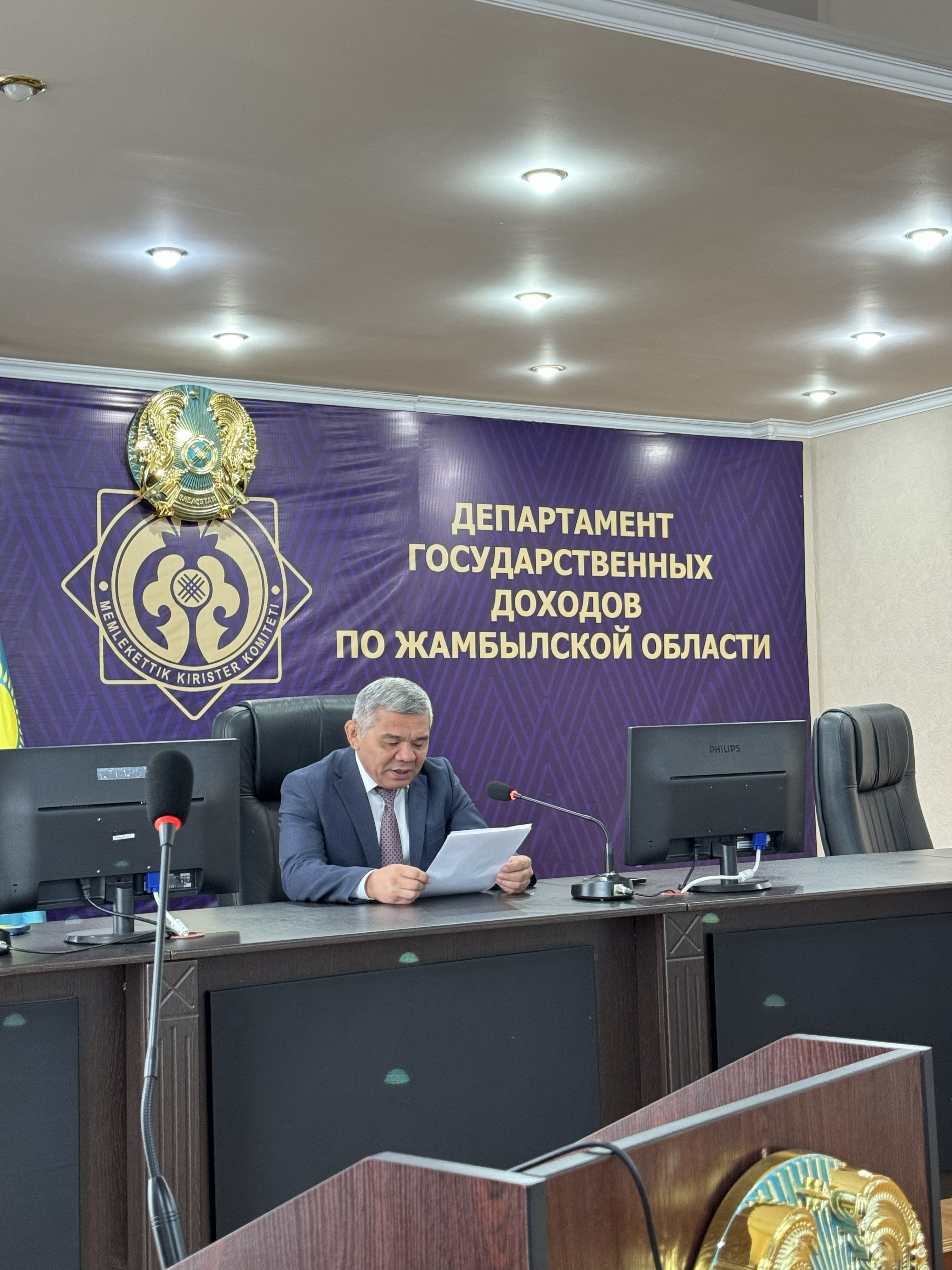
A seminar was held on the formation of an anti-corruption culture and compliance with the Ethics Code 24.07.2026
On July 22, 2026, Deputy Head of the Department and Ethics Commissioner K. B. Shaiduev held a seminar-meeting to inform the Department's personnel about the "formation of an anti-corruption culture in society, absolute intolerance towards corruption, and the norms of the Ethics Code."In his report, the Ethics Commissioner explained the requirements of the laws of the Republic of Kazakhstan on anti-corruption, the Ethics Code, and the Law on Public Service, as well as the rules on disciplinary penalties for public servants, which were approved by Decree No. 152 of the President of the Republic of Kazakhstan dated December 29, 2015.In addition, the ethical code requires civil servants to comply with generally accepted moral and ethical standards, follow the restrictions established by law, demonstrate integrity in society and in their interactions with citizens, avoid rudeness and humiliation, and adhere to the norms and principles of behavior.Department of Explanatory Work and Contact Center DGD in Zhambyl regionSource : https://www.gov.kz/memleket/entities/kgd-zhambyl/press/news/details/1263168?lang=ru
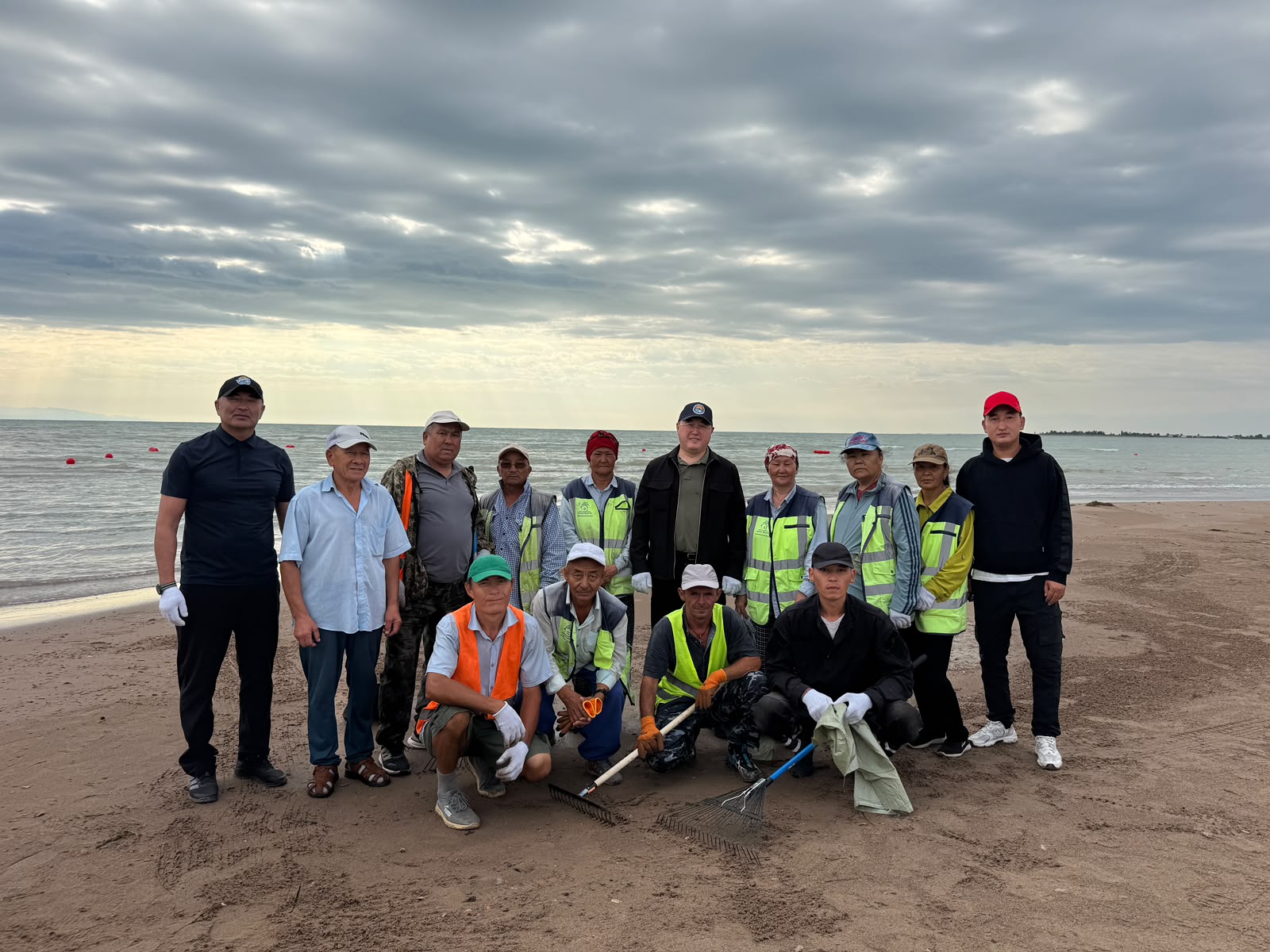
Respect for the man of work 24.07.2026
Source : https://www.gov.kz/memleket/entities/almobl/press/news/details/1263158?lang=ru

Obligation to register as an individual entrepreneur 24.07.2026
If a citizen regularly earns income, sells goods, or provides services, they must legalize their entrepreneurial activities.According to Article 35 of the Entrepreneurial Code of the Republic of Kazakhstan, individuals who meet one of the following conditions must be registered as individual entrepreneurs:1) individuals who regularly employ employees;2) the amount of income from entrepreneurial activities exceeds 360 times the monthly calculation index (1.5 million tenge).In addition, if you do not use the labor of hired employees on a regular basis, and if you receive income from: a special tax regime for self-employed individuals, income that is subject to self-assessment by an individual (i.e., you calculate and pay taxes on your income yourself), then you do not need to register as an individual entrepreneur.Methods of registering a private enterprise:Business registration is carried out online within a few minutes. To do this, it is enough to use electronic services. You do not need to contact the state revenue authorities.For example, you can register an individual entrepreneur through "E-licensing" elicense.kz, the mobile application "E-salyq Business", through the mobile applications of second-tier banks, etc.What are the advantages of conducting a legal business:The main advantage of registering as an individual entrepreneur is that it allows you to conduct business legally. Legal entrepreneurship is protected by the state.A registered entrepreneur can issue fiscal checks, accept cash and non-cash payments, work with legal entities, choose a tax regime, and participate in government support programs.In addition, you will have access to social guarantees, such as mandatory health insurance, social insurance, and a pension system.What is the responsibility for working without registration:According to Article 463 of the Code of Administrative Offenses of the Republic of Kazakhstan, engaging in entrepreneurial activities without registration is punishable by a fine of fifteen monthly calculation indices for individuals, unless the actions constitute a criminal offense.If the offense is committed again within one year of the previous administrative penalty, an administrative fine of thirty monthly calculation indices will be imposed.We call on all individuals engaged in entrepreneurial activities to practice good-faith entrepreneurship.Entrepreneurial activities have a significant impact on the development of our country's economy. Good-faith entrepreneurship, along with compliance with legal requirements, provides opportunities for stable business growth.Department of Explanatory Work and Contact Center DGD in Zhambyl regionSource : https://www.gov.kz/memleket/entities/kgd-zhambyl/press/news/details/1263163?lang=ru

Control of the Issuance of Electronic Invoices 24.07.2026
The control of the issuance of electronic invoices is carried out by the tax authorities to prevent the issuance of electronic invoices associated with a high level of risk. The control of the issuance of electronic invoices is conducted in the following forms:Automated control of the issuance of electronic invoices (automated control);Comparative control of the issuance of electronic invoices (comparative control).Note: Tax risk means the likelihood of non-compliance with the tax legislation of the Republic of Kazakhstan and other legislation of the Republic of Kazakhstan, compliance with which is monitored by the tax authorities. Source : https://www.gov.kz/memleket/entities/kgd-astana/press/news/details/1263148?lang=ru
Baiterek District Students Embark on a Journey Through 225 Years of History 24.07.2026
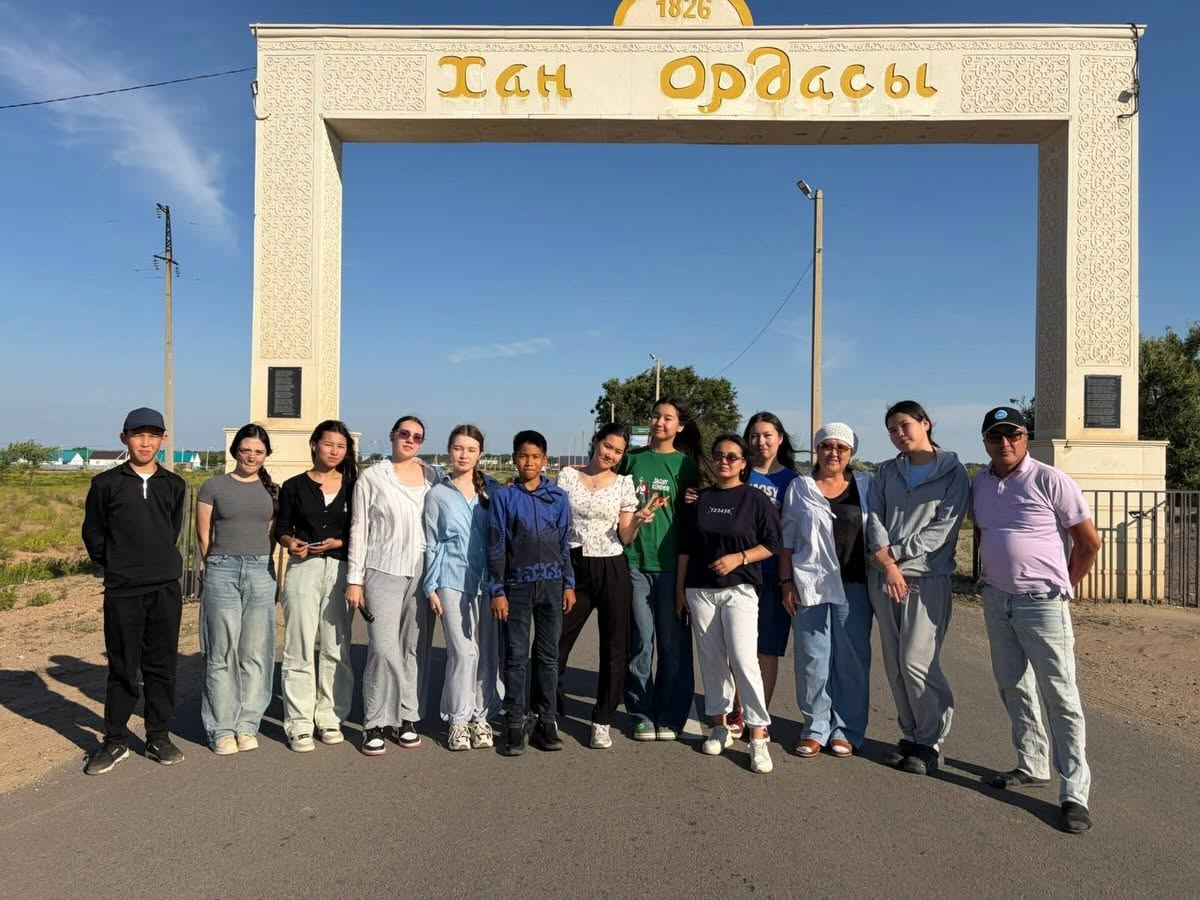
This year, West Kazakhstan Region is widely celebrating several significant historical anniversaries: the 225th anniversary of the Bukey Horde, the 200th anniversary of Khan Ordasy village, and the 185th anniversary of Zhangir Khan School, the region’s first educational institution. As part of these commemorative events, students from schools in Baiterek District took part in an educational excursion to the historic and culturally significant area that once served as the capital of the Bukey Horde.During the trip, the students visited the Khan Ordasy Historical and Cultural Museum Complex, where they learned about the formation of the Bukey Horde and the lives of prominent figures who made invaluable contributions to the development of the region. In particular, they gained new insights into the lives of public figure Alma Orazbayeva, statesman and public leader Seitkali Mendeshev, educator and scholar Khangerei Bokeiuly, as well as other notable historical personalities.As part of the educational tour, the students paid tribute at the mausoleums of Zhangir Khan, ethnographer and educator Salyk Babazhanov, and the renowned kui composer Dauletkerey Shygaiuly. They also learned more about the important role these distinguished individuals played in preserving and enriching the spiritual and cultural heritage of the Kazakh people.The excursion also included a visit to the picturesque Karagaily Pine Forest. On their way home, the students stopped to see the Yntymaq (Unity) Tower, a landmark presented this year by graduating school students.To ensure the students’ safety and well-being throughout the trip, they were accompanied by the school’s deputy principal for educational affairs, a nurse, and the bus driver.Source : https://www.gov.kz/memleket/entities/bko-baiterek/press/news/details/1263109?lang=ru
ANNOUNCEMENT How pension savings are protected in different countries 24.07.2026
International experience shows that countries use various mechanisms to protect pension savings depending on the specifics of their national pension system. In most countries, the protection of pension system participants' rights is ensured by mechanisms such as insurance against the risk of default on pension payment obligations, state oversight of pension funds and management companies, and the establishment of requirements for their financial stability and risk management systems. Consequently, the primary focus is on creating a robust regulatory system, effective oversight, and the distribution of responsibilities between the state, funds, and management companies.In the United States, defined benefit (DB) corporate pension plans are protected by the federal insurance system through the Pension Benefit Guaranty Corporation (PBGC)[1], which ensures that employees' pension obligations under the corporate pension plan are met (up to statutory limits) in the event of the employer's default on the employee's retirement savings. In the United Kingdom, the Pension Protection Fund (PPF)[2] performs similar functions. Similar mechanisms exist in Germany. However, these insurance systems only apply to defined benefit (DB) corporate pension plans and do not apply to defined contribution (DC) pension plans. Some countries provide mechanisms to ensure a minimum return on pension savings. These can be set either in absolute nominal terms (e.g., Belgium, Switzerland, Malaysia, Singapore) or in relative terms, i.e., compared to a certain benchmark, such as the average return (in Latin American countries). In Belgium and Switzerland, legislation sets a minimum nominal rate of return on mandatory occupational pension funds, which is used to calculate the employer's obligations under its employee's pension plans. In several Latin American countries (Chile, Colombia, El Salvador), the minimum return is determined relative to the average return among the corresponding types of pension funds. If the pension fund manager (AFP) fails to meet the minimum return, the difference is covered by established reserves (guarantee reserve). A number of Asian countries also have minimum return requirements for pension savings. In Malaysia, the Employees' Pension Fund (EPF) guarantees a nominal return on pension savings of at least 2.5% per annum. In Singapore, the Central Provident Fund (CPF) provides a minimum nominal return of 2.5% to 4% per annum (depending on the account type). In virtually all OECD countries, the activities of pension funds and management companies are subject to risk-based government oversight, accompanied by strict requirements for capital adequacy, reserve formation, risk management systems, and compliance with professional investment standards for client assets. Thus, as funded pension systems develop, the emphasis is increasingly shifting to effective regulation, risk-based supervision, and expanding the rights and investment opportunities of contributors. Kazakhstan's pension system is also developing in this direction. As a reminder, legislative changes provide for expanded opportunities for citizens to manage their pension savings. Contributors will be able to independently select one or more management companies offering various investment strategies and portfolios and entrust them with the management of up to 100% of their savings. With expanding investment opportunities and the implementation of measures to improve pension provision, approaches to preserving pension savings are also changing. Effective January 1, 2027, the state guarantee will be to ensure the preservation of compulsory pension contributions and compulsory occupational pension contributions to the Unified Accumulative Pension Fund (UAPF) in the amount of actual contributions. The state's primary obligations, however, focus on maintaining the adequacy of the state component of pensions (basic and solidarity pensions). UAPF was founded on August 22, 2013 on the basis of GNPF APF JSC. The founder and shareholder of the UAPF is the Government of the Republic of Kazakhstan represented by the State Institution Committee of State Property and Privatization of the Ministry of Finance of the Republic of Kazakhstan. Trust management of UAPF pension assets is carried out by the National Bank of the Republic of Kazakhstan. In accordance with the pension legislation, the UAPF attracts compulsory pension contributions, employer’s compulsory pension contributions, compulsory occupational pension contributions, voluntary pension contributions, as well as carries out enrollment and accounting of voluntary pension contributions formed at the expense of the unclaimed amount of guaranteed compensation for the guaranteed deposit, transferred by the organization carrying out mandatory guarantee of deposits, in accordance with the Law of the Republic of Kazakhstan "On mandatory guarantee of deposits placed in second-tier banks of the Republic of Kazakhstan", ensures the implementation of pension benefits. The Fund also carries out accounting of target assets and target requirements, accounting and crediting of target savings (TS) to target savings accounts, payments of TS to their recipients in bank accounts, accounting for returns of TS in the manner determined by the Government of the Republic of Kazakhstan within the framework of the National Fund for Children program (More details at www.enpf.kz) [1] Who we are | Pension Benefit Guaranty Corporation[2] https://www.ppf.co.uk/?utmSource : https://www.gov.kz/memleket/entities/abay-urzhar/press/news/details/1263049?lang=ru
The Agency has approved a senior executives of a second-tier banks 24.07.2026
Rauza Ibragimova has been approved for the position of Member of the governing body of of the Corporate Fund «KMF-Demeu» (Protocol No. 58/БВУ/П dated July 29, 2026).Gulnara Balakhmetova has been approved for the position of Member of the Management Board, Deputy Chairman of the Board of Alatau City Bank JSC (Minutes No. 61/БВУ/П dated July 30, 2026).Source : https://www.gov.kz/memleket/entities/ardfm/press/news/details/1266608?lang=ru

Sale of real estate: What has changed? 24.07.2026
When selling a property, it is important to consider the period of ownership.Dear taxpayers, we remind you that since January 1, 2026, the minimum period of ownership of real estate has changed, which is taken into account when determining obligations to pay individual income tax (IIT) on property income.If the property was purchased on January 1, 2026, the minimum period of ownership is 2 years. When selling such property earlier than the specified period, an individual has an obligation to pay personal income tax on the increase in value if the object is sold at a price higher than the cost of its acquisition.Please note that the tax is calculated not from the entire sale amount, but only from the positive difference between the purchase price and the sale price of the property.We recommend that you take into account the current tax legislation when planning real estate transactions in order to avoid violations of tax obligations.Source : https://www.gov.kz/memleket/entities/kgd-sko/press/news/details/1262979?lang=ru
On changing the approach to the implementation of the state guarantee of the safety of pension savings 24.07.2026
In connection with the questions received regarding the cancellation of the state guarantee for recipients of pension payments regarding the safety of their pension savings in the amount of actually paid compulsory pension contributions (CPC), compulsory occupational pension contributions (COPC) taking into account the level of accumulated inflation, the UAPF comments as follows.The state guarantees and regulates.Article 217 of the Social Code of the Republic of Kazakhstan provides that, from January 1, 2027, “The State guarantees to recipients of pension payments the safety of compulsory pension contributions, compulsory occupational pension contributions in the unified accumulative pension fund in the amount of compulsory pension contributions, compulsory occupational pension contributions actually made.”The state guarantees the safety of pension assets by regulating the activities of the UAPF and private investment portfolio managers (IPMs), establishing investment requirements for the National Bank of the Republic of Kazakhstan (NBRK) and IPMs, requirements for diversification and risk mitigation when investing pension assets, and other regulatory standards.NBRK manages pension assets with goals aimed at preserving pension savings and achieving long-term real returns.The IPM bears statutory responsibility for the trust management of pension assets and, in the event of a negative difference between the nominal return received by the IPM and the minimum return value calculated in accordance with the regulator’s requirements, compensates for the negative difference from the IPM’s own capital.The state provides multi-level control.The pension asset investment management system remains under multi-level government control.- The National Fund Management Council (NFMC), chaired by the Head of State, determines the main directions of investment policy, considers proposals to improve management efficiency, and reviews annual reports on the UAPF's activities in terms of pension asset management.- The government approves a list of financial instruments permitted for acquisition using pension assets held in trust by NBRK.- To ensure the safety of pension savings and the achievement of long-term real returns, NBRK develops and approves the UAPF investment declaration and manages pension assets.At the same time, the Social Code of the Republic of Kazakhstan establishes the principle of solidarity and collective responsibility of the state, employers, and citizens in the social security system, including pension provision, as is accepted in international practice.Participation of contributors in the management of pension assets.Article 40 of the Social Code of the Republic of Kazakhstan grants contributors the right to independently decide whether to transfer their pension savings to the management of a IPM and/or maintain them under the management of NBRK.In September 2026, legislative changes will also come into force, expanding contributors' investment options. While contributors can currently transfer up to 50% of their compulsory and compulsory occupational savings and up to 100% of their voluntary savings to IPM management, starting in the fall, they will be able to transfer both voluntary pension savings and savings formed through compulsory pension contributions (CPCs) and compulsory occupational pension contributions (COPCs) to IPM management in full.Contributors have the right to independently select one or more IPMs, as well as various investment portfolios — that is, investment strategies for managing pension assets offered by IPMs, which vary in risk level, expected return, and investment term.To assess the effectiveness of the investment management of pension funds, composite indices (benchmarks) tracked by leading global financial companies, such as MSCI and Bloomberg, as well as indices of Kazakhstan Stock Exchange JSC, are used. IPMs guarantee a set level of investment return, and if the return falls below the market benchmark, the IPM is obligated to compensate for the difference from its own capital. Therefore, investors have the right to independently choose different investment asset managers and different investment strategies (portfolios) for their pension savings. Under market-based approaches to pension asset management, the legal and economic rationale for a state guarantee of inflation loses its significance.Ensuring transparency in pension asset management. UAPF, 100% owned by the government, is the single infrastructure institution in the pension market. With contributors exercising their right to transfer their savings to the management of investment portfolio managers (IPMs), the institutional role of the UAPF has expanded. UAPF is a unified accounting and information center for all contributors, operating their individual pension savings accounts regardless of who manages the assets (NBRK and/or the IPM, at the contributor’s discretion).UAPF provides accessible services related to pension asset management, fully reflecting information on individuals' savings in statements 24/7. Furthermore, an online information platform (invest.enpf.kz) has been launched for UAPF contributors as a modern digital resource that allows them to compare asset management results across all managers (NBRK and the IPM). Invest.enpf.kz provides access to performance information and allows for dynamic comparison of data across asset managers and their portfolios over a specified period. Thus, the funded pension system and pension provision for Kazakhstanis as a whole remain under the regulation, control, and responsibility of the state. At the same time, the role of other participants—employees and employers—in the formation of pension savings increases, in line with international practice.For reference. Over the 28 years of its existence, Kazakhstan's funded pension system has demonstrated stability and sustainability. Pension assets amount to approximately 28 trillion tenge. The volume of pension benefits from the UAPF is constantly increasing: in 2024, it exceeded 1 trillion tenge, in 2025 – 1.5 trillion tenge, and over the first five months of 2026, pension benefits amounted to approximately 917 billion tenge.The share of investment income in total savings exceeds 40%. Over the long term, investment returns significantly exceed accrued inflation. Since the inception of the funded pension system in 1998, as of June 1, 2026, the cumulative return was 1,095.39%, with inflation for the entire period at 986.70%.Source : https://www.gov.kz/memleket/entities/abay-kurchatov/press/news/details/1262937?lang=ru
How pension savings are protected in different countries 24.07.2026
International experience shows that countries use various mechanisms to protect pension savings depending on the specifics of their national pension system. In most countries, the protection of pension system participants' rights is ensured by mechanisms such as insurance against the risk of default on pension payment obligations, state oversight of pension funds and management companies, and the establishment of requirements for their financial stability and risk management systems. Consequently, the primary focus is on creating a robust regulatory system, effective oversight, and the distribution of responsibilities between the state, funds, and management companies.In the United States, defined benefit (DB) corporate pension plans are protected by the federal insurance system through the Pension Benefit Guaranty Corporation (PBGC)[1], which ensures that employees' pension obligations under the corporate pension plan are met (up to statutory limits) in the event of the employer's default on the employee's retirement savings. In the United Kingdom, the Pension Protection Fund (PPF)[2] performs similar functions. Similar mechanisms exist in Germany. However, these insurance systems only apply to defined benefit (DB) corporate pension plans and do not apply to defined contribution (DC) pension plans. Some countries provide mechanisms to ensure a minimum return on pension savings. These can be set either in absolute nominal terms (e.g., Belgium, Switzerland, Malaysia, Singapore) or in relative terms, i.e., compared to a certain benchmark, such as the average return (in Latin American countries). In Belgium and Switzerland, legislation sets a minimum nominal rate of return on mandatory occupational pension funds, which is used to calculate the employer's obligations under its employee's pension plans. In several Latin American countries (Chile, Colombia, El Salvador), the minimum return is determined relative to the average return among the corresponding types of pension funds. If the pension fund manager (AFP) fails to meet the minimum return, the difference is covered by established reserves (guarantee reserve). A number of Asian countries also have minimum return requirements for pension savings. In Malaysia, the Employees' Pension Fund (EPF) guarantees a nominal return on pension savings of at least 2.5% per annum. In Singapore, the Central Provident Fund (CPF) provides a minimum nominal return of 2.5% to 4% per annum (depending on the account type). In virtually all OECD countries, the activities of pension funds and management companies are subject to risk-based government oversight, accompanied by strict requirements for capital adequacy, reserve formation, risk management systems, and compliance with professional investment standards for client assets. Thus, as funded pension systems develop, the emphasis is increasingly shifting to effective regulation, risk-based supervision, and expanding the rights and investment opportunities of contributors. Kazakhstan's pension system is also developing in this direction. As a reminder, legislative changes provide for expanded opportunities for citizens to manage their pension savings. Contributors will be able to independently select one or more management companies offering various investment strategies and portfolios and entrust them with the management of up to 100% of their savings. With expanding investment opportunities and the implementation of measures to improve pension provision, approaches to preserving pension savings are also changing. Effective January 1, 2027, the state guarantee will be to ensure the preservation of compulsory pension contributions and compulsory occupational pension contributions to the Unified Accumulative Pension Fund (UAPF) in the amount of actual contributions. The state's primary obligations, however, focus on maintaining the adequacy of the state component of pensions (basic and solidarity pensions). UAPF was founded on August 22, 2013 on the basis of GNPF APF JSC. The founder and shareholder of the UAPF is the Government of the Republic of Kazakhstan represented by the State Institution Committee of State Property and Privatization of the Ministry of Finance of the Republic of Kazakhstan. Trust management of UAPF pension assets is carried out by the National Bank of the Republic of Kazakhstan. In accordance with the pension legislation, the UAPF attracts compulsory pension contributions, employer’s compulsory pension contributions, compulsory occupational pension contributions, voluntary pension contributions, as well as carries out enrollment and accounting of voluntary pension contributions formed at the expense of the unclaimed amount of guaranteed compensation for the guaranteed deposit, transferred by the organization carrying out mandatory guarantee of deposits, in accordance with the Law of the Republic of Kazakhstan "On mandatory guarantee of deposits placed in second-tier banks of the Republic of Kazakhstan", ensures the implementation of pension benefits. The Fund also carries out accounting of target assets and target requirements, accounting and crediting of target savings (TS) to target savings accounts, payments of TS to their recipients in bank accounts, accounting for returns of TS in the manner determined by the Government of the Republic of Kazakhstan within the framework of the National Fund for Children program (More details at www.enpf.kz) [1] Who we are | Pension Benefit Guaranty Corporation[2] https://www.ppf.co.uk/?utmSource : https://www.gov.kz/memleket/entities/kostanai-mendykarin-audany-akimat/press/news/details/1267875?lang=ru
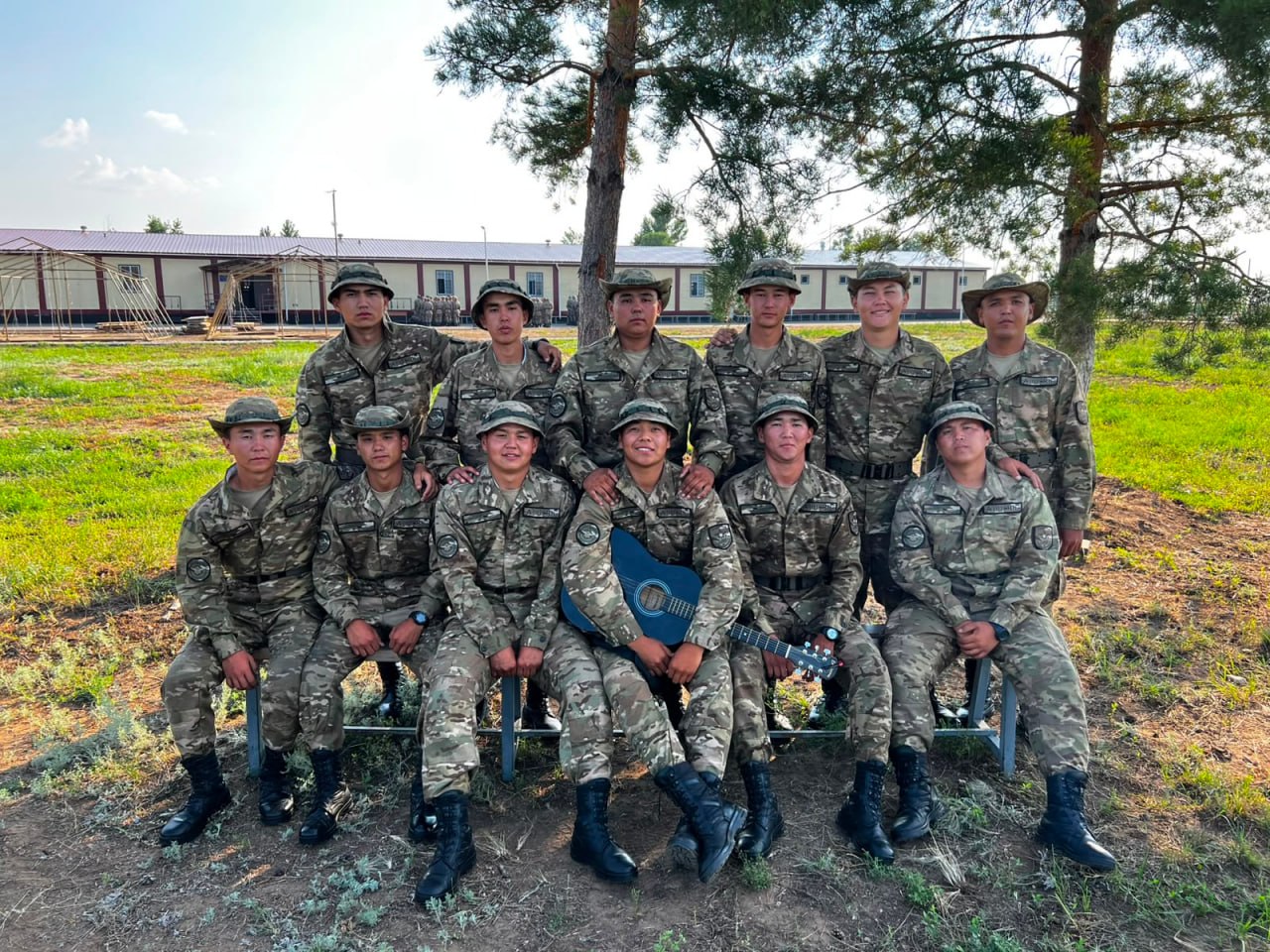
Fellow villagers yesterday, fellow soldiers today: 13 soldiers from the village of Kyzyltobe are training in aviation specialties. 24.07.2026
Source : https://www.gov.kz/memleket/entities/mod/press/news/details/1262914?lang=ru
Правительство усиливает меры по стабилизации цен на СЗПТ 24.07.2026
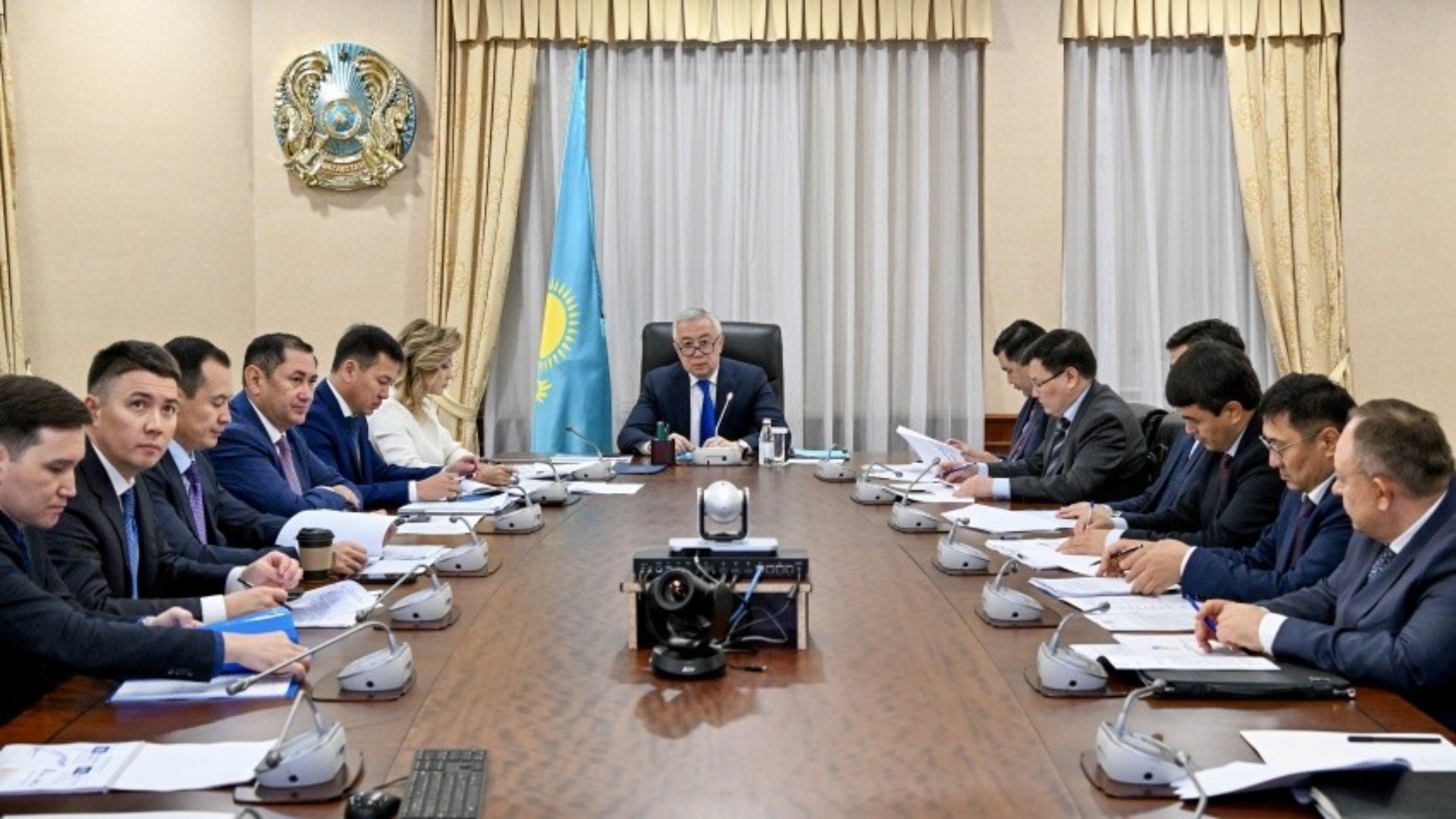
Снижение среднего индекса цен на социально-значимые продовольственные товары на -0,1% по итогам трех недель июля зафиксировано впервые с начала текущего года. Такие данные были озвучены на совещании по вопросам стабилизации цен на СЗПТ и инфляции, прошедшем под председательством заместителя Премьер-министра – министра национальной экономики Серика Жумангарина.По итогам июня годовая инфляция в стране составила 10,3%, при 10,4% в мае. Уровень годовой инфляции выше среднереспубликанского отмечен в 11 регионах страны. Наиболее высокие показатели зафиксированы в областях Жетісу, Ұлытау, а также в Северо-Казахстанском, и Акмолинском регионах.Как сообщила первый вице-министр торговли и интеграции Айжан Бижанова, июль и август традиционно являются периодом сезонной стабилизации цен на основные продукты питания. За последнюю неделю наиболее заметно подешевели помидоры на 15,1%, огурцы на 18,2%, морковь на 5,2% и яйца на 2,4%. Вместе с тем сохраняется рост цен на отдельные виды мясной продукции: баранину – 2%, конину – 1,3% и мясной фарш – 0,6%.В связи с этим Серик Жумангарин поручил провести детальный анализ рынка производства мяса и мясной продукции с учетом объемов производства, внутреннего потребления и экспортных поставок для определения дальнейших действий Правительства. Одним из ключевых факторов дальнейшей стабилизации цен станет увеличение внутреннего производства и расширение мер государственной поддержки отечественных производителей. До конца года планируется ввод в эксплуатацию трех заводов по рафинации растительных масел, что позволит увеличить предложение подсолнечного масла на внутреннем рынке.В ближайшее время вступит в силу нормативный правовой акт, предусматривающий льготные тарифы на электроэнергию для 40 предприятий хлебопекарной отрасли. Эта мера позволит снизить производственные издержки и будет способствовать сохранению стабильных цен на хлебобулочную продукцию.Кроме того, АО «НК «Қазақстан темір жолы» предоставляет скидку в размере 70% на железнодорожные перевозки социально значимых продовольственных товаров внутри страны. Местным исполнительным органам поручено обеспечить мониторинг таких перевозок и контроль за исполнением получателями данной меры поддержки встречных обязательств по недопущению необоснованного роста цен.Подводя итоги совещания, Серик Жумангарин поручил государственным органам и акиматам усилить адресную работу с участниками рынка.«По каждому случаю существенного роста цен необходимо анализировать всю цепочку поставок и устранять причины удорожания. Поручаю профильным министерствам и акиматам провести встречи с крупнейшими оптовыми поставщиками и импортерами, определить существующие барьеры и выработать необходимые меры государственной поддержки при обязательном принятии ими встречных обязательств по обеспечению ценовой стабильности. Такую же системную работу необходимо организовать и в отношении непродовольственных товаров и платных услуг, с учетом специфики соответствующих рынков. Каждый государственный орган должен обеспечить реализацию мер в пределах своей компетенции», — подчеркнул Серик Жумангарин. В этот же день вице-премьер провел совещание с министерствами науки и высшего образования и просвещения по вопросам стабилизации стоимости образовательных услуг.Source : https://www.gov.kz/memleket/entities/economy/press/news/details/1262905?lang=ru