News
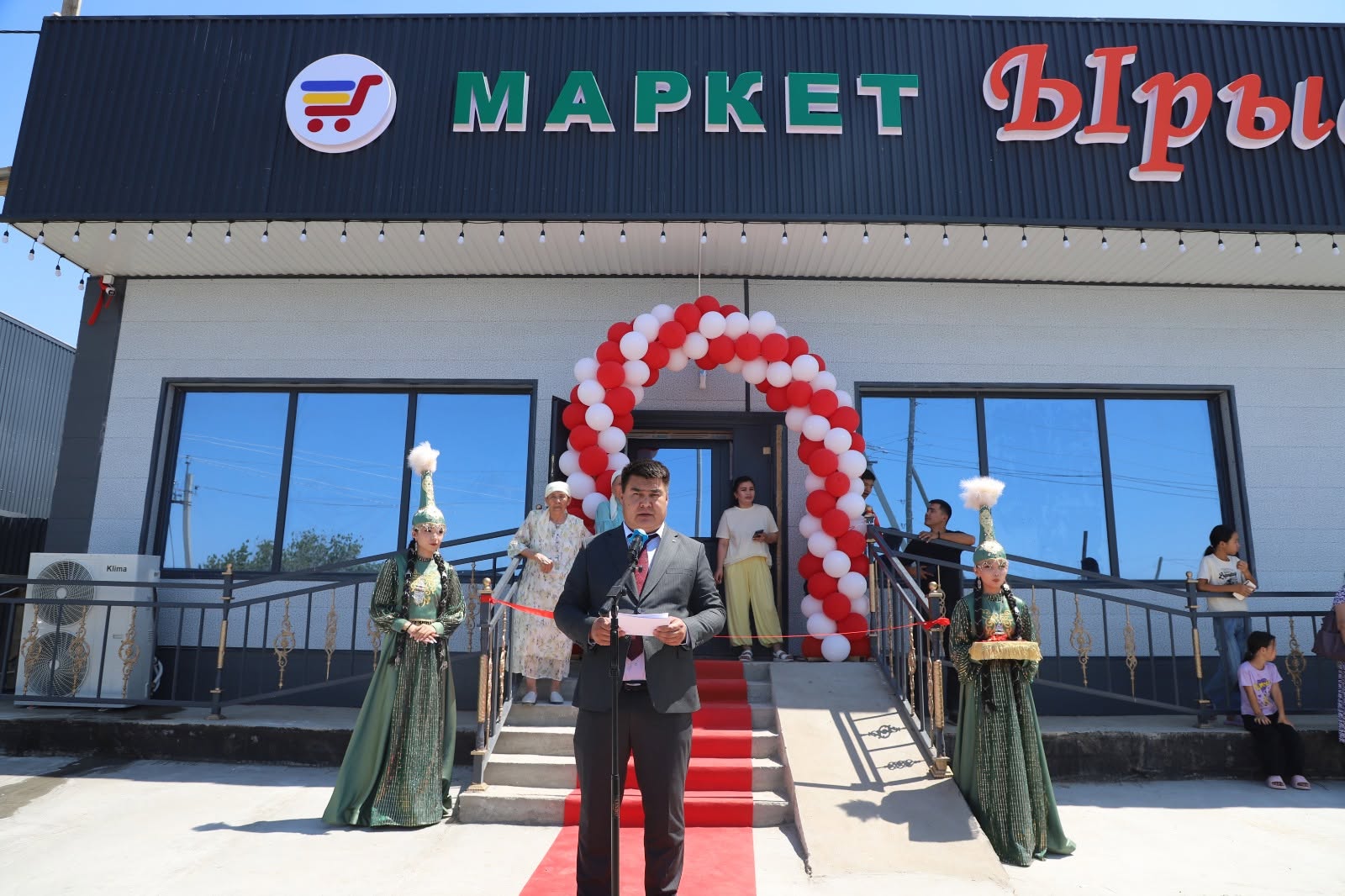
A New Business Facility Opens in Zhosaly Settlement 16.07.2026
Today, the grand opening ceremony of the new Yrystyzhan Shopping Center took place in Zhosaly settlement. The event was attended by Dias Asylbekuly Moldabayev, Deputy Akim of Karmakshy District, who congratulated the entrepreneur on this significant occasion and wished continued success and prosperity.“Entrepreneurship plays a vital role in ensuring sustainable economic growth and improving the well-being of the population. The Head of State has consistently emphasized that entrepreneurship is the driving force of the economy. I am confident that the implementation of such successful projects, along with the opening of new production facilities and commercial centers in our district, will further strengthen its socio-economic potential,” said Dias Asylbekuly.The newly opened Yrystyzhan Shopping Center is one of the important projects contributing to the development of entrepreneurship in the district. In addition to providing residents with high-quality and affordable food products, the shopping center has created 13 permanent jobs. This initiative will help improve the quality of life of local residents, stimulate entrepreneurial activity, and contribute to the further development of the district's economy.It is worth noting that the entrepreneurial sector in Karmakshy District continues to develop steadily. According to the results of the first half of 2026, the district has 2,837 registered business entities, 95.2% of which are actively operating. In addition, entrepreneurs receive government support through the Auyl Amanaty program and the Agrarian Credit Corporation, creating favorable conditions for the implementation of new investment projects.Source : https://www.gov.kz/memleket/entities/kyzylorda-karmakshy/press/news/details/1258689?lang=ru
VAT Excess Refund: Who Is Eligible and Under What Circumstances? 16.07.2026
The refund of excess Value Added Tax (VAT) is one of the measures of state support for businesses, enabling taxpayers to recover VAT amounts that have arisen as a result of carrying out certain types of business activities in a timely manner. In accordance with the Tax Code of the Republic of Kazakhstan, an excess VAT amount is defined as the amount by which input VAT deductible exceeds output VAT accrued, as reflected in the VAT return on a cumulative basis at the end of the reporting tax period. Who Is Eligible for a VAT Excess Refund?The right to claim a refund of excess VAT is granted to the following categories of taxpayers:-taxpayers engaged in the supply of goods, performance of work, or provision of services subject to the zero-rate VAT;-taxpayers carrying out activities under subsoil use contracts, except for contracts related to the exploration and/or extraction of commonly occurring minerals, groundwater, and therapeutic mud;-taxpayers purchasing goods, works, and services in connection with the construction of production buildings and facilities under long-term contracts, provided that such buildings and facilities are commissioned for the first time within the territory of the Republic of Kazakhstan. Cases Where an Excess VAT Amount Is Not RefundableAt the same time, the tax legislation establishes cases where an excess VAT amount is not subject to refund. In particular, no refund shall be granted for VAT amounts:-credited on the basis of invoices issued by procurement organizations operating in the agro-industrial sector;-credited in respect of goods, works, and services related to minerals transferred in kind as fulfillment of a tax obligation;-accumulated during tax periods in which the taxpayer claimed an additional amount of VAT as input tax. How to Claim a VAT Refund A taxpayer has the right to submit a claim for the refund of excess VAT by indicating the relevant request in the next VAT tax return. This right may be exercised within the statute of limitations established by the tax legislation of the Republic of Kazakhstan. Grounds for the Refund of Confirmed Excess VATThe following documents serve as the basis for refunding the confirmed amount of excess VAT:-a notification confirming the amount of excess VAT approved for refund under the simplified procedure;-a tax audit report, taking into account the results of the appeal, where applicable;-a conclusion issued based on the tax audit report. Once the refundable amount has been confirmed, the taxpayer shall submit a tax application to the tax authority at the place of registration. The refund procedure is then carried out on the basis of this application.Conclusion The refund of excess VAT is an important mechanism for supporting businesses and ensuring the financial stability of enterprises, particularly exporters and organizations implementing investment projects. Understanding the eligibility criteria and refund procedures enables taxpayers to exercise their right to VAT recovery in a timely manner, avoid errors in preparing the required documentation, and improve overall tax compliance.Source : https://www.gov.kz/memleket/entities/kgd-vko/press/news/details/1258668?lang=ru

The largest plant for the production of metal structures and ready-mixed concrete has been launched in the Almaty region 16.07.2026
Source : https://www.gov.kz/memleket/entities/almobl/press/news/details/1258662?lang=ru
On the Issuance of a Universal Banking License to KMF Bank JSC, Altyn Bank JSC (Subsidiary Bank of China Citic Bank Corporation Limited), Bank RBK Bank JSC, "Otbasy Bank" Housing Construction Savings Bank JSC 16.07.2026
In accordance with Orders No. Б-143, No. Б-144, No. Б-145, №Б-146 of the Deputy Chairman of the Agency, dated July 15, the licenses of the following banks have been re-registered:- “KMF Bank” JSC was issued universal banking license No. 1.1.719.137, which includes the following additional types of operations:other operations:interbank loans, interbank guarantees, interbank sureties, and other interbank operations.- “Altyn Bank (Subsidiary Bank of China Citic Bank Corporation Limited) ” JSC was issued universal banking license No. 1.1.949.136, which includes the following additional types of operations:other operations:interbank loans, interbank guarantees, interbank sureties, as well as other interbank operations.- “«Bank RBK» Bank” JSC was issued universal banking license No. 1.1.821.135, which includes the following additional types of operations:other operations:interbank loans, interbank guarantees, interbank sureties, as well as other interbank operations.“"Otbasy Bank" Housing Construction Savings Bank” JSC was issued universal banking license No 1.1.972.134Source : https://www.gov.kz/memleket/entities/ardfm/press/news/details/1258616?lang=ru
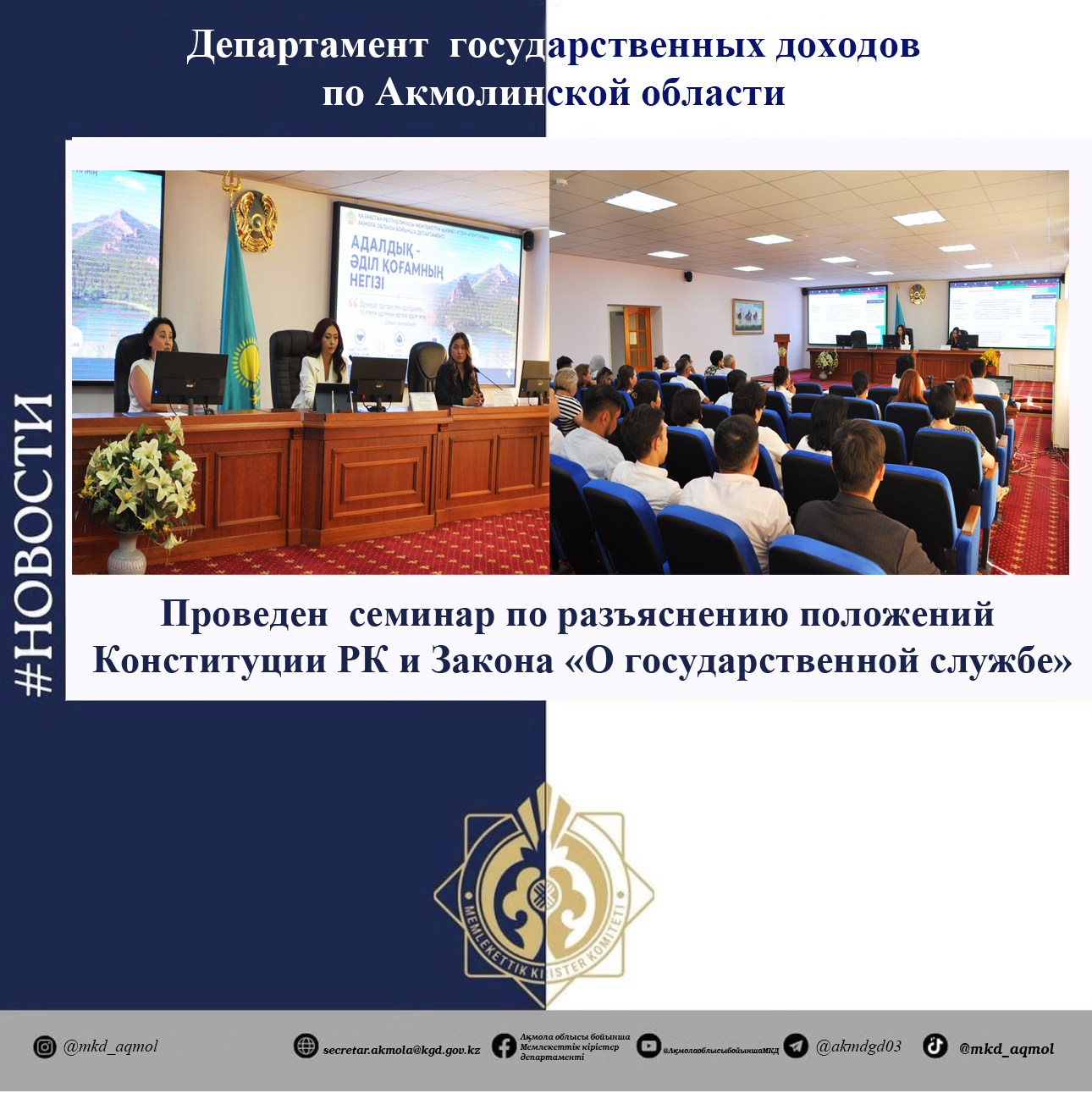
A seminar was held to clarify the provisions of the Constitution of the Republic of Kazakhstan and the Law "On the Civil Service of the Republic of Kazakhstan" 16.07.2026
Today on July 15, the Department of State Revenues in Akmola region hosted a seminar for employees of the Department and territorial departments with the participation of employees of the Department of the Agency of the Republic of Kazakhstan for Civil Service Affairs Zhazira Seytmaganbetova and Diana Koblanova.During the event, employees were familiarized with the amendments made to the Constitution of the Republic of Kazakhstan, as well as to the Law of the Republic of Kazakhstan "On Public Service." We received information on the procedure for entering the civil service, career opportunities, social guarantees, protection of labor rights and responsibility of civil servants.Employees of the Department got acquainted with key changes made to anti-corruption legislation, as well as to criminal, criminal procedure and administrative legislation on anti-corruption issues. The seminar participants were given answers to their questions.This work is aimed at improving the efficiency of the public service, ensuring compliance with legal requirements and improving the quality of public services provided.Source : https://www.gov.kz/memleket/entities/kgd-akmola/press/news/details/1258621?lang=ru
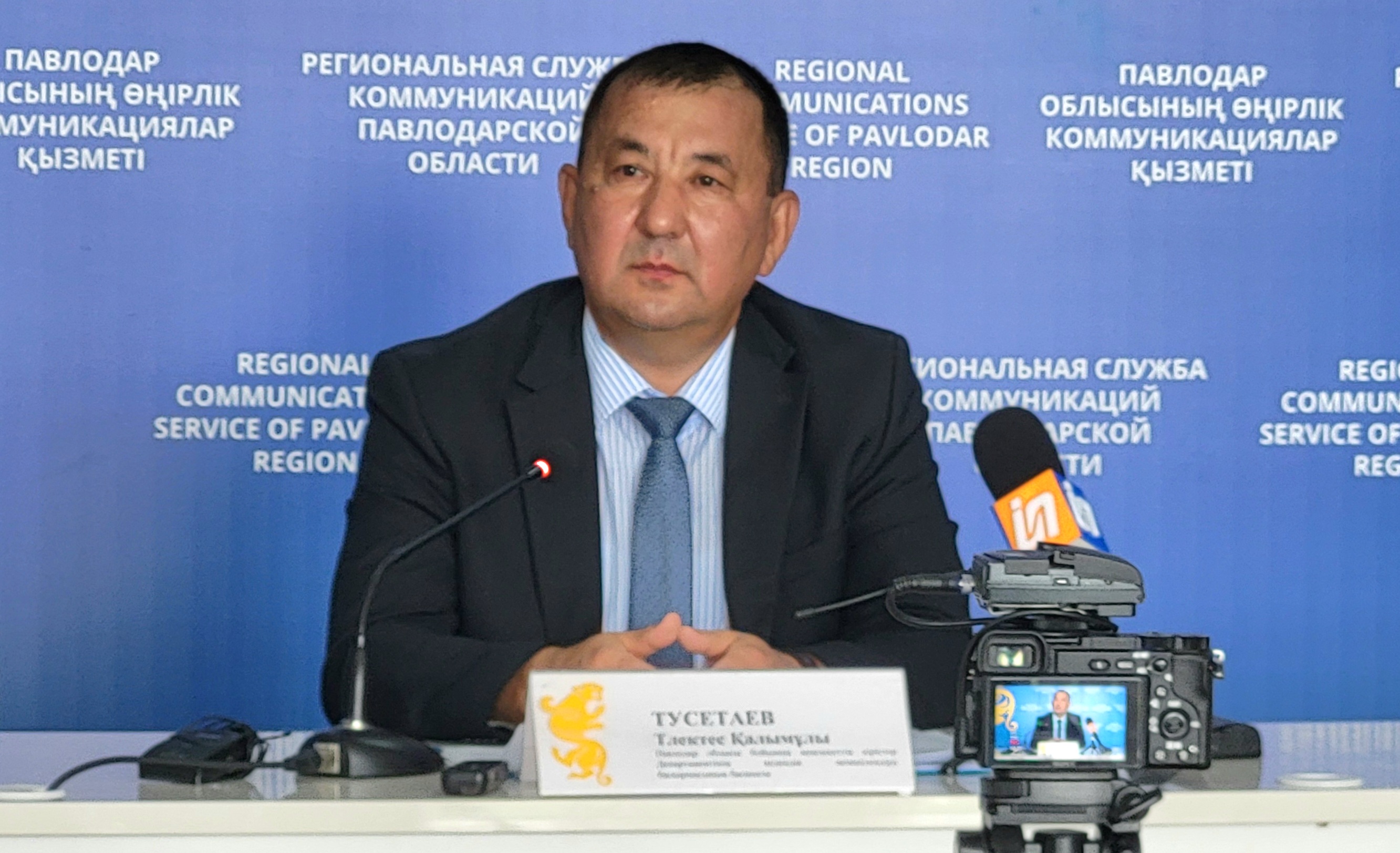
Discussed issues of customs administration 16.07.2026
The regional communications service held a press conference on key aspects of customs administration, the results of work for the first half of 2026 and measures to protect the domestic fuel market. During the event, the head of the Department of Customs Administration of the Department of State Customs of Pavlodar region, Tlekes Tusetayev, highlighted in detail the issues of receiving customs payments to the budget, the introduction of digital technologies and the fight against offenses when moving goods across the state border. The speaker paid special attention to monitoring compliance with time restrictions on the export of petroleum products, introduced by the Government to prevent fuel shortages in the country. As a result of the coordinated actions of the department, about 4 thousand liters of illegal fuel were detained in the border area, of which about 1,500 liters were gasoline and more than 2,500 liters were diesel fuel. The analysis shows that such offenses at the border are committed mainly by citizens in passenger vehicles trying to transport fuel in cans. To prevent such incidents, mobile groups carry out round-the-clock patrols of border roads. As for the overall results of the work, during the reporting period, the Department transferred 13,891.6 million tenge of customs payments and taxes to the budget, which demonstrates an increase of 104% compared to the same period last year. Due to high-quality administration, an additional 680 million tenge was recovered. An important step in the modernization of procedures was the introduction of the new information system "Keden", which made it possible to automate many processes and reduce the average time for issuing declarations in the absence of risks to 2-3 minutes.At the end of the meeting, the head of the Customs Administration Department recalled the importance of strict observance of customs rules and currency regulations by all participants in foreign economic activity.Department of Explanatory Work and Contact CenterState Duma of the Pavlodar regionSource : https://www.gov.kz/memleket/entities/kgd-pavlodar/press/news/details/1258542?lang=ru
Personal bankruptcy 16.07.2026
Bankruptcy may be established voluntarily upon the debtor's application to the court.Bankruptcy may be established compulsorily upon an application filed with the court by creditors or other persons authorized under this Law.In the cases provided for by the Law of the Republic of Kazakhstan "On Rehabilitation and Bankruptcy", the debtor is obliged to apply to the court for a declaration of bankruptcy.If the value of the property of a legal entity in respect of which a decision on liquidation has been adopted in accordance with paragraph 1 of Article 49 of the Civil Code of the Republic of Kazakhstan is insufficient to satisfy the creditors' claims, the liquidation commission shall apply to the court to have such legal entity declared bankrupt for the purpose of conducting bankruptcy proceedings in accordance with the rules established by the Law of the Republic of Kazakhstan "On Rehabilitation and Bankruptcy."The ground for declaring a debtor bankrupt by a court is the debtor's insolvency.The debtor's insolvency shall be determined by the court taking into account the financial sustainability opinion prepared in accordance with Article 49 of the Law of the Republic of Kazakhstan "On Rehabilitation and Bankruptcy." Source : https://www.gov.kz/memleket/entities/kgd-astana/press/news/details/1258516?lang=ru
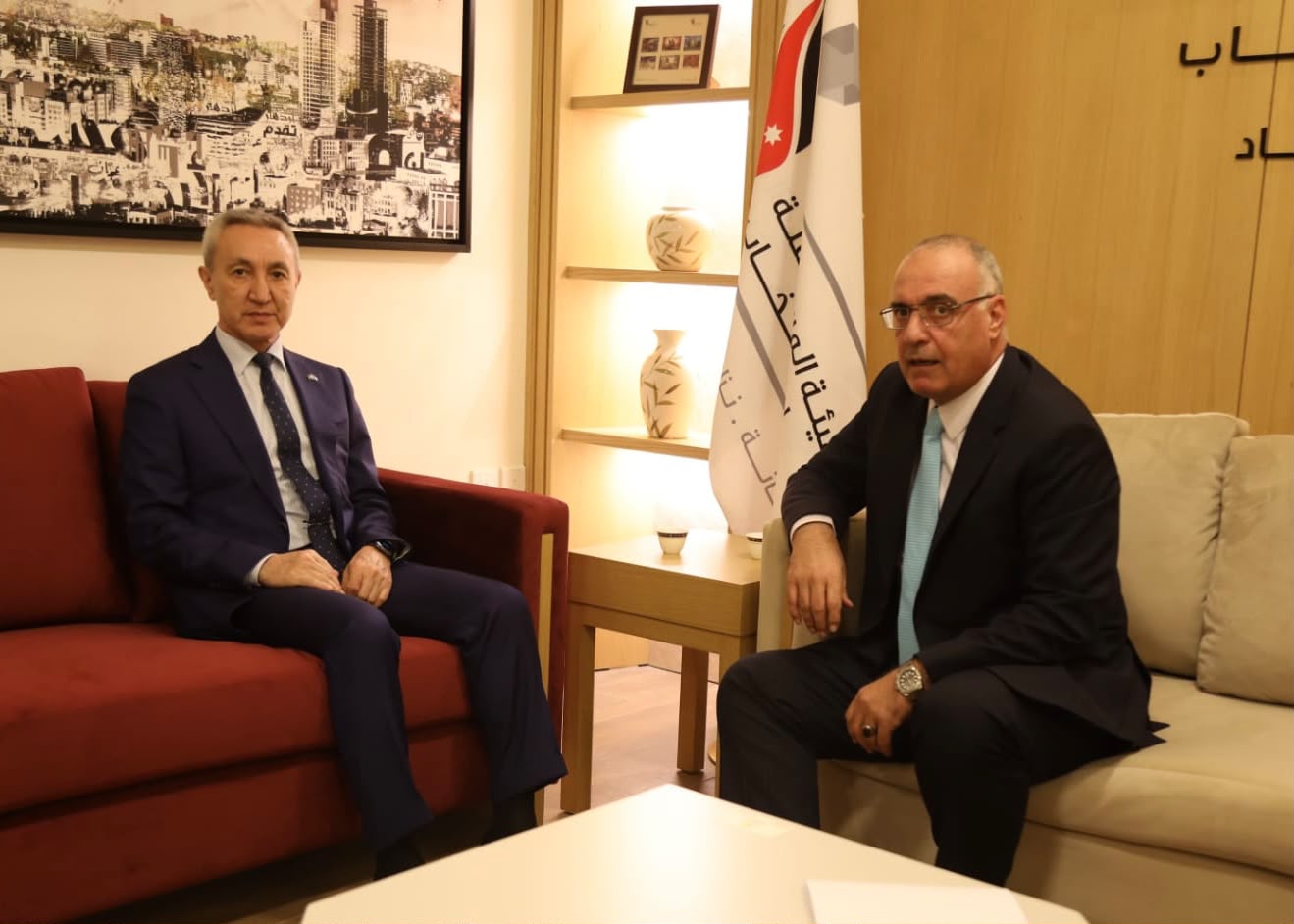
Meeting of the Ambassador of Kazakhstan with the Independent Election Commission of the Hashemite Kingdom of Jordan 16.07.2026
Amman, 15 July 2026 – Ambassador of the Republic of Kazakhstan to the Hashemite Kingdom of Jordan H.E. Mr.Talgat Shaldanbay, met with the Deputy Chairman of the Independent Election Commission of Jordan H.E. Mr.Ali Al-Zyoud.During the meeting, Ambassador T.Shaldanbay briefed his counterpart on the large-scale political, institutional and socio-economic reforms being implemented in Kazakhstan, as well as the key priorities for the further modernization of the country's system of public administration.Particular attention was given to the entry into force of the new Constitution of the Republic of Kazakhstan and the upcoming elections of deputies to the Kurultai, scheduled for 23 August 2026. It was noted that the formation of the first composition of the new unicameral legislature would mark an important milestone in Kazakhstan's transition to its renewed constitutional model.The Ambassador also highlighted Kazakhstan's consistent digital and economic modernization, the development of artificial intelligence technologies, modern infrastructure and high-tech industries, as well as the implementation of major projects in the transport, energy and logistics sectors.The Kazakh diplomat presented Ali Al-Zyoud with an invitation, on behalf of the Chairman of the Central Election Commission of the Republic of Kazakhstan H.E. Mr.Nurlan Abdirov, inviting him to participate as an international observer in monitoring the preparation and conduct of the elections of deputies to the Kurultai.For his part, Ali Al-Zyoud noted the high level of friendly relations between Kazakhstan and Jordan, expressed interest in further strengthening cooperation between the electoral authorities of the two countries, and confirmed the participation of representatives of the Independent Election Commission of Jordan as international observers for the upcoming elections of deputies to the Kurultai of the Republic of Kazakhstan.Source : https://www.gov.kz/memleket/entities/mfa-amman/press/news/details/1258521?lang=ru
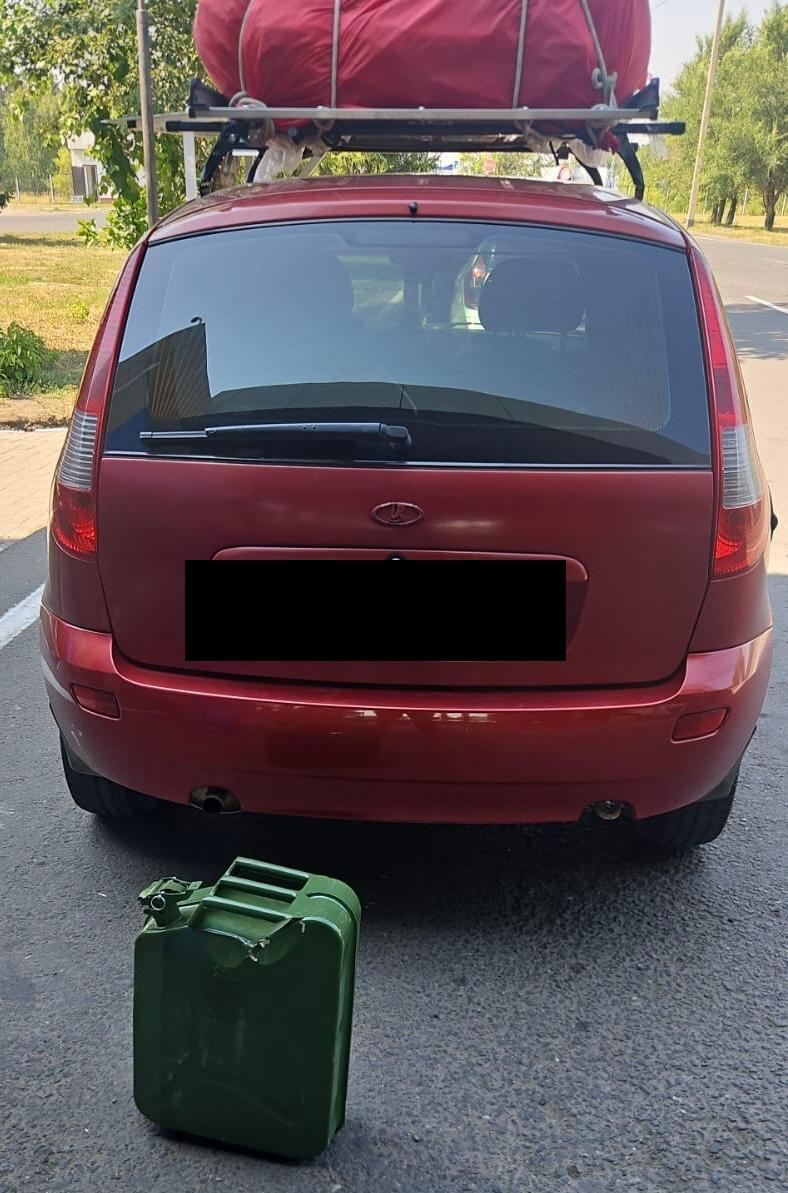
Strengthening control over the movement of petroleum products across the state border 16.07.2026
The Department of State Revenue for the Pavlodar region, together with the Border Guard Service of the National Security Committee of the Republic of Kazakhstan, has strengthened control over the movement of petroleum products across the state border. The work is aimed at protecting the domestic market, suppressing the illegal export of fuels and lubricants and ensuring economic security.Monitoring is carried out around the clock, both directly at automobile checkpoints and by mobile groups throughout the Pavlodar region. At the same time, the situation in the domestic market is being monitored daily, including an analysis of fuel sales volumes at gas stations.These verification measures are carried out within the framework of the instructions of the Prime Minister of the Republic of Kazakhstan and the execution of the Order of the Minister of Energy of the Republic of Kazakhstan No. 175-n/k "On certain issues of export of petroleum products from the territory of the Republic of Kazakhstan", which introduced temporary restrictions on the export of petroleum products from the country.:- until November 21, 2026, there is a ban on the export of gasoline, diesel fuel and certain types of petroleum products by road. The only exceptions are fuel in the factory tanks of cars (no more than once a day) and lubricating oils.;- until December 31, 2026, a ban has been imposed on the export of light distillates, jet fuel, diesel fuel, gas oil, toluene, xylene and petroleum bitumen outside the customs territory of the EAEU.Due to the increased measures, about 100 attempts to export fuel and lubricants have been stopped at automobile checkpoints in the region.In total, specialists detained about 4 thousand liters of fuel, of which about 1,500 liters are gasoline and more than 2,500 liters are diesel fuel. The analysis shows that offenses at the border are committed mainly by citizens in passenger vehicles who are trying to transport fuel in cans.The DGD staff also conducts time-lapse surveys of gas stations near the border, during which gasoline and diesel fuel sales volumes are monitored. There are 15 gas stations in total in the border area.In the Department of Internal Affairs of the Pavlodar region, security and inspection activities continue around the clock in an enhanced mode.Department of Explanatory Work and Contact CenterState Duma of the Pavlodar regionSource : https://www.gov.kz/memleket/entities/kgd-pavlodar/press/news/details/1258523?lang=ru
The Prosecutor's Office of Pavlodar region discussed judicial practice in disputes with government agencies 16.07.2026
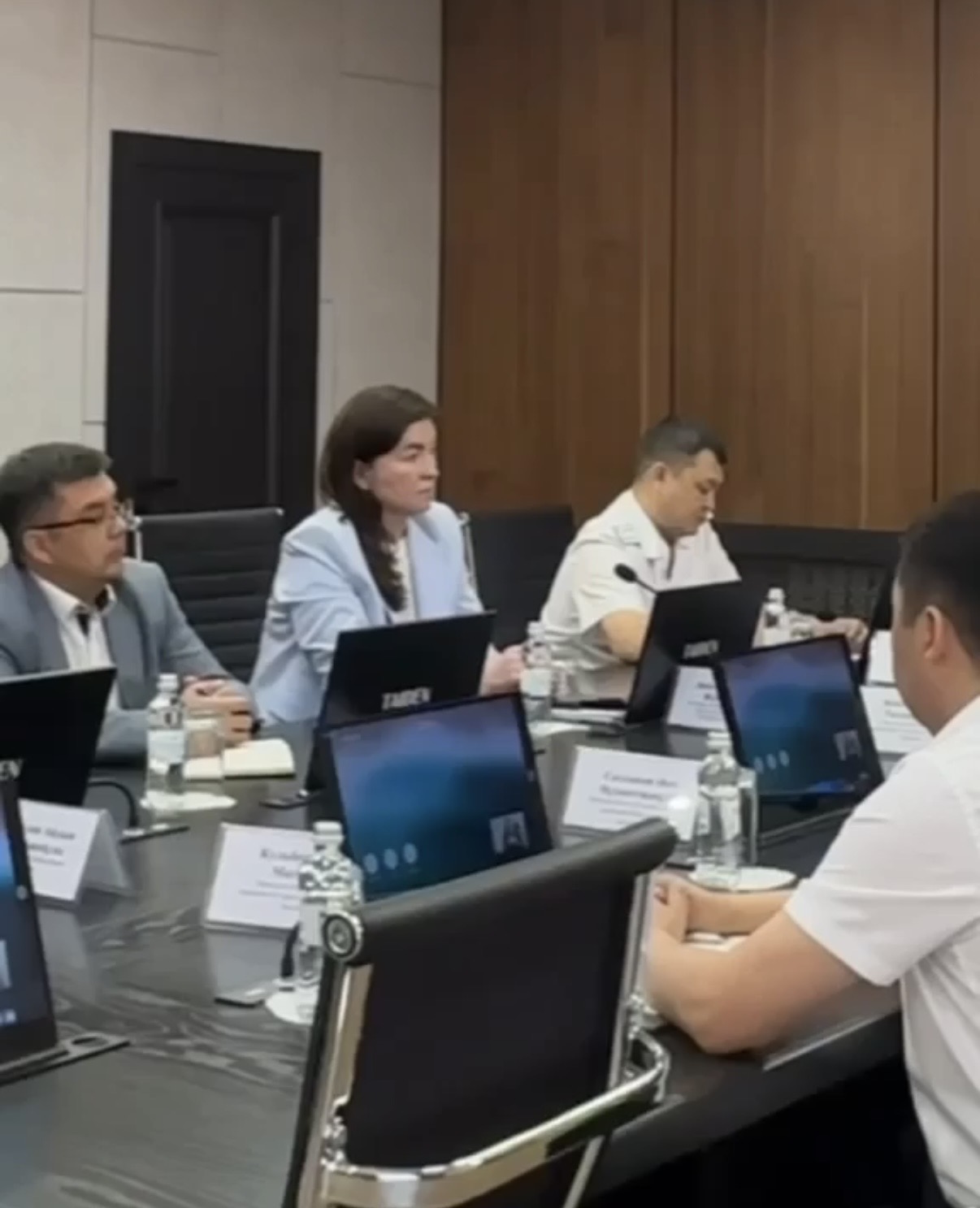
A working meeting was held at the site of the Prosecutor's Office of the Pavlodar region to discuss judicial practice on challenging decisions and actions of state bodies.The event was attended by Chairman of the Specialized Interdistrict Administrative Court (SMAS) of Pavlodar region Adlet Bakhtiyarov, as well as representatives of the Prosecutor's Office and state revenue.The participants of the meeting discussed in detail the problematic issues related to violations that are allowed during the adoption of administrative acts.During the discussion, Asem Dyusembekova, Head of the Legal Department of the State Duma of the Pavlodar Region, stressed that the Department is constantly working to reduce the number of court disputes."In order to minimize the number of challenges to administrative acts, we systematically analyze and summarize judicial practice. Our lawyers identify both general and specific problems that may cause the courts to rule against the state revenue authorities. Based on the results of this analysis, specific proposals are being developed to improve the performance of tax and customs administration," Asem Dyusembekova.The participants of the event agreed that strict compliance with the requirements of the Administrative Procedural Procedure Code (APPC RK) when making decisions by government agencies directly affects the legality of the acts adopted.Work on the analysis of court decisions and improving the quality of administrative procedures in the Department of State Revenue in Pavlodar region is under special control.Department of Explanatory Work and Contact CenterState Duma of the Pavlodar regionSource : https://www.gov.kz/memleket/entities/kgd-pavlodar/press/news/details/1258534?lang=ru
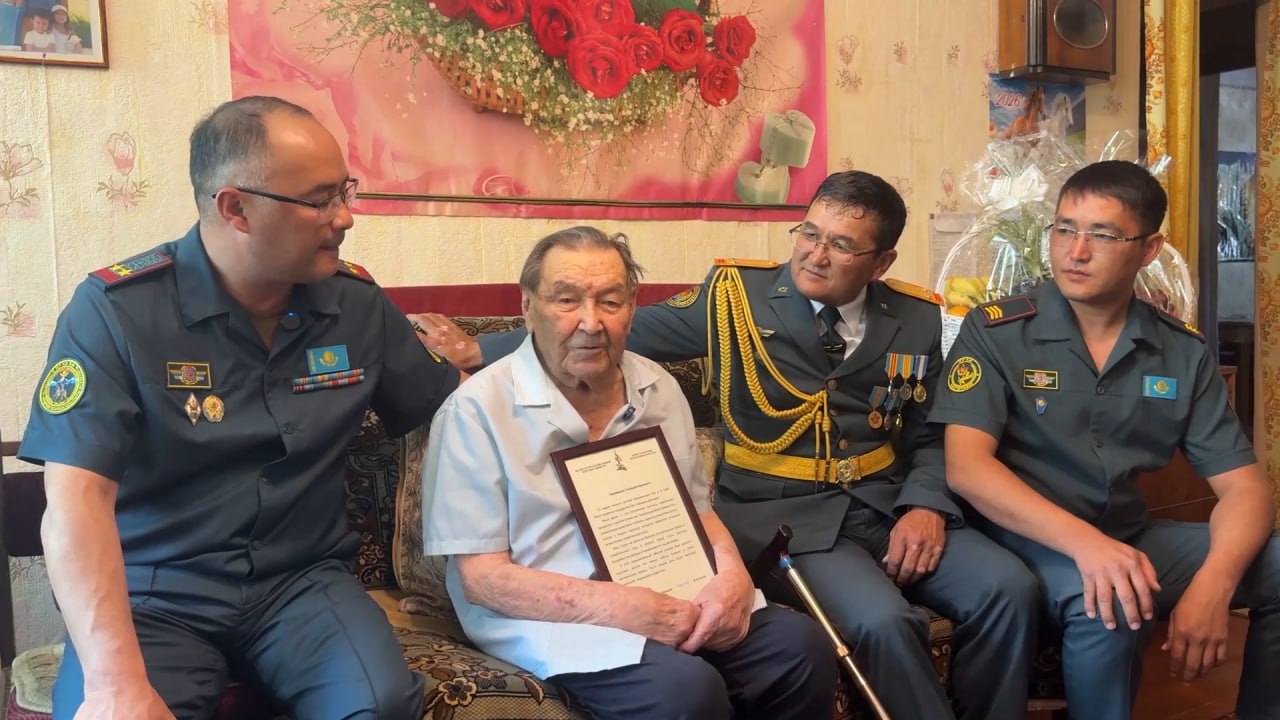
In Taraz, war veteran Gennady Ivanov was congratulated on his 100th birthday 16.07.2026
Source : https://www.gov.kz/memleket/entities/mod/press/news/details/1258538?lang=ru
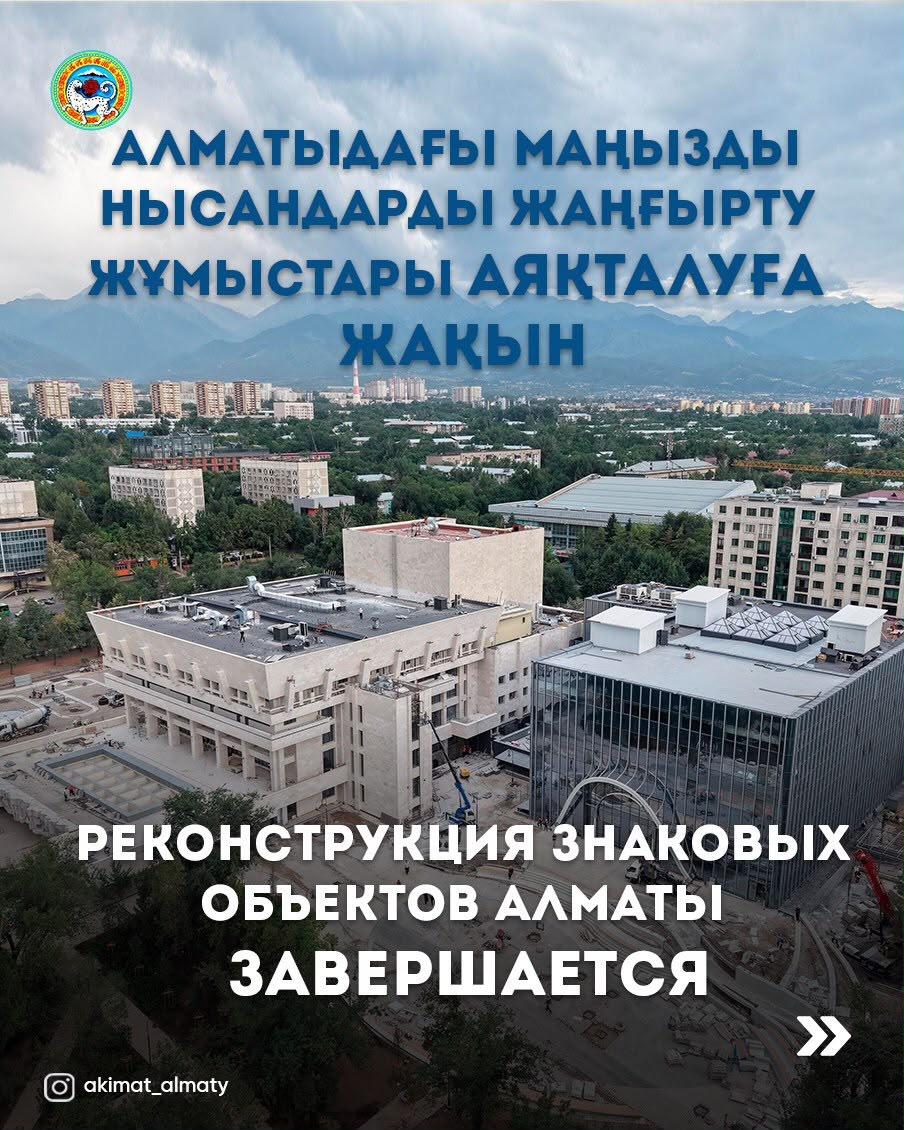
The Mayor of Almaty, Darkhan Satybaldy, inspected the progress of the renovation of the N. Sats Theatre for Children and Youth and the construction of its auxiliary building 16.07.2026
The renovation of this important cultural site is nearing completion. The building’s load-bearing structures have been reinforced, and the roof, facade, and engineering networks have been modernized. In addition, state-of-the-art theatrical equipment has been installed.Throughout the renovation, special attention was paid to preserving the building's historical appearance. Artistic elements, including mosaics, were restored based on archival materials and with the participation of their original creators.A new wing of the theatre has also been constructed. It will house an additional auditorium, dressing rooms, workshops, and storage space for scenery. The surrounding area will be transformed into a modern public space for residents and visitors to enjoy.The work is scheduled to be completed by the end of the summer, and the renovated theatre will open its new season this autumn.As part of his working visit, Darkhan Satybaldy also inspected the Raiymbek Batyr Memorial Complex. The main construction work is complete, and crews are currently finalizing the interior finishing, landscaping the grounds, and preparing the museum exhibits.Source : https://www.gov.kz/memleket/entities/almaty-us/press/news/details/1258497?lang=ru
Key Amendments to the Tax Code of the Republic of Kazakhstan Effective from January 1, 2026, Concerning the Taxation of Non-Residents 16.07.2026
Effective January 1, 2026, the new Tax Code of the Republic of Kazakhstan (Law of the Republic of Kazakhstan No. 214-VIII dated July 18, 2025) entered into force, comprehensively reforming the country's tax system. The new legislation introduces significant changes across various areas of taxation, including the taxation of non-residents. New Withholding Tax Rates on Non-Residents' Income. Beginning in 2026, new withholding tax rates apply to certain types of income derived by non-residents. In addition, a progressive personal income tax (PIT) scale has been introduced for specific categories of income. Pursuant to Article 682 of the new Tax Code, dividends paid to an individual who directly or indirectly owns at least 25 percent of the capital of a resident legal entity are subject to the following tax rates: 5% on the portion of dividends not exceeding 230,000 Monthly Calculation Indices (MCI); 15% on the portion exceeding this threshold. A 10% tax rate applies to: interest on loans and credits; income from debt securities; and winnings from gambling and betting activities. Introduction of a Progressive Personal Income Tax ScaleUnder Articles 692 and 693 of the Tax Code, a progressive PIT scale has been introduced for: employment income of non-resident employees; and income of foreign citizens and stateless persons seconded by a non-resident legal entity that is not registered as a taxpayer in the Republic of Kazakhstan. The applicable rates are: 10% on income up to 8,500 MCI; 15% on the portion exceeding 8,500 MCI. Accordingly, the progressive tax rates apply exclusively to the employment income of the above categories of non-resident individuals. Income Taxed at Existing Rates Certain categories of non-resident income continue to be taxed under the existing rules. Income received by non-resident individuals under civil law contracts (service agreements), as well as other non-employment income of non-residents, remains subject to a 20% withholding tax without the application of tax deductions.The following types of income continue to be taxed at 15%: dividends (except where the new progressive rules apply); capital gains; interest income; and royalties. Abolition of Certain Dividend Tax Exemptions. Under the previous version of the Tax Code, Article 646 provided tax relief for dividend income where specific conditions were met, including the requirement that shares or participating interests had been held for more than three years. Effective January 1, 2026, these tax incentives have been abolished. Consequently, the preferential tax treatment previously available for qualifying dividend income is no longer applicable.New Taxation Rules for Non-Resident Labour ImmigrantsThe 2026 Tax Code also introduces significant changes to the taxation of income earned by non-resident labour immigrants.The taxable income of a non-resident labour immigrant consists of:a minimum taxable income equal to 40 Monthly Calculation Indices (MCI) for each month during which work is performed or services are rendered; andthe amount by which the income payable under the employment contract exceeds the minimum taxable income for the relevant period, where such excess exists.The taxable excess is calculated as follows:income received for work performed or services rendered during each month of the relevant period;less the minimum taxable income for the same period;less an additional deduction equal to 14 Monthly Calculation Indices (MCI) for each month during which work is performed or services are rendered.Payment of Personal Income Tax. Personal income tax calculated on the minimum taxable income must be paid before obtaining or extending the labour immigrant's permit, at the place of residence (stay) of the non-resident labour immigrant.Personal income tax calculated on the taxable excess must be paid no later than ten calendar days after the deadline for filing the Declaration of Income and Property for the relevant tax period.Filing of the Tax Return. A non-resident labour immigrant is required to submit the Declaration of Income and Property to the tax authority at the place of residence (stay) no later than July 1 of the year following the reporting tax period.Source : https://www.gov.kz/memleket/entities/kgd-vko/press/news/details/1258476?lang=ru
Meeting with the Associate Editor of the Vatican’s Fides News Agency 16.07.2026
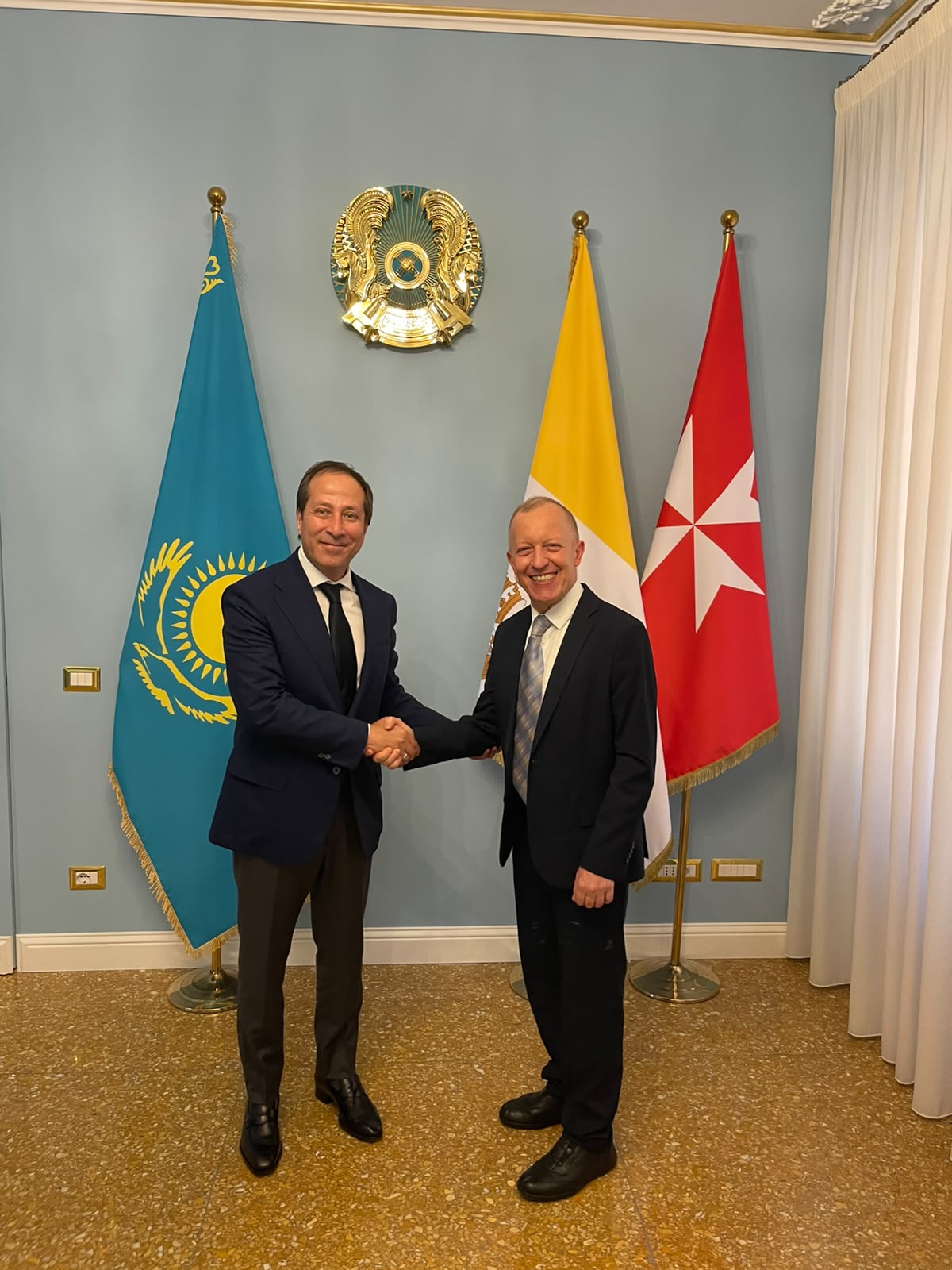
On 14 July 2026, Ambassador of the Republic of Kazakhstan to the Holy See Timur Primbetov met at the Embassy with Paolo Affatato, a prominent Italian journalist and Asia Editor of the Fides News Agency, which operates under the Dicastery for Evangelization of the Holy See.The interlocutors discussed prospects for cooperation in the field of information and media outreach, including opportunities to provide broader coverage of the political, social and economic reforms being implemented in Kazakhstan under the leadership of President Kassym-Jomart Tokayev.Particular attention was devoted to Kazakhstan’s international initiatives aimed at strengthening peace and mutual understanding, as well as promoting interreligious, interconfessional and intercultural dialogue.The parties also explored opportunities for the preparation and publication of informational and analytical materials ahead of major international events to be held in Kazakhstan.The Vatican journalist expressed his interest in developing constructive cooperation with the Embassy and his readiness to contribute to the coverage of relevant topics through the information platforms of the Fides News Agency.Following the meeting, the parties agreed to examine the possibility of publishing materials dedicated to the Congress of Leaders of World and Traditional Religions in the lead-up to the 24th Meeting of the Secretariat of the Congress, scheduled to take place in Astana in October 2026.Source : https://www.gov.kz/memleket/entities/mfa-vatican/press/news/details/1258485?lang=ru

Public service for issuing state land title certificates becomes fully online 16.07.2026
Starting July 12, 2026, the public service for issuing state land title certificates is no longer be available at Public Service Centers (PSCs). Applications for obtaining a state land title certificate can now be submitted exclusively through the eGov.kz portal. The changes come into force in accordance with the Order of the Ministry of Agriculture of the Republic of Kazakhstan.To obtain the service, users must sign in to the eGov.kz portal, select the service for the issuance of a state land title certificate, complete the required information, and sign the application using one of the available electronic authentication methods. Once the application has been processed, the result will be available in the personal account.Detailed information on the procedure for obtaining the service is available in the service datasheet published on the eGov.kz portal."Previously, citizens were required to visit a Public Service Centre in person to obtain a state land title certificate. Today, this requirement has virtually disappeared, as 96% of applications are already submitted online. As of 12 July, the entire process has been fully digitized. Applicants now simply need to submit an application through the eGov.kz portal, sign it using their digital signature (DS), and receive the completed document in their personal account. The same approach is being used to digitize the TOP-10 public services. Even now, this initiative is delivering tangible results: the workload of PSC operators has been reduced by 30%, enabling hundreds of thousands of citizens to receive public services more quickly and without the need to visit PSCs or wait in queues”, told Rostislav Konyashkin, First Vice Minister of Artificial Intelligence and Digital Development of the Republic of Kazakhstan.To date, the number of public services have already been automated and made available online, including the issuance of technical passports and duplicate cadastral passports for real estate, issuance of digital signatures (DS), residence registration, issuance of driving licenses, as well as the issuance and extension of work permits for foreign labour immigrants, etc.At the same time, if a citizen does not have the necessary conditions to obtain the service online, they may use the self-service zones at PSCs and independently apply for the public service.The transition to an exclusively online service format has been implemented through the joint efforts of the Public Services Committee under the Ministry of Artificial Intelligence and Digital Development of the Republic of Kazakhstan, the Ministry of Agriculture of the Republic of Kazakhstan, National Information Technologies JSC and "Government for Citizens" State Corporation.Source : https://www.gov.kz/memleket/entities/aqmola-selinograd/press/news/details/1258466?lang=ru
History of the establishment of the Korgalzhyn State Nature Reserve 16.07.2026
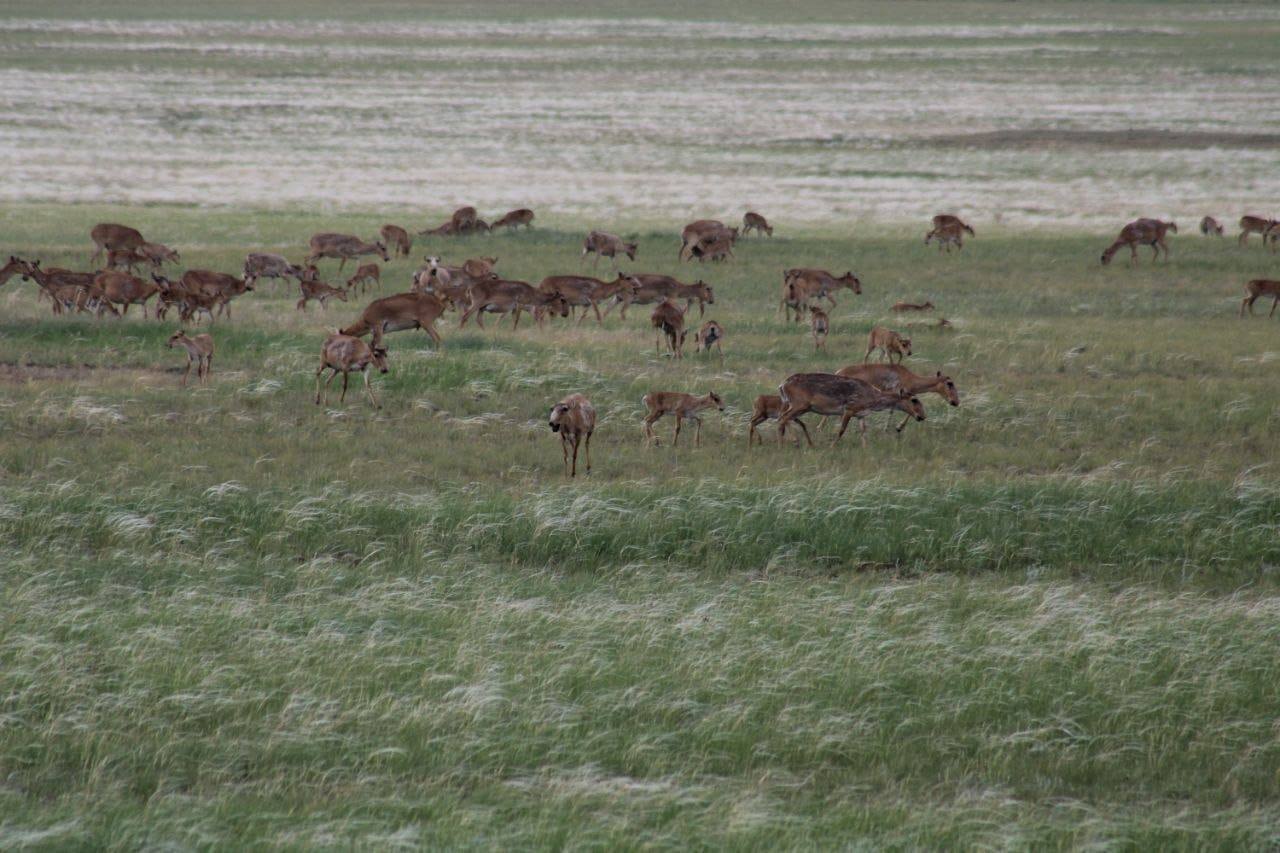
The Korgalzhyn State Nature Reserve is one of the largest specially protected natural areas in the Republic of Kazakhstan. It was established in April 1968 to conserve the unique steppe and wetland ecosystems of Central Kazakhstan. The reserve covers an area of 543,171 hectares.The reserve is centered around the unique Tengiz–Korgalzhyn lake system, which includes the saline Lake Tengiz and the freshwater Lake Korgalzhyn. Located at the intersection of the major migratory bird flyways of Eurasia, the area serves as one of the most important breeding, stopover, and resting sites for migratory birds. It is also home to the world’s northernmost breeding colony of Greater Flamingos.The outstanding conservation value of the reserve has received international recognition. In 1976, the Tengiz–Korgalzhyn lake system was designated as a Wetland of International Importance under the Ramsar Convention. In 2007, the territory was included in the global Important Bird Areas (IBA) network. Later, it was inscribed on the UNESCO World Heritage List as part of the “Saryarka – Steppe and Lakes of Northern Kazakhstan” property and became Kazakhstan’s first UNESCO Biosphere Reserve under the Man and the Biosphere (MAB) Programme.Today, the Korgalzhyn State Nature Reserve is one of Kazakhstan’s leading centers for nature conservation and scientific research. The reserve is home to 365 bird species, 46 mammal species, 15 fish species, 4 reptile species, 2 amphibian species, and more than 700 insect species. Its flora comprises 443 species of vascular plants, representing approximately one quarter of the flora of the Saryarka (Kazakh Uplands).Thanks to its exceptional biodiversity, unique natural ecosystems, and internationally recognized conservation status, the Korgalzhyn State Nature Reserve is regarded as one of the most important centers for nature conservation not only in Kazakhstan but throughout Eurasia.Source : https://www.gov.kz/memleket/entities/ecogeo/press/news/details/1258427?lang=ru
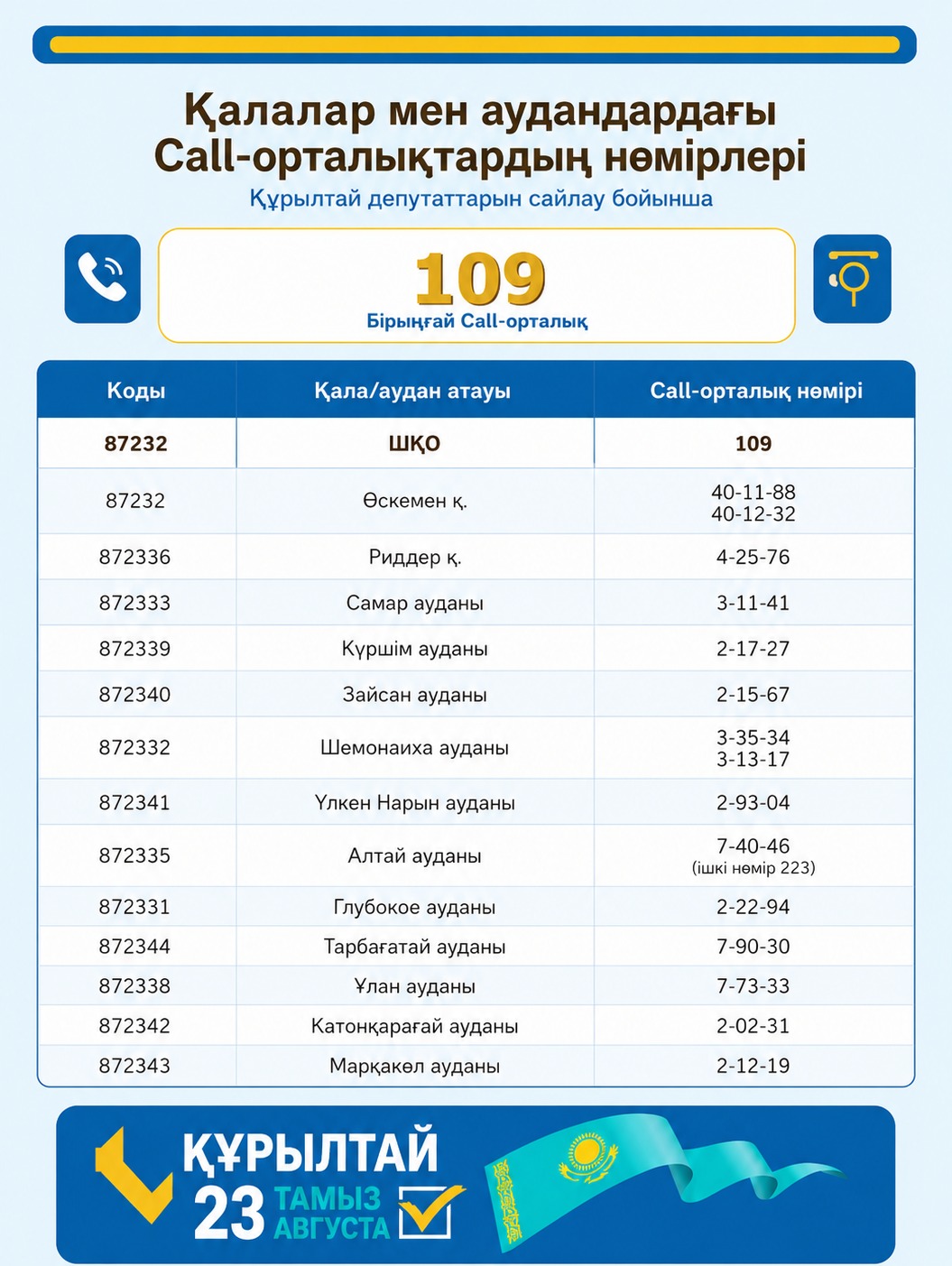
Call Center Numbers in Cities and Districts 16.07.2026
Source : https://www.gov.kz/memleket/entities/vko-ridder/press/news/details/1258415?lang=ru
Concept of anti-corruption policy of the Republic of Kazakhstan for 2022-2026 16.07.2026
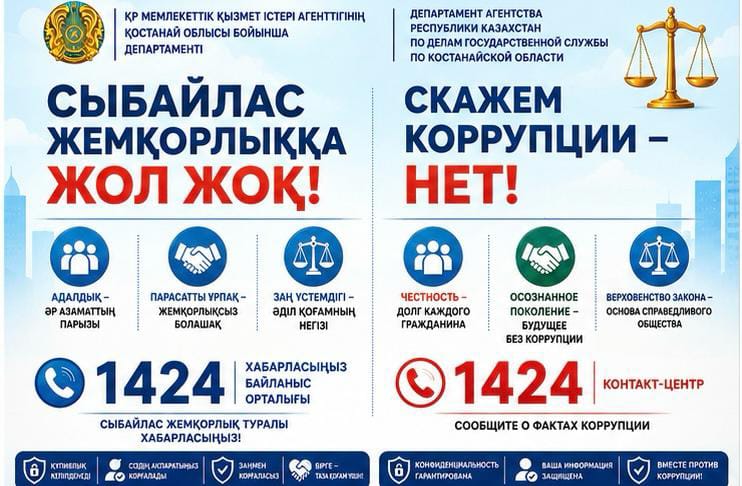
The Concept of Anti-Corruption Policy of the Republic of Kazakhstan for 2022-2026 prioritizes fostering an anti-corruption culture and principles of integrity in society, increasing citizens' legal literacy, and strengthening sustainable intolerance to any manifestations of corruption. To enhance citizens' legal awareness, prevent corruption offenses, and inform the public about the fundamental principles of combating corruption, preventative measures, and mechanisms for protecting citizens' rights, civil servants from the Mendykara District Maslikhat familiarized themselves with anti-corruption informational materials (brochures, memos, infographics, and other informational and explanatory materials).Source : https://www.gov.kz/memleket/entities/maslihat-mendikara/press/news/details/1258418?lang=ru
Число социальных предпринимателей в Казахстане достигло 1776 16.07.2026
В Казахстане продолжает расти число социальных предпринимателей. По итогам II квартала 2026 года в Едином реестре субъектов социального предпринимательства числятся 1 776 предпринимателей. По сравнению с итогами I квартала количество участников реестра увеличилось почти на 11,2%.Единый реестр субъектов социального предпринимательства формируется и актуализируется Министерством национальной экономики РК на ежеквартальной основе. Включение в него позволяет предпринимателям претендовать на предусмотренные законодательством меры государственной поддержки и развивать проекты, направленные на решение социально значимых задач.Социальное предпринимательство объединяет бизнес, который не только ведет предпринимательскую деятельность, но и создает общественную пользу: обеспечивает занятость людей с инвалидностью и представителей социально уязвимых категорий населения, оказывает социально значимые услуги или реализует проекты, направленные на решение актуальных социальных проблем.Формирование реестра осуществляется на основании решений специальных комиссий при местных исполнительных органах, которые рассматривают заявления предпринимателей и оценивают их соответствие установленным критериям.Source : https://www.gov.kz/memleket/entities/economy/press/news/details/1258422?lang=ru
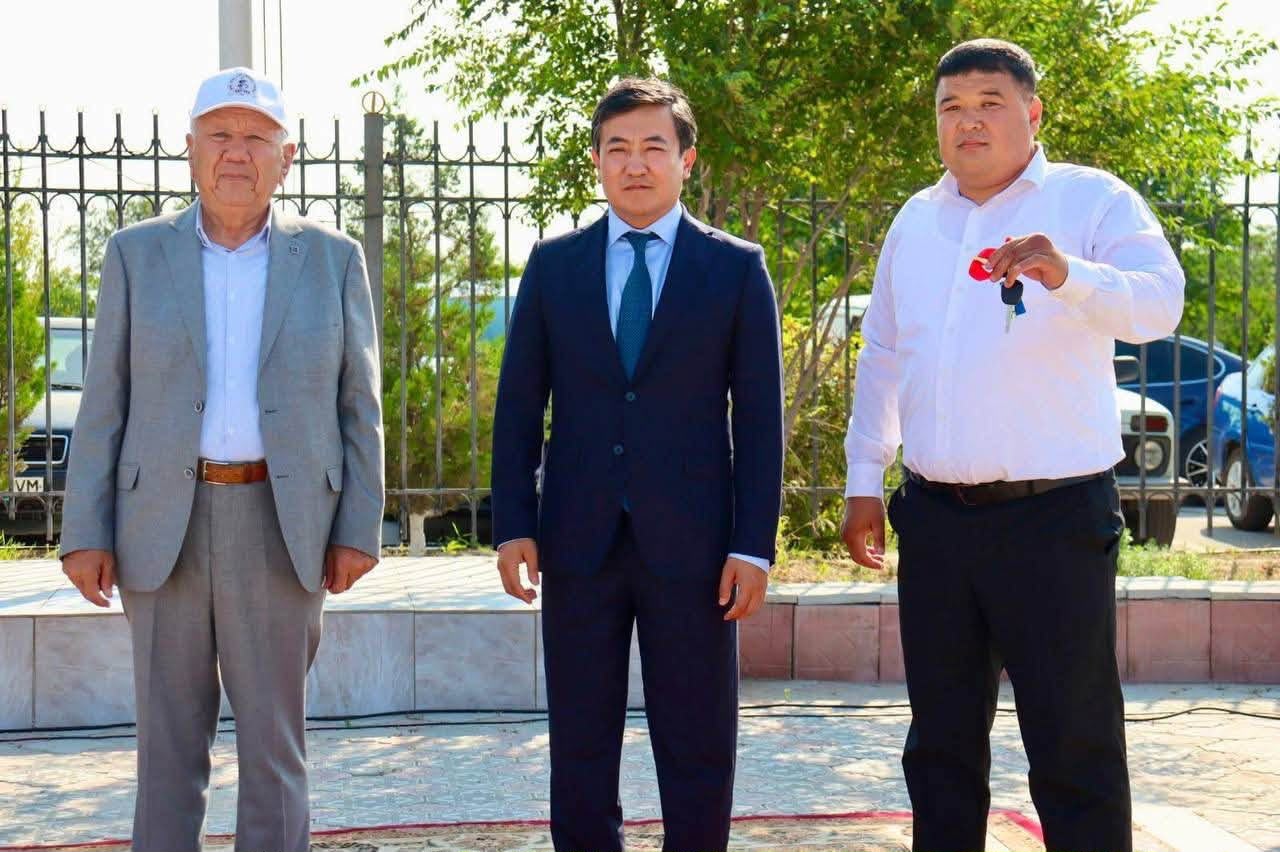
**New Buses Introduced for Residents of Munaily District** Modern **Yutong** buses have been introduced in Munaily District to improve the quality of public transportation services, according to the Public Communications Center. According to the district administration’s press service, four of the new buses will operate on the **Mangystau – Batyr – Mangystau** route, while another four will serve the **Mangystau – Atameken – Mangystau** route. The keys to the new buses were presented during an official ceremony by Munaily District Akim Kanat Kulzhanov and Chairman of the Munaily District Veterans Council Chapay Abilov. Speaking at the ceremony, the district akim emphasized the importance of the new buses for local residents. “The new vehicles fully comply with modern standards. They not only ensure greater comfort and safety for passengers but also improve the reliability of the bus schedule and will help raise the quality of passenger transportation services to a new level,” said Kanat Kulzhanov. 16.07.2026
Source : https://www.gov.kz/memleket/entities/mangystau-munaily-batyr/press/news/details/1258389?lang=ru