News
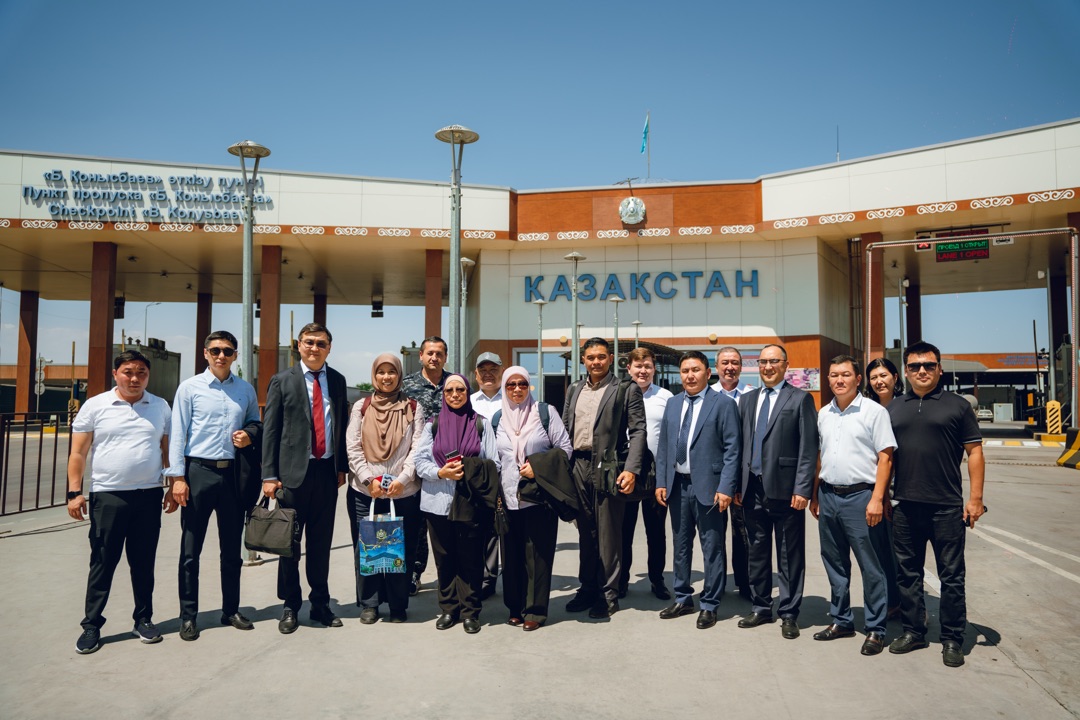
Kazakhstan Showcased Advanced Digital Solutions for Customs Control to Malaysia 15.07.2026
On 8 July 2026, a working meeting was held at the B. Konysbayev border crossing point in the Turkistan Region between representatives of the State Revenue Committee of the Ministry of Finance of the Republic of Kazakhstan and a delegation from the Royal Malaysian Customs Department. The meeting was organized at the initiative of the World Customs Organization as part of its trade facilitation programme. Its main purpose was to exchange experience and demonstrate modern solutions implemented by Kazakhstan to accelerate and enhance the transparency of customs procedures. The Malaysian representatives were introduced to the operations of the border crossing point and the coordination mechanisms among government agencies involved in border management. Particular attention was paid to modern technologies that make border crossing faster, more convenient, and more efficient for both traders and government authorities. The delegation was also presented with the KEDEN information system, which automates customs clearance procedures; the risk management system, which enables customs authorities to focus controls on potentially high-risk shipments; and the CargoRuqsat electronic queue system, which allows carriers to book border crossing times in advance, helping to reduce congestion and improve process transparency. Kazakhstan’s experience generated significant interest among the foreign delegates. The Head of the Royal Malaysian Royal Malaysian Customs Department delegation highly praised the level of digitalization of Kazakhstan’s customs service, noting the effectiveness of the technologies being used and expressing gratitude to the State Revenue Committee and the World Customs Organization for organizing the meeting. At the conclusion of the event, both sides reaffirmed their commitment to further strengthening professional cooperation and continuing the exchange of experience and best practices in the field of customs administration. Source : https://www.gov.kz/memleket/entities/kgd/press/news/details/1257524?lang=ru
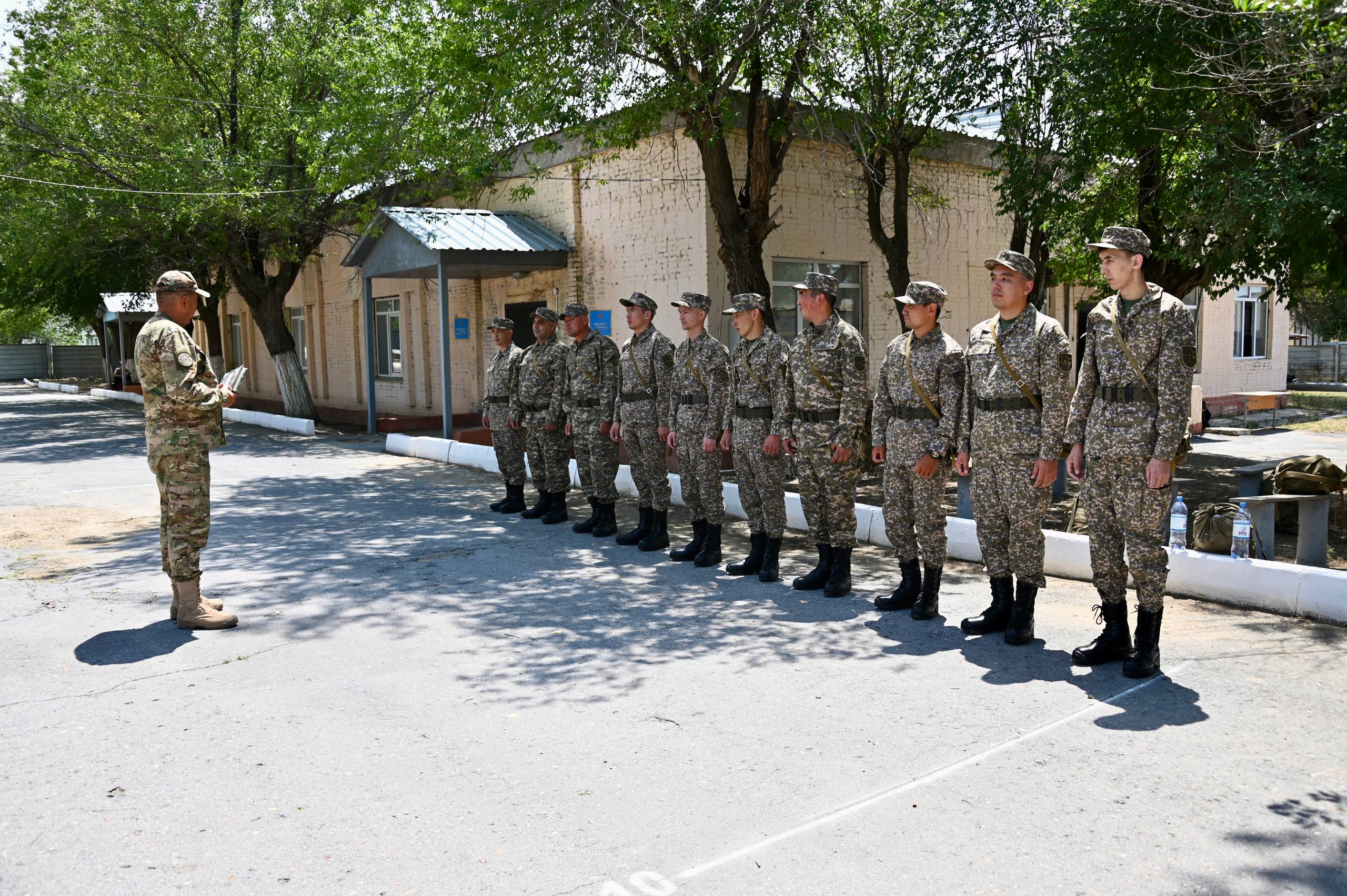
Training assemblies for the retraining of military reservists have begun at the country's garrisons 15.07.2026
Source : https://www.gov.kz/memleket/entities/mod/press/news/details/1257530?lang=ru
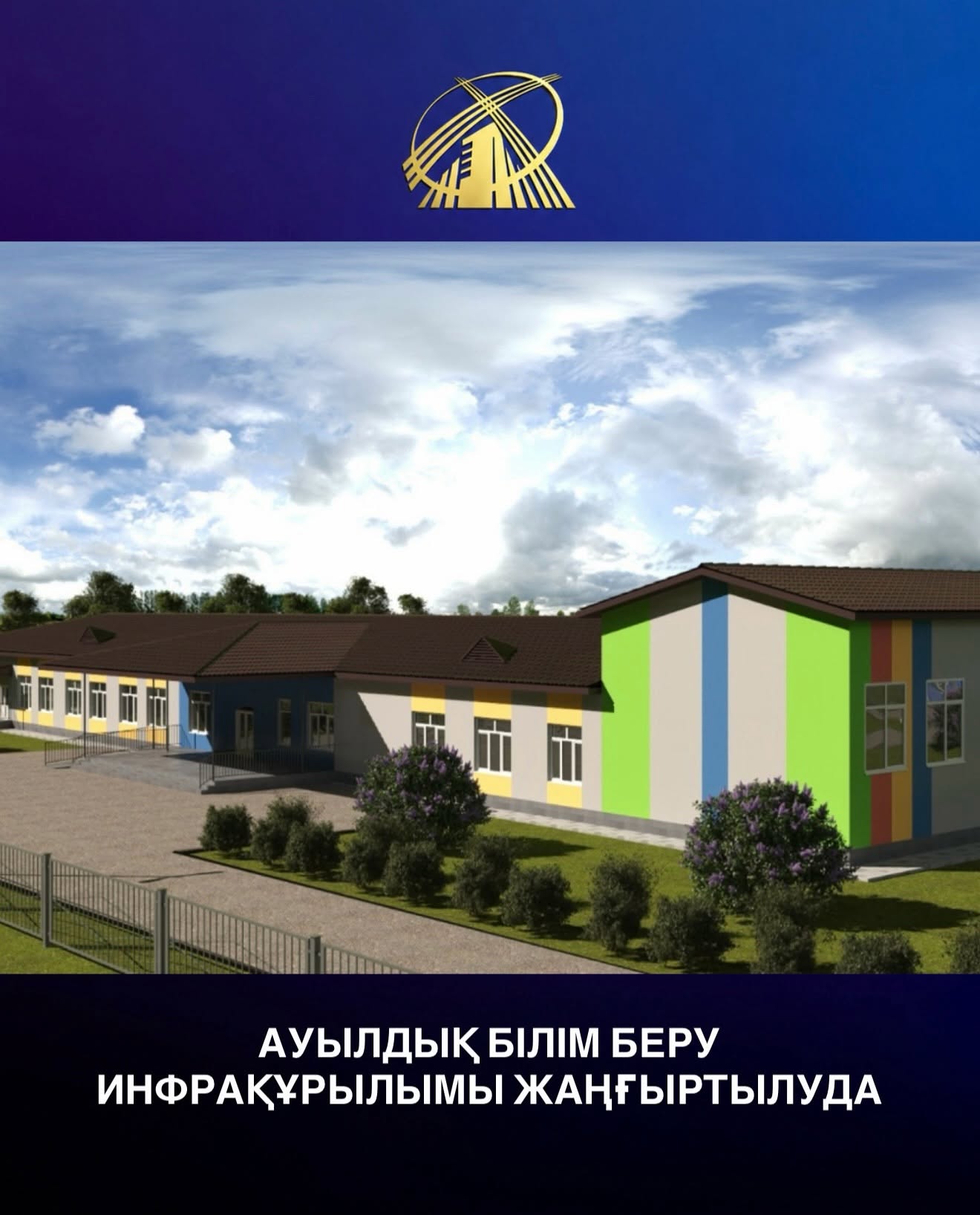
RURAL EDUCATION INFRASTRUCTURE IS BEING MODERNIZED! 15.07.2026
To improve the quality of education in rural communities, projects are being developed to build five new 48-seat schools in rural villages.As part of the project, new educational facilities are planned to be constructed in the following villages:Akzhayik District – Zhanazhol Village;Bokeyorda District – Zhiekkum Village;Zhanibek District – Tegisshil Village;Kaztalov District – Abish and Komekshi Villages.The public procurement procedures have now been completed, and the design organization has been selected. Currently, the preparation of the design and cost estimate documentation (DCED) is underway for all facilities.These projects will provide rural students with modern, safe, and comfortable learning environments that meet current educational standards. The new schools represent an important investment in rural development and in ensuring high-quality education for the younger generation.Source : https://www.gov.kz/memleket/entities/bko-kurylys/press/news/details/1257515?lang=ru
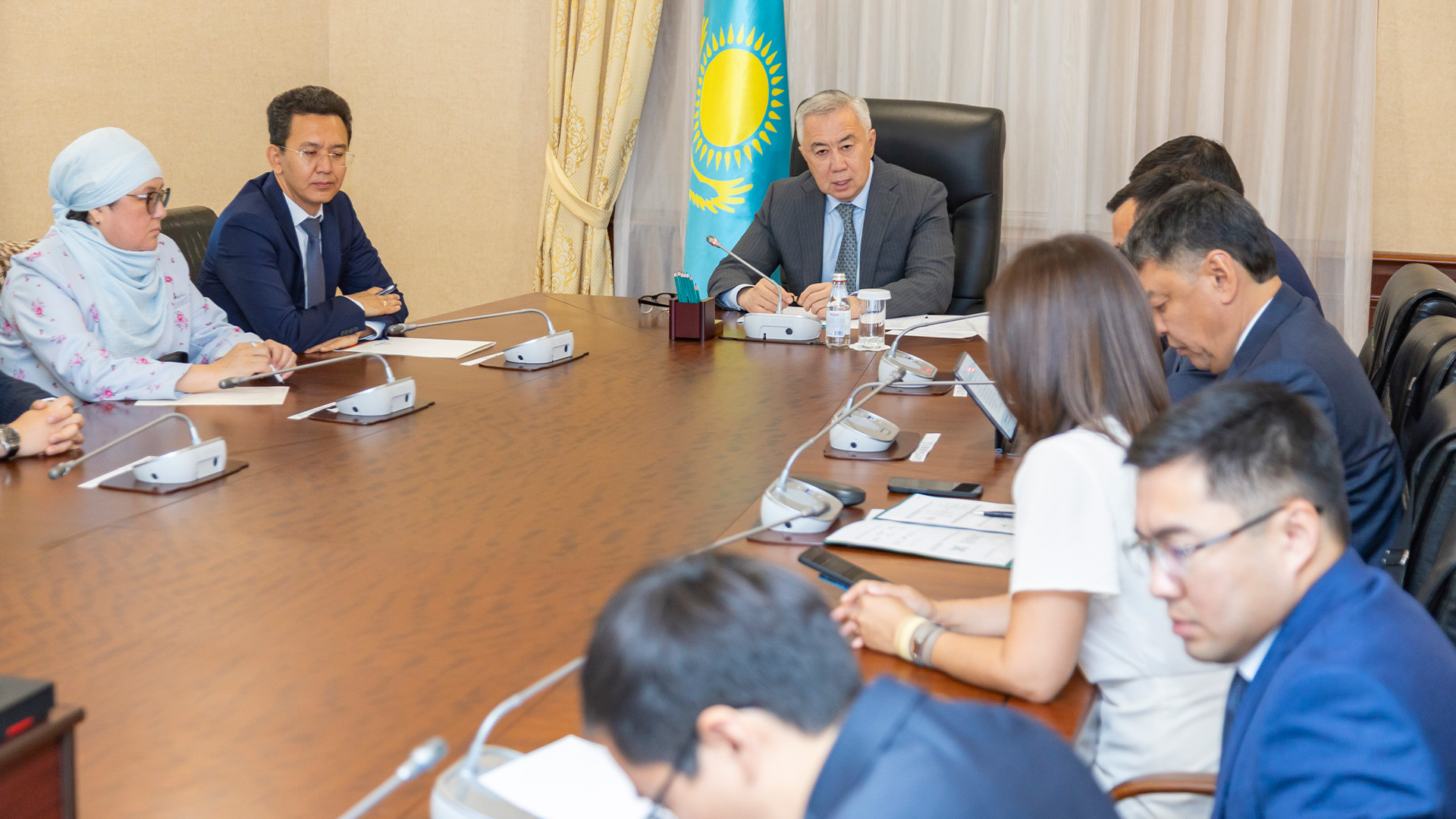
На 21-м заседании Проектного офиса внедрения нового Налогового кодекса сформирован очередной пакет поправок в проект документа 15.07.2026
Новый пакет объединил предложения, выработанные в ходе работы Проектного офиса и профильных рабочих групп, а также поправки, подготовленные во исполнение поручений Главы государства, постановлений Правительства, поручений Премьер-министра и решений Проектного офиса. Всего на сегодняшний день в пакет включено 45 изменений. Их ключевые положения включены в Консультативный документ регуляторной политики, опубликованный 2 июля на сайте Министерства нацэкономики и портале «Открытые НПА».На 21-м заседании Проектного офиса, прошедшего под председательством заместителя Премьер-министра – министра национальной экономики Серика Жумангарина, участники рассмотрели очередной блок поправок. В частности, предлагается создать льготные налоговые условия для стимулирования легального оборота цифровых активов. Для этого предусмотрено освобождение физических лиц от уплаты индивидуального подоходного налога по доходам от операций с цифровыми активами, совершенных через казахстанских провайдеров услуг цифровых активов, на период с 1 января 2026 года по 31 декабря 2028 года.Отдельный блок поправок направлен на совершенствование механизмов государственной поддержки инвестиционных проектов и создание более привлекательных условий для иностранных инвесторов. В частности, предлагается восстановить механизм заключения инвестиционных приоритетных контрактов, а также соглашений об инвестициях со всем предусмотренным пакетом фискальных преференций. Кроме того, предлагается предоставить инвесторам возможность самостоятельно подводить необходимую инфраструктуру с последующим возмещением понесенных затрат через механизм вычетов по КПН.В новый пакет также включены решения, ранее выработанные на заседаниях Проектного офиса. Среди них — введение сверхвычета на расходы по маркировке товаров, расширение вычетов по ИПН для лиц с инвалидностью, восстановление освобождения отдельных доходов от социального налога, освобождение факторинга и форфейтинга от НДС, корректировка НДС по сельскохозяйственной продукции, относимого в зачет, акциз на плодовые вина и другие инициативы. Всего в пакет вошло 20 решений, принятых в ходе работы Проектного офиса.Кроме того, пакет дополнен поправками, направленными на дальнейшую цифровизацию налогового администрирования, совершенствование налоговых процедур и устранение выявленных в ходе применения Налогового кодекса вопросов. Они подготовлены с учетом обращений налогоплательщиков, предложений государственных органов, Национальной палаты предпринимателей «Атамекен» и Высшей аудиторской палаты. При этом ряд инициатив требует дополнительной проработки с бизнес-сообществом до внесения законопроекта на рассмотрение Курултая. Их обсуждение будет продолжено на площадке Проектного офиса.Source : https://www.gov.kz/memleket/entities/economy/press/news/details/1257479?lang=ru
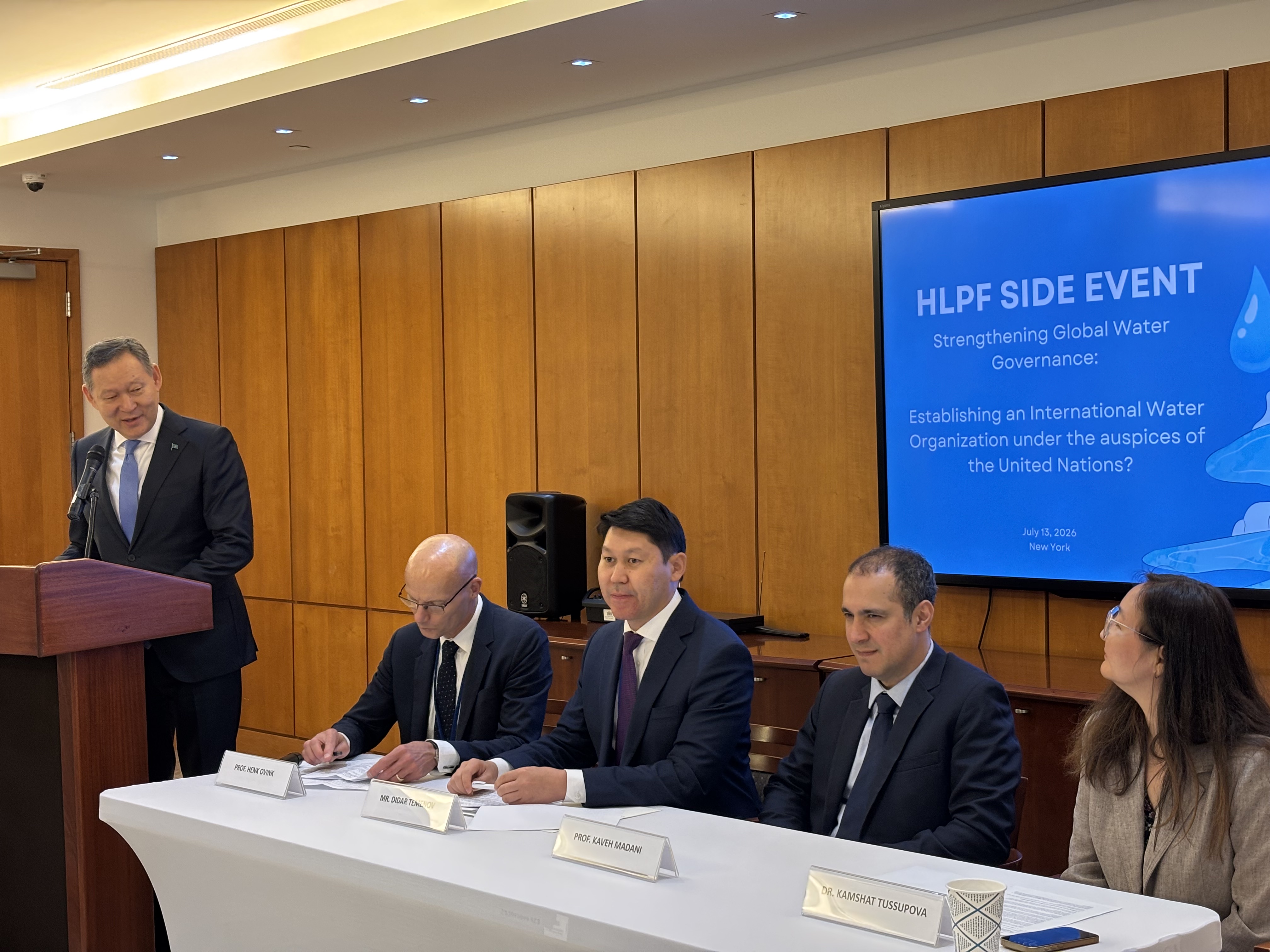
Kazakhstan Promotes the Strengthening of the UN Water Architecture 15.07.2026
New York, 13 July 2026 – On the margins of the United Nations High-level Political Forum on Sustainable Development, the Permanent Mission of the Republic of Kazakhstan to the UN hosted a thematic event entitled “Strengthening Global Water Governance: Establishing an International Water Organization under the Auspices of the United Nations?”Opening the event, Permanent Representative of the Republic of Kazakhstan to the United Nations Kairat Umarov noted that the continued fragmentation of the international water architecture limits the ability of the global community to respond effectively to mounting water-related challenges. In this context, the initiative of President of the Republic of Kazakhstan Kassym-Jomart Tokayev to establish an International Water Organization under the auspices of the United Nations was presented as an open invitation to an inclusive dialogue on enhancing the coherence, effectiveness and accountability of global water governance.Participants exchanged views on the existing shortcomings of the current UN water architecture, opportunities to strengthen the role of the United Nations in the international water governance system, and prospects for developing a more coordinated, effective and Member State-accountable institutional mechanism. Particular attention was given to the need for a comprehensive approach to water-related challenges, taking into account their close interlinkages with climate change, food and energy security, public health, economic development and international stability.The event followed the first round of international consultations on Kazakhstan’s initiative, held in Astana on 23 April 2026 within the framework of the Regional Ecological Summit. The discussion in New York provided an opportunity to present the initiative to a broader range of Member States, United Nations entities and international partners. The proposals and expert assessments put forward during the event will contribute to further discussions on possible formats and mechanisms for the institutional strengthening of global water governance, including in the context of the 2026 UN Water Conference and the formulation of the post-2030 development agenda.On the margins of the event, the Kazakh delegation also held bilateral meetings with Kaveh Madani, Director of the United Nations University Institute for Water, Environment and Health, and Miriam Haritz, German Water Director at the Federal Ministry for the Environment, Climate Action, Nature Conservation and Nuclear Safety. The parties discussed promising areas of cooperation, including efforts to advance multilateral dialogue on the institutional strengthening of the UN water architecture.Source : https://www.gov.kz/memleket/entities/mfa-kazakhstanun/press/news/details/1257488?lang=ru
On the Issuance of a Universal Banking License to Kaspi Bank JSC and Halyk Bank of Kazakhstan JSC 15.07.2026
In accordance with Orders No. Б-138 and No. Б-139 of the Deputy Chairman of the Agency, dated July 13, the licenses of the following banks to conduct banking and other operations and activities in the securities market have been re-registered:- JSC “Halyk Bank of Kazakhstan” was issued universal banking license No. 1.1.601.130, which includes the following additional types of operations:other operations:interbank loans, interbank guarantees, interbank sureties, and other interbank operations.- Kaspi Bank JSC was issued universal banking license No. 1.1.722.131, which includes the following additional types of operations:other operations:interbank loans, interbank guarantees, interbank sureties, as well as other interbank operations.Source : https://www.gov.kz/memleket/entities/ardfm/press/news/details/1257493?lang=ru
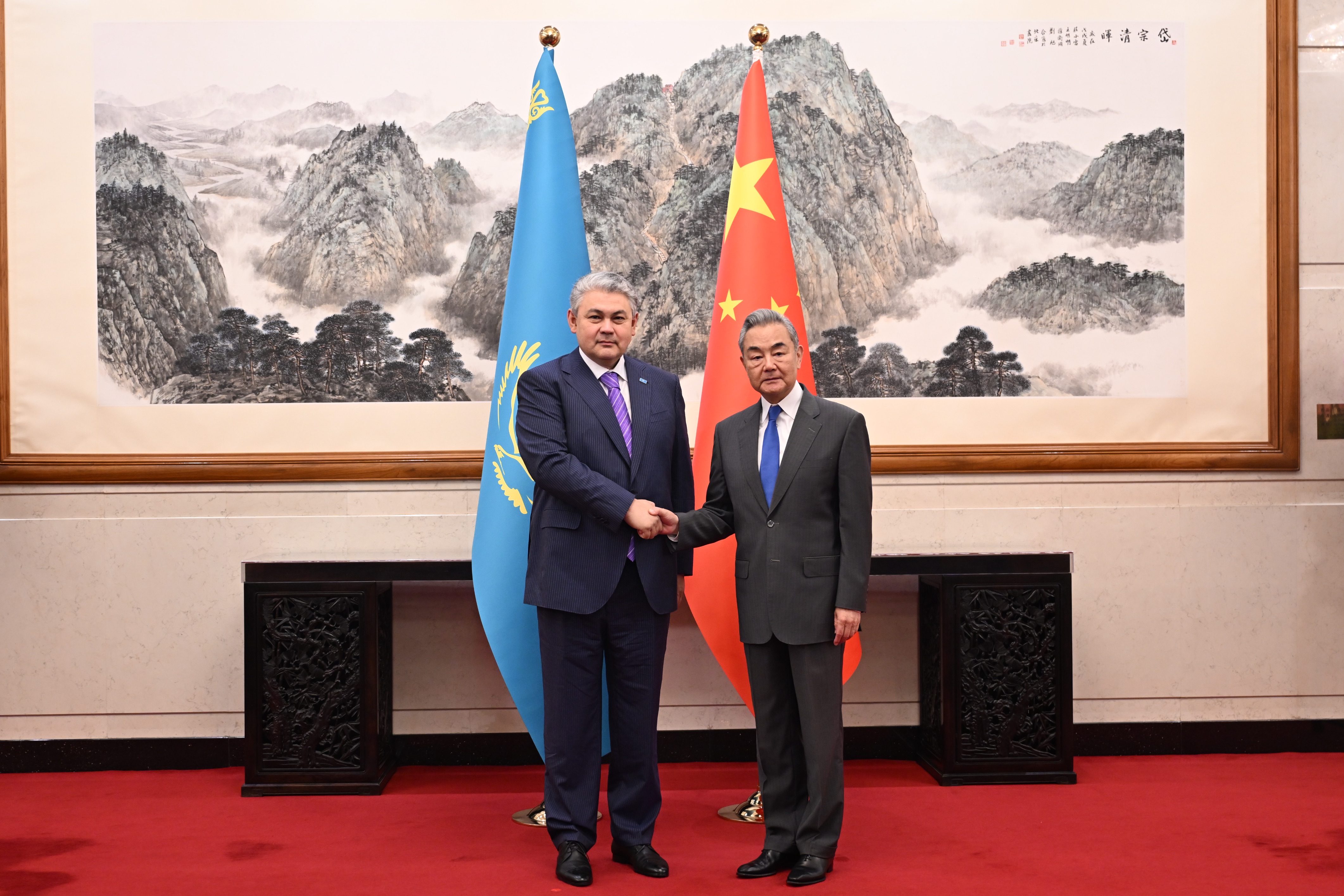
Kazakhstan and China Continue to Strengthen Their Permanent Comprehensive Strategic Partnership 15.07.2026
Beijing, July 13, 2026 – As part of the official visit of the Minister of Foreign Affairs of the Republic of Kazakhstan Yermek Kosherbayev to the People’s Republic of China talks were held with the Member of the Political Bureau of the Central Committee of the Communist Party and Minister of Foreign Affairs of China Wang Yi.Foreign Minister Kosherbayev congratulated the Chinese side on the 105th anniversary of the Communist Party of China and on the successful launch of the implementation of the 15th Five-Year Plan for the National Economic and Social Development of China. He also briefed his counterpart on a new stage of Kazakhstan’s institutional reforms, marked by the entry into force of the country’s new Constitution on July 1 this year. It was emphasized that these reforms are aimed at further strengthening the rule of law, improving public administration, and creating favorable conditions for international cooperation and investment.The two sides expressed satisfaction with the current state of their permanent comprehensive strategic partnership and the implementation of the agreements reached by the leaders of the two countries.“Since our last meeting, Kazakhstan-China relations have maintained strong momentum and continued to develop steadily across all areas of bilateral cooperation,” Kosherbayev stated.For his part, Wang Yi noted that China consistently regards Kazakhstan as one of its key strategic partners and that the trusting dialogue between the leaders of the two countries serves as a solid foundation for the further strengthening of bilateral cooperation.The Kazakh Foreign Minister noted that Kazakhstan and China are consistently advancing towards the goal set by the two Heads of State to double bilateral trade. It was highlighted that China remains one of Kazakhstan’s largest trading partners, with bilateral trade reaching a record high of 48.7 billion US dollars in 2025.Special attention was paid to technological cooperation and artificial intelligence. Ahead of the World Artificial Intelligence Conference in Shanghai, Kosherbayev highly appreciated China’s efforts in organizing the forum, as well as its initiative to establish the World AI Cooperation Organization.The ministers also exchanged views on key regional and international issues, reaffirming their commitment to close coordination within the United Nations, the Shanghai Cooperation Organization (SCO), the Conference on Interaction and Confidence Building Measures in Asia (CICA), the Central Asia-China format, and other multilateral frameworks.The two sides also discussed the schedule of upcoming high-level engagements and expressed readiness to continue joint efforts to further strengthen their strategic partnership.Following the talks, Minister of Foreign Affairs of the Republic of Kazakhstan Yermek Kosherbayev signed the Convention on the Establishment of the International Organization for Mediation, providing for Kazakhstan’s accession to the Organization. Source : https://www.gov.kz/memleket/entities/mfa/press/news/details/1257443?lang=ru
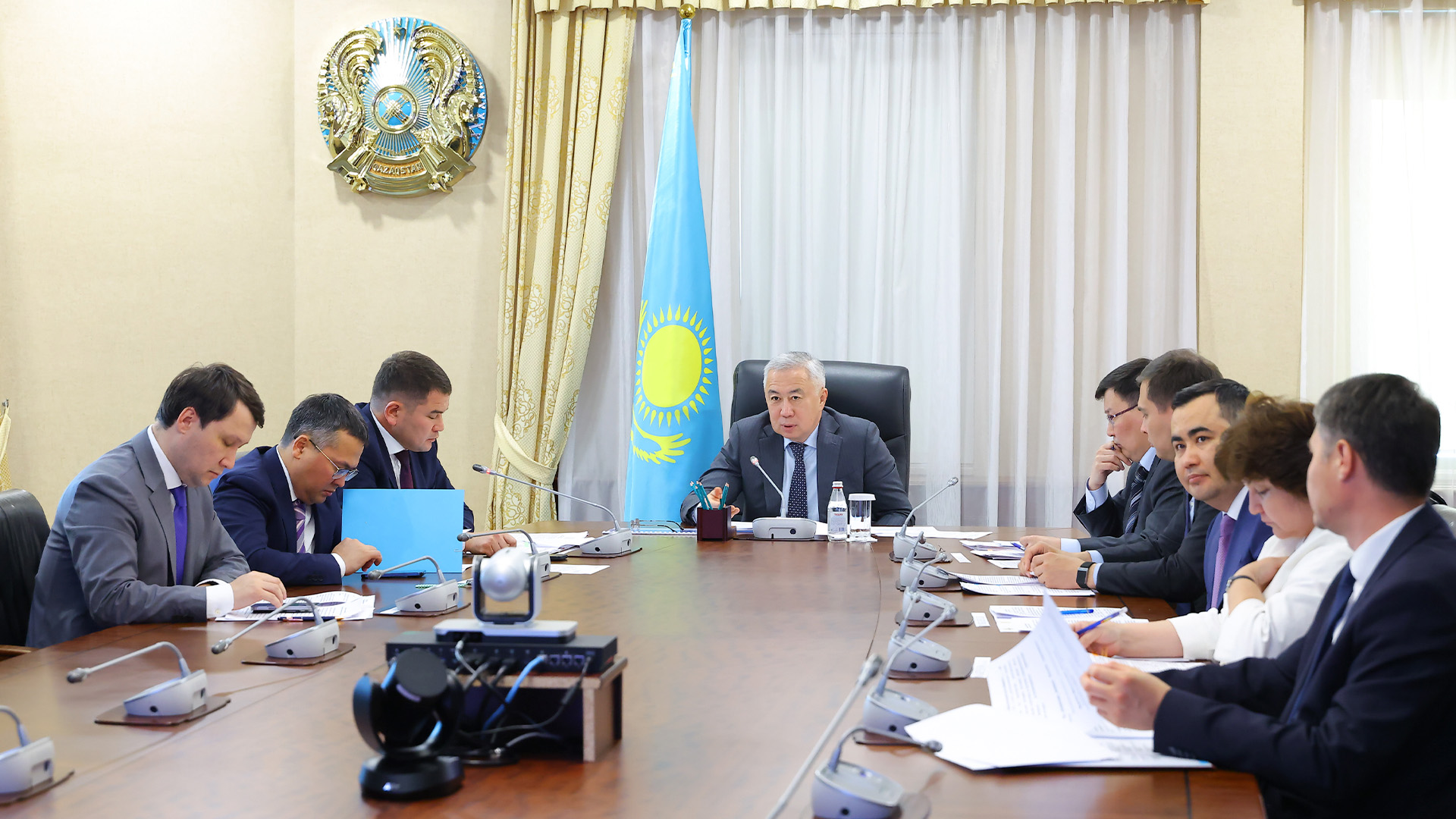
Итоги МВК: развитие бизнеса, сокращение административных барьеров и усиление контроля в АПК 15.07.2026
В Правительстве состоялось очередное 100-е заседание Межведомственной комиссии по вопросам регулирования предпринимательской деятельности под председательством заместителя Премьер-министра – министра национальной экономики Серика Жумангарина. Участники подвели итоги работы по развитию малого и среднего предпринимательства за 2025 год, рассмотрели меры по дальнейшему снижению административной нагрузки на бизнес, а также поддержали законодательные инициативы, направленные на усиление контроля в сфере карантина растений, зернового рынка и регулирования электронных лотерей.По итогам 2025 года сектор малого и среднего предпринимательства продолжил укреплять свои позиции в экономике страны. Как сообщил вице-министр национальной экономики Ерлан Сагнаев, на 1 января 2026 года в Казахстане зарегистрировано 2,4 млн субъектов малого и среднего предпринимательства, из которых 2,2 млн являются действующими. За последние пять лет доля действующих предприятий выросла с 84,3% до 92,2%, увеличившись на 7,9 процентного пункта. Основную часть предпринимательского сектора составляет малый бизнес – 2,4 млн субъекта. Продолжает расти и вклад малого и среднего бизнеса в экономику страны. Если в 2020 году его доля в ВВП составляла 32,9%, то по итогам 2025 года достигла 40,9%. Из них вклад малого бизнеса составил 33,7%, среднего – 7,2%. На заседании отмечено, что государством продолжается работа по цифровизации регулирования и сокращению административных процедур. В 2025 году количество проверок бизнеса снизилось на 4,9%. Проверки на соответствие квалификационным требованиям сократились на 69,5% – с 1 173 до 358. Внеплановые проверки уменьшились с 47 154 до 46 884, иные проверки – с 4 993 до 3 449.Продолжается оптимизация разрешительной системы. Министерства по чрезвычайным ситуациям, внутренних дел и сельского хозяйства сократили сроки выдачи отдельных разрешительных документов, что позволяет предпринимателям экономить от 6 до 18 дней. Работа ведется и по сокращению отчетности. Из 192 действующих информационных инструментов предложено дополнительно сократить 15%. Уже автоматизировано 79 инструментов, или 40,7% от общего количества. В частности, в системе «Е-Минфин» в электронный формат переведены 10 форм отчетности.Одним из вопросов заседания стали поправки в законодательство, направленные на снижение рисков чрезмерного вовлечения граждан в электронные моментальные и тиражные лотереи.Поводом для изменений стали обращения граждан, поступающие в государственные органы. По информации Министерства туризма и спорта, участились случаи крупных финансовых потерь населения в электронных лотереях (к примеру, факты значительных проигрышей зафиксированы среди жителей Актюбинской области и города Шымкент). В настоящее время в стране функционирует более 200 организаций, осуществляющих такую деятельность.Поправками предлагается увеличить интервал между розыгрышами электронной тиражной лотереи в «лофтпарках» – вместо проведения каждые три минуты они смогут проводиться не чаще одного раза в 30 минут.Кроме того, вводится ограничение на количество приобретаемых билетов электронной моментальной лотереи у оператора лотереи за определенный период времени.Отдельное внимание в ходе заседания было уделено правовому регулированию в агропромышленном комплексе. В связи с отменой обязательных карантинных сертификатов при межобластной перевозке продукции в 2025 году возникли риски бесконтрольного распространения карантинных объектов. В 2023 году было выявлено 1 986 нарушений на сумму штрафов 158,5 млн тенге, в 2024 году – 2 093 нарушения на сумму 208,1 млн тенге.Поправками предлагается вновь сделать карантинный сертификат обязательным при межобластных перевозках подкарантинной продукции и установить административную ответственность за его отсутствие.Размер штрафов составит: для физических лиц – 20 МРП; для должностных лиц, субъектов малого предпринимательства и некоммерческих организаций – 30 МРП; для субъектов среднего предпринимательства – 40 МРП; для субъектов крупного предпринимательства – 100 МРП.Еще одним решением станет возвращение ежегодного обследования хлебоприемных предприятий перед приемом нового урожая. Вице-министр сельского хозяйства Ермек Кенжеханулы сообщил, что системные обследования хлебоприемных предприятий не проводились в стране с 2018 года.По его словам, это обусловлено изменениями в законодательстве и общим подходом к проведению проверок. Действующий подход не позволял обеспечить непрерывный и комплексный мониторинг всего технологического цикла – от приемки зерна до его хранения и последующей отгрузки. В результате за последние пять лет проверочные мероприятия охватили предприятия лишь четырех областей, что существенно повышало риски технологических нарушений при сушке и хранении зерновых культур. В 2024 году было выявлено 37 нарушений требований законодательства о зерне, к ответственности привлечен 31 субъект бизнеса. В 2025 году зафиксировано 11 нарушений, привлечены четыре предприятия.Поправками в Закон «О зерне», Предпринимательский кодекс и Кодекс об административных правонарушениях предусматривается введение обязательного ежегодного обследования хлебоприемных предприятий, а также административной ответственности за несоответствие установленным требованиям.Реформа затронет 189 субъектов бизнеса, зарегистрированных в системе зерновых расписок «AgriBonds» на платформе «QOLDAU». Ожидается, что новые меры позволят обеспечить безопасное хранение и бесперебойную приемку зерна нового урожая.По итогам заседания МВК результаты анализа регуляторного воздействия по рассмотренным выше вопросам были одобрены комиссией.Source : https://www.gov.kz/memleket/entities/economy/press/news/details/1257444?lang=ru
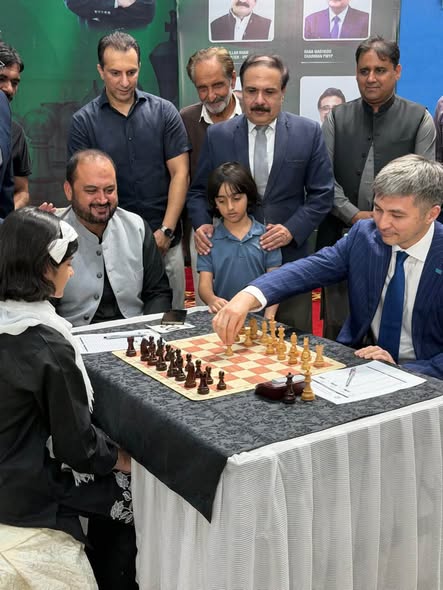
The Ambassador of Kazakhstan took part in the Opening Ceremony of the Pakistan National Chess Championship 15.07.2026
Islamabad, 10 July 2026 – At the invitation of the President of the Pakistan Chess Federation, Mr. Zeeshan Ali Naqvi, the Ambassador of Kazakhstan to Pakistan, H.E. Mr. Yerzhan Kistafin, attended as the Guest of Honour the opening ceremony of the Pakistan National Chess Championship 2026.The ceremony was also attended by the Federal Secretary of the Ministry of Inter-Provincial Coordination of Pakistan, Mr. Mohyuddin Ahmad Wani, the Director General of the Pakistan Sports Board, Mr. Yasir Hussain, the President of the Pakistan Chess Federation, Mr. Zeeshan Ali Naqvi, as well as other distinguished guests.In his remarks, Ambassador Y.Kistafin highlighted the dynamic development of Kazakhstan-Pakistan cooperation in the field of sports, including chess, boxing, Qazaq Kuresi, and other sporting disciplines. He emphasized that the expanding cooperation between the sports federations of the two countries contributes to strengthening the bonds of friendship, enhancing people-to-people ties, and promoting the exchange of experience between athletes and coaches.In turn, Federal Secretary Mr. A.Mohyuddin and President of the Pakistan Chess Federation Mr. Z.A.Naqvi expressed their appreciation to the Kazakhstan side for its continued support in the development of chess in Pakistan. They particularly acknowledged Kazakhstan's contribution to the establishment of the Chess Academy in Islamabad, the organization of online and offline masterclasses for local chess players, as well as its support for the development of other sports. The Pakistani side also reaffirmed its strong commitment to further strengthening bilateral cooperation in the fields of sport and sports diplomacy.The Embassy of Kazakhstan extends its best wishes to all participants of the Pakistan National Chess Championship 2026 and wishes them every success and new sporting achievements.Source : https://www.gov.kz/memleket/entities/mfa-islamabad/press/news/details/1257436?lang=ru
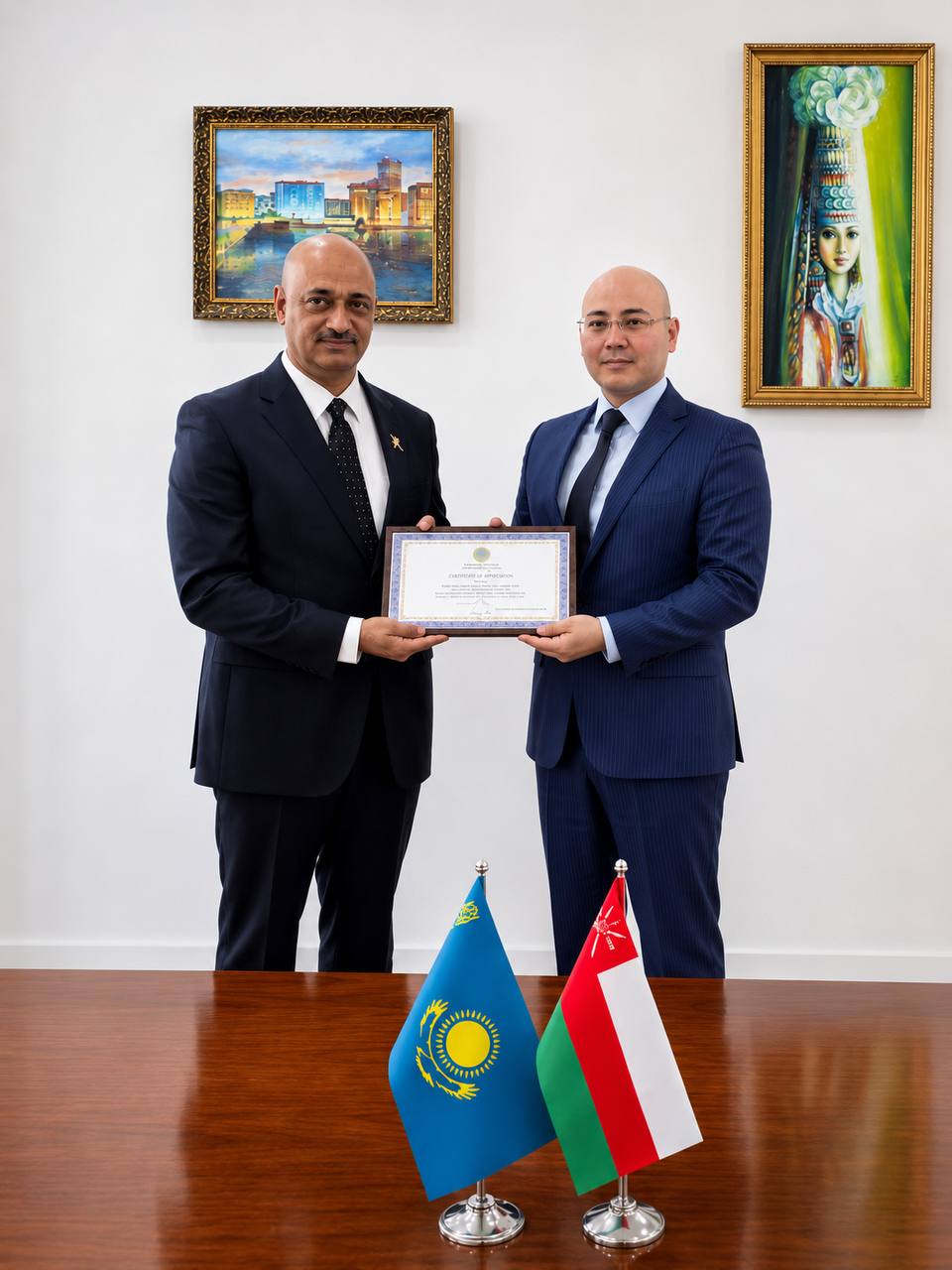
Omani Ambassador Received at the Kazakh Foreign Ministry Upon Completion of Diplomatic Mission 15.07.2026
Astana, July 13, 2026 – Deputy Minister of Foreign Affairs of the Republic of Kazakhstan Alibek Kuantyrov received the Ambassador of the Sultanate of Oman to Kazakhstan Mohammed Al-Bahrani, on the occasion of the completion of his diplomatic mission in the country.The Deputy Minister highly praised the current level of cooperation between Kazakhstan and Oman and expressed his appreciation to Ambassador Al-Bahrani for his efforts in strengthening the mutually beneficial partnership between the two countries.For his part, the Omani diplomat expressed confidence in the continued development of bilateral and multilateral cooperation based on friendship and mutual understanding.At the conclusion of the meeting, Ambassador Al-Bahrani was presented with a letter of appreciation from the Minister of Foreign Affairs of the Republic of Kazakhstan Yermek Kosherbayev.Source : https://www.gov.kz/memleket/entities/mfa/press/news/details/1257425?lang=ru
On August 24, 2026, at 10:00 a.m., the Akimat of the Mendykarinsky District of the Kostanay Region will hold a tender for the provision of temporary paid land use rights (lease) for running a peasant or farm enterprise, agricultural production for a period of 10 years at the address: Kostanay Region, Mendykarinsky District, Borovskoye Village, Koroleva Street 5 (district Akimat building) for the following lots: 15.07.2026
№ лотаМестоположение участкаПлощадь гаСостав угодийКачественная характеристикаБалл бонитетаВодообеспеченностьСрок арендыСельскохозяйственная специализацияпашняпастбищасенокосы1Буденновский сельский округ (поле №66)75,1 75,0 Черноземы обыкновенные56Нет10 летРастениеводство, животноводство2Каракогинский сельский округ (поле №134, 125)332,4 331,2 Черноземы обыкновенные24Нет10 летРастениеводство, животноводство3Каракогинский сельский округ (поле №119, 6)150,45323,170,7Черноземы обыкновенные49Нет10 летРастениеводство, животноводство4Каракогинский сельский округ (поле №8)141,1 7,458,7Черноземы обыкновенные10Нет10 летЖивотноводство5Каракогинский сельский округ (поле №7)59,6 51,66,2Черноземы обыкновенные10Нет10 летЖивотноводство6Сосновский сельский округ (поле №33)22,122 Черноземы обыкновенные35Нет10 летРастениеводство7Сосновский сельский округ (поле №42 ВСУ)3 2,8 Черноземы обыкновенные10Нет10 летРастениеводство, животноводство ИТОГО:783,7150416,1135,6 In accordance with Article 43-1 of the Land Code of the Republic of Kazakhstan and the Rules for organizing and holding a competition for granting the right to temporary paid land use (lease) for running a peasant or farm enterprise, agricultural production (order of the Deputy Prime Minister of the Republic of Kazakhstan - Minister of Agriculture of the Republic of Kazakhstan dated 20.12.2018 No. 518), applications will be accepted and registered from August 3 to August 21, 2026 at the address: Kostanay region, Mendykarinsky district, Borovskoye village, Korolev street 5, State Institution "Department of Land Relations of the Mendykarinsky District". Telephone / Fax: 8 (71443) 2-45-78, e-mail: mend.zem.kom@mail.ru Source : https://www.gov.kz/memleket/entities/kostanai-mendykarin-audany-akimat/press/news/details/1257395?lang=ru

National Fund for Children: $62.7 million allocated to improve housing conditions and pay for education 15.07.2026
From February 1, 2024, to July 1, 2026, 333,809 applications for a total of approximately $62.71 million were processed. Funds were transferred to authorized operators for subsequent deposit into applicants' bank accounts.Among the processed applications, housing improvements were the most numerous: 216,060 applications for over $41.01 million. Education funding received 117,749 applications for $21.69 million.As a reminder, recipients of targeted savings (TS) have the right to use the entire amount or a portion of it. Any unclaimed funds remain in the targeted savings account (TSA) for 10 years. After this period, the unused balance is transferred to the recipient's individual pension savings account to account for voluntary pension contributions.The most popular housing improvement program was replenishing housing construction savings for further accumulation (211,474 applications completed, totaling approximately $40.25 million). Funds were also used as down payments for mortgage loans to purchase housing (1,583 applications, totaling $269,480), and for the purpose of acquiring housing through civil law transactions (final settlements), totaling 1,081 applications, totaling $177,790.Within the scope of the CTD program for education, the largest amount of funds was allocated to pay for educational services at educational institutions located in the Republic of Kazakhstan, either in installments (for each academic period or academic year) or in full (for the entire term of study) (108,782 applications, totaling approximately $20.36 million, were completed). The following areas were also in demand: replenishment of an educational savings deposit under an agreement on an educational savings deposit (6,153 applications were completed for a total of approximately 894.12 thousand US dollars), payment for educational services of foreign educational organizations in installments (for each academic period or academic year) or in full at one time (for the entire period of study) (2,175 applications were completed for a total of 335.33 thousand US dollars).Detailed informationon social security payments for the purpose of improving housing conditions and/or paying for education, broken down by authorized operators and regions, is available on the enpf.kz website.Let us recall that based on the results of 2025, Kazakhstani children received the next payment in the amount of130.71 US dollars per child, for 2024 - 129.38 US dollars, and for 2023 - 100.52 US dollars.Children under 18 receive annual payments from the National Fund as targeted benefits. According to law, the amounts accrued to young Kazakhstanis remain part of the National Fund's assets and continue to be invested. Through continued investment, each child's targeted benefit amount increases annually through the investment income received.As a result, the total accumulated target requirement (including the annually accrued investment income) for a child participating in the program:- three years, $370.56;- two years, $263.93;- one year, $130.71. Parents and other legal representatives can check the child's under 18 participation in the program using their child's IIN on the website kids.enpf.kz, in their personal account on the eGov.kz e-government portal, and in the eGov Mobile and select second-tier bank mobile apps.If information about target benefits accrued to children for the 2025 reporting year is not displayed, you must update your documents in your mobile apps by following this path:in the eGov Mobile app: "Digital Documents" - "Family" - "Update Document List" - "Accruals from the National Fund";in second-tier bank mobile apps, such as Kaspi.kz: "Gosuslugi" - "All Documents" - "Update Document List" - "Accruals from the National Fund."The absence of information about the accrual of target benefits for children who have reached or will reach the age of 18 this year in the legal representative's personal account is due to the fact that target benefits have acquired the status of TS, and therefore access to information about them is provided directly to the TS recipient (a citizen who has reached or will reach the age of 18 in 2026). These individuals must independently obtain information about their TS through their personal account on the UAPF or e-government websites. Upon reaching the age of 18, they can contact an authorized operator to open a US dollar bank account and submit an online application for TS payment to improve their housing conditions and/or pay for education.Currently, the following are authorized operators:Otbasy Bank JSC (for housing and education),Halyk Bank JSC (for education),Bank CenterCredit JSC (for education).Statisticson minor children eligible for targeted assistance and adult recipients of the TS, as well as on the use of the TSfor housing and/or education, can be found on the enpf.kz website.You can learn more about the program, get instructions, and get answers to your questions on the website kids.enpf.kz. You can also watch video comments and instructions on the БЖЗҚЕНПФYouTube channel:Video commentary by the Chairman the Executive Board of UAPF JSC, Zh.B. Kurmanov:https://www.youtube.com/watch?app=desktop&v=30CdPWl6dv0 Video commentary by the Managing Director of UAPF JSC, M.T. Sharipov:https://www.youtube.com/watch?v=APg2vATmMk0 Video commentary "Question and Answer" on the "National Fund for Children" program:https://www.youtube.com/watch?v=4cKr1VCAvUkhttps://www.youtube.com/watch?v=mrV0y37Gjnk Instructions for the "National Fund for Children" website:https://www.youtube.com/watch?v=VgP3dmMwAHchttps://www.youtube.com/watch?v=jyC2c-HgqpQInstructions for the implementation of the National Fund for Children program:https://www.youtube.com/watch?v=bqeT41rWecAhttps://www.youtube.com/watch?v=pNBSS1VHdWU Source : https://www.gov.kz/memleket/entities/kostanai-rudnyi-kalasy-akimat/press/news/details/1258356?lang=ru
VAT Input Tax Credit 15.07.2026
From January 1, 2026, the new Tax Code of the Republic of Kazakhstan entered into force, significantly changing the procedure for claiming Value Added Tax (VAT) input tax credits. The new rules establish a clear and uniform approach, making tax compliance easier for taxpayers and reducing the number of disputes.Previously, the moment when VAT could be claimed as an input tax credit often depended on the date the invoice was issued, which led to uncertainty. Under the new Tax Code, a single approach based on the actual date of the taxable event has been introduced. For goods, works, and services, VAT may be claimed on the date they are actually received. For works and services, this date is the date on which the acceptance certificate (act of completed works/services) is signed. This change enables taxpayers to better plan their tax obligations.For imports from non-EAEU countries, VAT may be claimed on the date the goods are released in accordance with customs legislation. For imports from member states of the Eurasian Economic Union (EAEU), the right to claim VAT arises on the date the VAT is paid. For works and services supplied by non-residents, VAT may be claimed on the date the electronic invoice (e-Invoice) is issued. The taxpayer must issue the e-Invoice within the established deadline and may claim the VAT on that date, provided the services are used for taxable transactions. These changes make the procedure more transparent and business-friendly.The new Tax Code also expands VAT credit opportunities for agricultural producers. The additional VAT amount eligible for credit has been increased from 70% to 80%, supporting the development of the agricultural sector.Another important innovation is the integration of the VAT input tax credit mechanism with the Electronic Invoice Information System (IS ESF). Before submitting the VAT Return (Form 300.00), taxpayers may indicate their VAT input tax credits directly in the electronic invoice system. This mechanism enhances transparency and enables tax authorities to monitor transactions more efficiently.Special transitional rules have been established. If goods, works, or services were acquired in December 2025, the timing for claiming the VAT credit is determined under the provisions of the previous Tax Code. If the purchase was made in 2025 but the invoice was issued in 2026, the latest applicable date under the previous rules applies. These transitional provisions allow businesses to adapt smoothly to the new requirements.The right to claim a VAT input tax credit remains available only to VAT-registered taxpayers, provided that the acquired goods, works, or services are used for taxable supplies and are supported by proper documentation. The new Tax Code also clarifies the list of transactions for which VAT credits are not allowed, particularly those related to non-taxable or VAT-exempt supplies.Overall, the new VAT input tax credit rules modernize tax administration and make it more convenient for businesses. Taxpayers are encouraged to update their accounting systems in accordance with the new requirements and to make active use of the capabilities of the Electronic Invoice Information System.If you need this translated in a more formal legal style or adapted for publication by the State Revenue Committee, I can prepare that version as well.Source : https://www.gov.kz/memleket/entities/kgd-zhetysu/press/news/details/1257326?lang=ru
Экономика Казахстана выросла на 4,1% за счет устойчивого развития несырьевых отраслей 15.07.2026
По данным Бюро национальной статистики, по итогам первого полугодия 2026 года реальный рост ВВП Казахстана составил 4,1%, ускорившись на 0,4 процентного пункта по сравнению с итогами января-мая.Основным драйвером роста остается ненефтяной сектор. По оценке Министерства национальной экономики, его рост превышает 5%. Несмотря на снижение объемов добычи нефти по сравнению с аналогичным периодом прошлого года на 8,4%, реальный сектор экономики вырос на 5,1%, сфера услуг - на 3,5%.Экономика продолжает расти за счет несырьевых отраслей. Более 80% прироста ВВП обеспечили обрабатывающая промышленность, строительство, торговля и транспорт, которые сохраняют наиболее высокие темпы развития.Лидером по темпам роста остается строительство. За первое полугодие объем выполненных строительных работ увеличился на 15,2%. Введено в эксплуатацию 8,5 млн кв. м жилья, что на 6,7% больше, чем за аналогичный период прошлого года.В обрабатывающей промышленности объем производства вырос на 9,8%. По итогам шести месяцев объем выпущенной продукции достиг 16,2 трлн тенге, что выше показателя горнодобывающей отрасли, который составил около 15,9 трлн тенге.Несмотря на снижение темпов роста производства в металлургии, на долю которой приходится более 40% обрабатывающей промышленности, рост сектора обработки обеспечили другие производства. Выпуск готовых металлических изделий увеличился на 39,9%, автомобилей - на 31,6%, фармацевтической продукции - на 43,6%, химической - на 20,7%, резиновых и пластмассовых изделий - на 21,8%, строительных материалов - на 14,1%, продуктов питания - на 14,7%.Положительная динамика сохраняется и в других отраслях экономики. Объем торговли вырос на 5,7%, сельского хозяйства — на 4,4%, услуг связи — на 4,3%.Транспортно-логистическая отрасль увеличилась на 7,1%. Рост обеспечен расширением услуг вспомогательной транспортной деятельности на 14%, увеличением объемов железнодорожных грузоперевозок на 4,9% и автомобильных грузоперевозок на 11,4%.Сохраняется высокая инвестиционная активность. Инвестиции в основной капитал выросли на 9,6%. Наиболее значительный прирост отмечен в сферах информации и связи - в 2,3 раза, электроснабжения - на 61,4%, обрабатывающей промышленности — на 33,3%, сельского хозяйства — на 24,6% и транспорта - на 11,6%.Таким образом, динамичное развитие несырьевых отраслей и высокая инвестиционная активность продолжают формировать устойчивую основу экономического роста Казахстана.Source : https://www.gov.kz/memleket/entities/economy/press/news/details/1257331?lang=ru

Requirements of the currency legislation 15.07.2026
The State Revenue Committee of the Ministry of Finance of the Republic of Kazakhstan reminds participants in foreign economic activity of the need to comply with the requirements of currency legislation when conducting export-import operations. One of the key requirements is the repatriation of the currency. This means that Kazakhstani companies are obliged to ensure: - receipt of export earnings to accounts in authorized banks of the Republic of Kazakhstan; - refund of funds transferred to a foreign supplier if the goods have not been delivered, the work or services have not been performed, or the obligations under a foreign economic agreement have not been fulfilled. In other words, if the foreign partner has not fulfilled the terms of the agreement, the resident of the Republic of Kazakhstan must take measures to return the transferred funds to their bank accounts. Currency control is aimed at ensuring compliance with legal requirements, protecting the economic interests of the country and returning foreign exchange earnings to the Republic of Kazakhstan. In order to avoid violations, the State Revenue Committee recommends that participants in foreign economic activity: - ensure timely receipt of export earnings or refund of funds for import operations in cases stipulated by law.; - monitor the deadlines for fulfilling obligations under foreign economic agreements; - when changing the terms of the agreement, execute additional agreements in a timely manner and make appropriate changes to the accounting data of the currency agreement; - keep documents confirming the fulfillment of obligations under foreign economic agreements; - if you have any questions, please contact the state revenue authorities, the National Bank of the Republic of Kazakhstan or an authorized servicing bank. Administrative liability is provided for violation of the requirements of the currency legislation. According to the results of the first half of 2026, 1 116 administrative protocols were drawn up under article 244 of the Code of Administrative Offences of the Republic of Kazakhstan («Violation of the procedure for obtaining an account number for a currency agreement with a bank and submitting information on it»). According to Article 251 of the Administrative Code of the Republic of Kazakhstan («Failure to comply with the requirement of repatriation of national and (or) foreign currency») 141 participants in foreign economic activity were brought to administrative responsibility, the total amount of fines imposed amounted to 15.3 billion tenge. The largest fines for violating the requirements of the currency legislation have been imposed: - there are more than 9.2 billion tenge in Almaty city; - there are more than 1.8 billion tenge in Pavlodar region; - there are more than 1.1 billion tenge in the Zhetysu region; - more than 1 billion tenge in the city of Astana. These examples show that non-compliance with the requirements of the currency legislation entails administrative liability, regardless of the size of the enterprise and the type of activity carried out. The Committee of State Revenue calls on all participants in foreign economic activity to carefully comply with the requirements of the currency legislation, timely fulfill their obligations under foreign economic contracts, and take necessary measures to prevent violations. Source : https://www.gov.kz/memleket/entities/kgd-akmola/press/news/details/1257961?lang=ru
Awarding diplomas to graduates of the S. Amanzholov East Kazakhstan University 15.07.2026
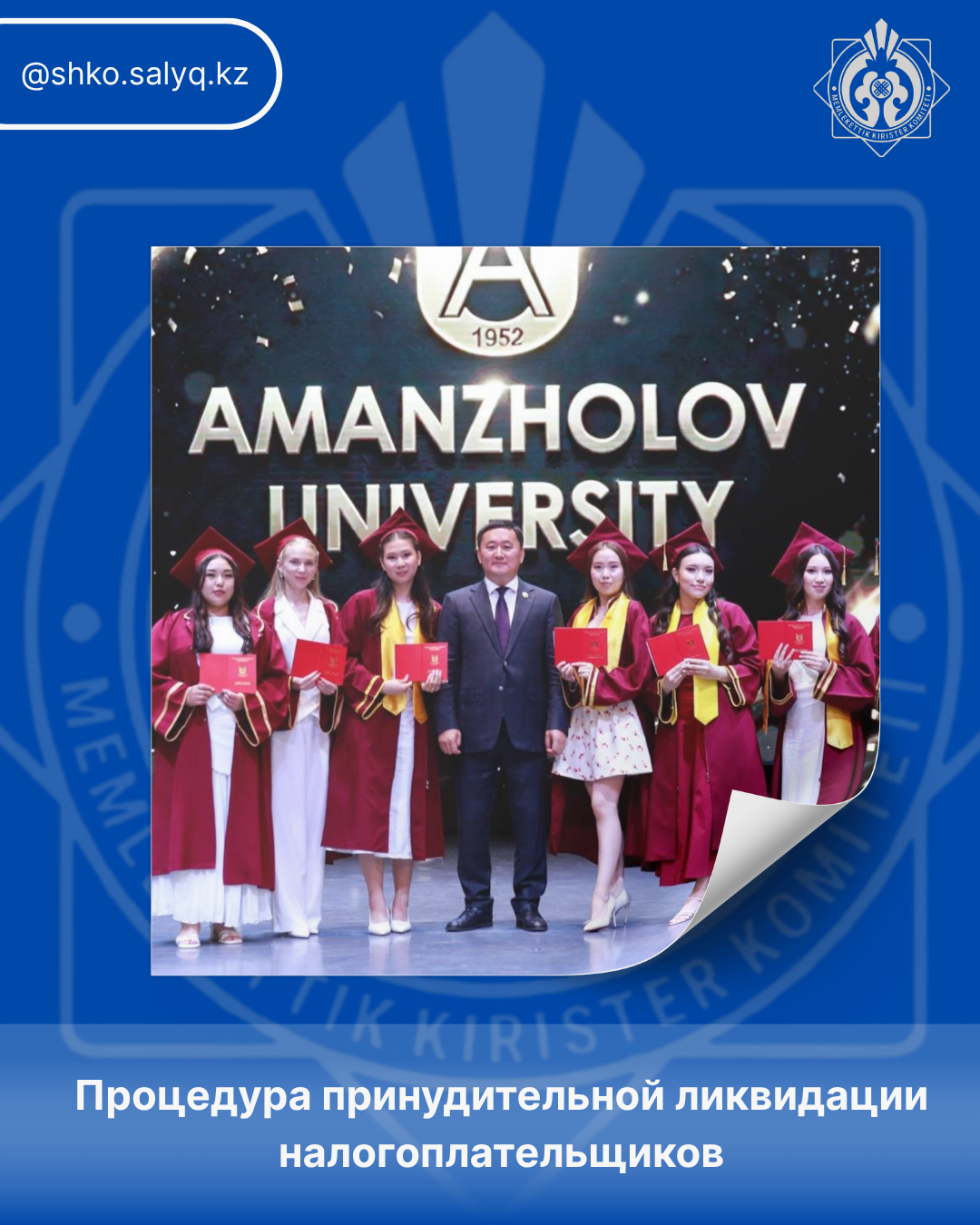
On July 6, 2026, the concert hall of the East Kazakhstan Regional Philharmonic hosted a solemn graduation ceremony for the Higher School of Business and Law of the S. Amanzholov East Kazakhstan University. Among those receiving their diplomas were graduates specializing in management, finance, accounting and audit, economics, and jurisprudence etc.Representatives from the State Revenue Department of EKR participated in the ceremony as part of an active memorandum of cooperation signed with Ust-Kamenogorsk universities, aimed at fostering a robust legal culture among youth and enhancing the educational process, specifically regarding tax and customs literacy.The department regularly conducts specialized training sessions for students on the norms of tax and customs legislation, the universal tax declaration system, personal bankruptcy frameworks, and mobile transfers, as well as actively facilitates professional internships for students, offering them hands-on experience utilizing the specialized information systems of the state revenue authorities and mobile applications, opportunities to participate in awareness campaigns, Open House events, and guided museum tours under the framework of the Memorandum,.A fundamental emphasis is on elevating the public tax culture and ensuring high-quality personnel training for further employment in the state revenue authorities.Following the presentation of diplomas, Gulmira Sabralimova, head of the Office of Advocacy and the Contact Center of the SRD, congratulated the graduates on their successful graduation and getting a university degree on behalf of the department, using an invitation to pursue careers within the state revenue authorities, highlighting the unique opportunities available to gain invaluable experience, achieve professional growth, and put their academic knowledge into practical action.Source : https://www.gov.kz/memleket/entities/kgd-vko/press/news/details/1257258?lang=ru

Strengthening Academic Cooperation between Kazakhstan and the Vatican in the Field of Historical Research 15.07.2026
From June 24 to July 3, 2026, a delegation of scientists from the R.B.Suleimenov Institute of Oriental Studies conducted a research visit to the Vatican.The visit was carried out as part of the practical implementation of the Memorandum of Understanding between the Institute of Oriental Studies and the Vatican Apostolic Library and the Vatican Apostolic Archive, as well as within the framework of the research project «The Early and Medieval History and Culture of the Turkic World Based on the Unique Materials of the Vatican».During the visit, the delegation conducted comprehensive research in the collections of the Vatican Apostolic Library and the Vatican Apostolic Archive. The study focused on historical sources relating to the medieval history of the Turkic peoples, the eras of the Desht-i Kipchak and the Golden Horde, as well as the distinctive features of diplomatic and cultural relations between Turkic states and the Holy See.Particular attention was devoted to archival materials concerning the unique monument of the Kipchak language, the «Codex Cumanicus», as well as to rare XIV century cartographic sources depicting Central Asia, the Caspian region and the urban centers of the Silk Road. The researchers identified archival references for a number of previously understudied documents of significant scholarly value, providing new opportunities for further analysis of the historical relations between Turkic states and Western Europe.The findings substantially expand the source base of Kazakhstan’s historiography and lay the foundation for further fundamental research into the history and cultural heritage of the Turkic world through the unique primary sources preserved in the Vatican.Source : https://www.gov.kz/memleket/entities/mfa-vatican/press/news/details/1257273?lang=ru
Regional Forum "The Constitution – the Legal Basis for the Development of Civil Society" 15.07.2026
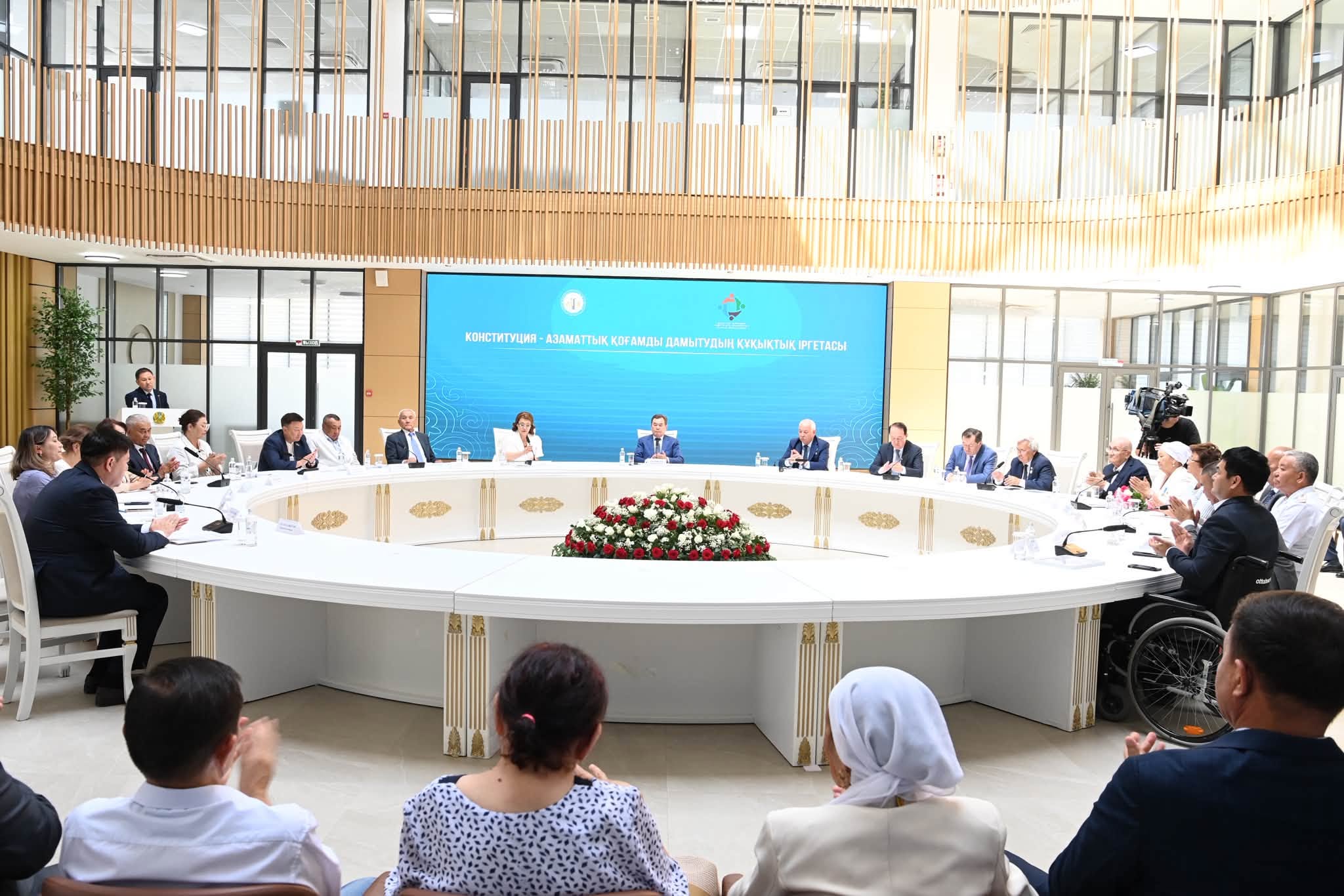
The regional civil forum "The Constitution — the Legal Basis for the Development of Civil Society" was held at the House of Friendship. The event was attended by the akim of the region Murat Ergeshbayev, heads of non-governmental organizations, departments and agencies, youth associations, and civil society activists.The issues of enhancing the role of civil society institutions under the new Constitution, strengthening constructive partnership between the state and society, as well as developing a culture of public dialogue were discussed."Uniting society around common goals and broadly engaging non-governmental organizations in the implementation of socially significant initiatives is an effective practice that contributes to improving the quality of public administration and strengthening trust between society and the authorities.President Kassym-Jomart Tokayev, in his Address to the people of Kazakhstan, emphasized the need to support and strengthen civil society, involving it in the discussion of the most pressing national tasks in order to solve them.Today, civil society institutions in our region actively participate in the implementation of state initiatives, protect the interests of the population, and contribute to solving urgent social issues",- noted Murat Ergeshbayev.Currently, about a thousand public organizations are registered in the region. Within the framework of the state social order, 555 social projects have been implemented in 2023–2026. More than 200 representatives of NGOs are members of councils and commissions under the regional and district akimats.The forum featured speeches by Zhandos Tusmagambetov, Director of the Public Foundation "Samuryq Center for the Development of Innovative Ideas," Zeinar Tazhiyeva, Chairperson of the Women's Public Association "Aq Bosaga," Askhat Baidauletov, Chairperson of the Public Foundation "El-Arai," and Anuar Toktamysov, Head of the "Zhas Tolqyn" volunteer squad. They presented proposals for the further development and strengthening of the potential of the non-governmental sector.At the conclusion of the forum, citizens who contributed to the development of civil society were presented with editions of the Constitution of the Republic of Kazakhstan in the new version. The heads of the most active non-governmental organizations in the region were awarded letters of gratitude from the akim of the region.Source : https://www.gov.kz/memleket/entities/kyzylorda/press/news/details/1257250?lang=ru
Investment and infrastructure projects were presented in the Aral region 15.07.2026
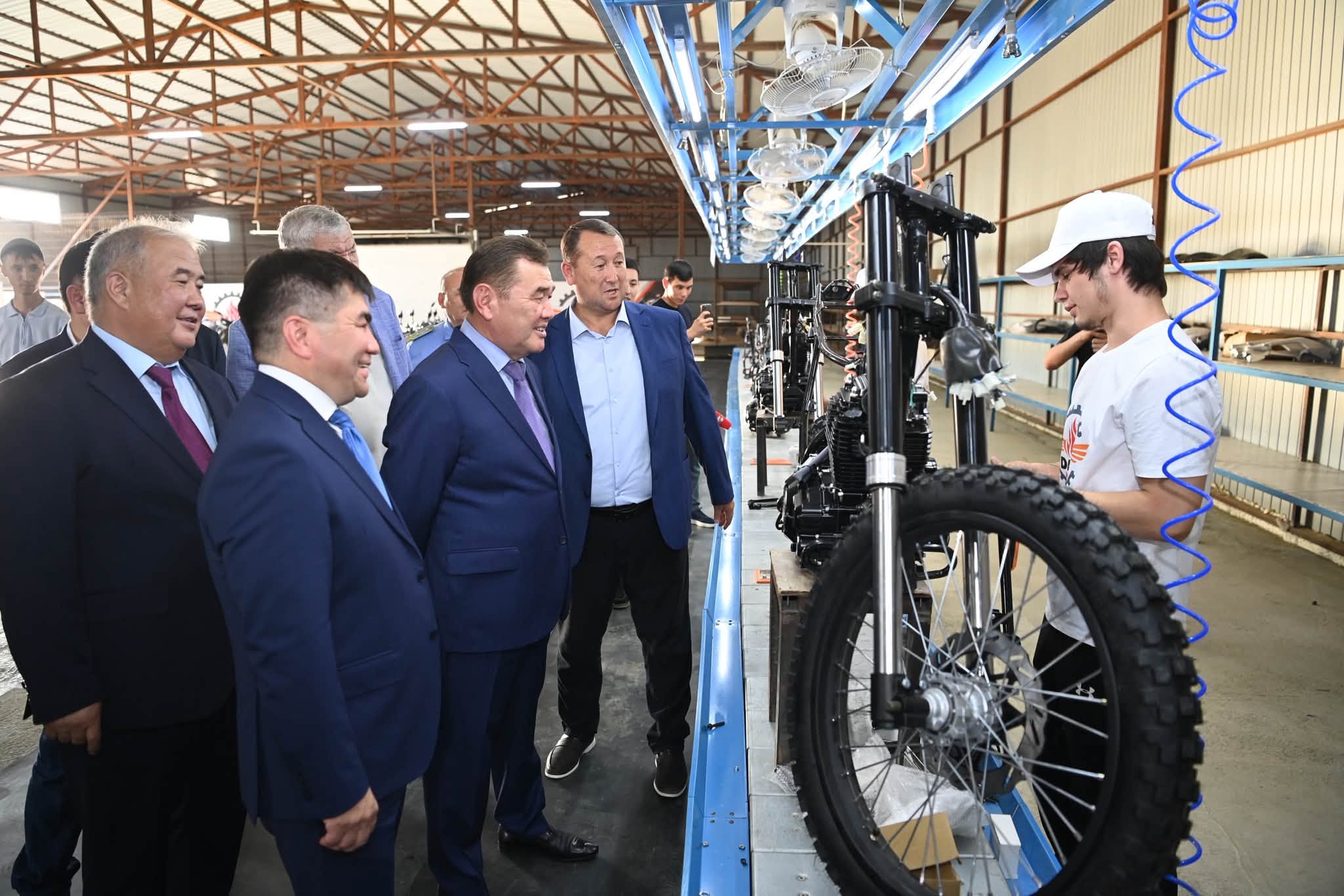
During a working trip to the Aral district, the head of the region Murat Ergeshbayev, regional prosecutor Rizabek Ozharov, representatives of the intelligentsia, and elders familiarized themselves with the operation of a motorcycle assembly plant.The "Togys-Aralotyn" LLP has invested 1 billion tenge in this project. It is planned to produce 20,000 components per year. 50 percent of the products manufactured at the plant will be supplied to the domestic market, and the remaining 50 percent will be exported abroad.Production projects are of great importance for diversifying the region's economy, creating new jobs, and increasing export potential.After this, the regional akim addressed issues related to the construction of the "Beineu – Sekseul" highway.As a reminder, at the V meeting of the National Kurultai, the Head of State instructed to accelerate the construction of the "Beineu – Sekseul" highway.In accordance with this, the relevant ministry is currently determining the sources of project financing, and design and estimate documentation is being developed.780 billion 285 million tenge is being allocated for the construction of the road. The total length is 559 kilometers, of which 189 kilometers belong to the Kyzylorda region. Upon full completion of construction, the route along the Europe – Caucasus – Asia international transport corridor will be reduced by approximately 900 kilometers, and cargo delivery times between China and Aktau will be shortened by two days.This road will have a positive impact on increasing the transit potential of the region and the development of settlements along the railway.The issue of the road leading to the settlements of Kulandy, Akbasty, Akespe, Kosaman, and Belaran, which are remote from the district center, will be fundamentally resolved.The head of the region instructed the heads of responsible sectors to keep the requirements regarding the quality and timing of the work in the center of attention.Source : https://www.gov.kz/memleket/entities/kyzylorda/press/news/details/1257239?lang=ru
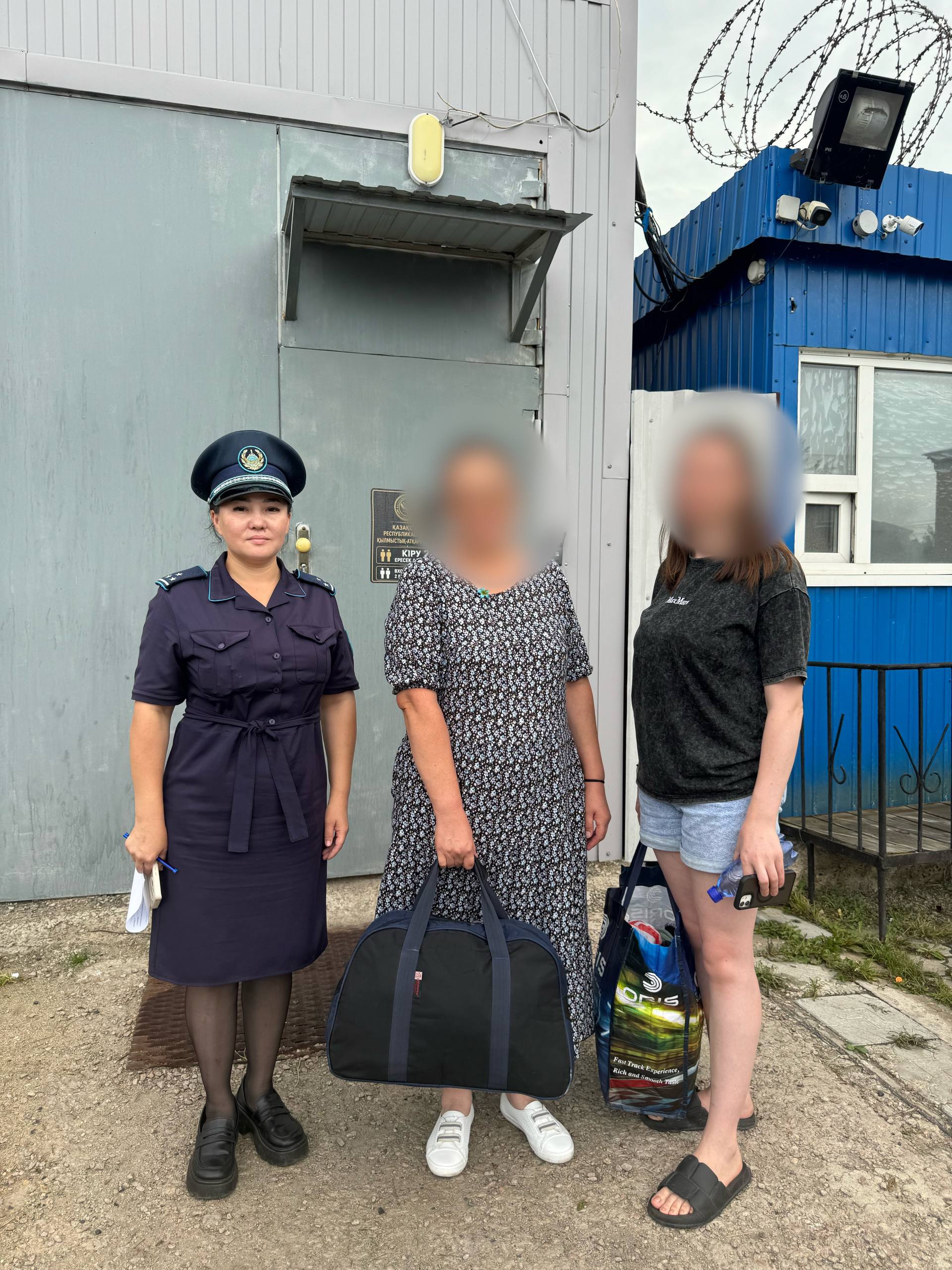
В Северо-Казахстанской области первые осужденные освобождены по амнистии 15.07.2026
The first inmates have been released from correctional institutions operated by the Department of criminally-executive system in the North Kazakhstan region under the Law of the Republic of Kazakhstan "On Amnesty," adopted in connection with the new Constitution of the Republic of Kazakhstan.The first three individuals to be released were two men and one woman. All of them had been serving sentences for theft. They were welcomed outside the correctional facilities by their families, who had been eagerly awaiting their return home.More than 1,700 people are currently serving sentences in the region's criminally-executive system institutions. Under the Amnesty Law, approximately 100 inmates are eligible for release. Overall, the Law applies to more than 250 convicted persons, whose prison terms will be reduced or who will receive other forms of relief предусмотренные by the legislation.The released individuals have now been given an opportunity to start a new chapter in their lives, rebuild family ties, and return to a law-abiding way of life.Source : https://www.gov.kz/memleket/entities/duissko/press/news/details/1257242?lang=ru